The Influence of Pop Art on Modern Culture
Pop Art, emerging in the mid-20th century, marked a pivotal shift in the art world by bridging the gap between high art and popular culture. Originating primarily in the United Kingdom and the United States during the 1950s and 1960s, Pop Art challenged conventional boundaries and blurred the lines between commercial imagery and fine art. This movement embraced everyday objects, advertisements, celebrities, and mass media as legitimate artistic subjects, signaling a democratization of art and reflecting the burgeoning consumerism and media saturation of the post-war era. Its vibrant colors, bold lines, and ironic tone captured the zeitgeist of a consumer-driven society, influencing not only visual art but also music, fashion, advertising, and design. Today, Pop Art’s legacy reverberates through modern culture, shaping aesthetic sensibilities and cultural commentary. This article explores the far-reaching influence of Pop Art, delving into its origins, key figures, and enduring impact across various facets of contemporary life.
- Origins of Pop Art: A Cultural and Historical Context
- Defining Characteristics and Themes of Pop Art
- Key Figures of Pop Art: Icons Who Shaped the Movement
- Pop Art and the Rise of Celebrity Culture
- The Impact of Pop Art on Advertising and Commercial Design
- Pop Art’s Influence on Fashion and Streetwear
- Pop Art’s Role in Shaping Contemporary Visual Media
- The Global Spread of Pop Art and Cross-Cultural Exchanges
- Technological Advancements and the Reinterpretation of Pop Art
- Pop Art’s Legacy in Contemporary Art and Culture
- Pop Art and Political Commentary
- Pop Art in the Era of Social Media and Digital Culture
- Conclusion
- More Related Topics
Origins of Pop Art: A Cultural and Historical Context
The roots of Pop Art lie in the post-World War II era, a time marked by rapid economic growth, technological advancements, and a rise in consumer culture. Traditional art movements like Abstract Expressionism dominated the early 1950s, but a new generation of artists sought to respond directly to the burgeoning commercial landscape and media proliferation. Pop Art emerged as a reaction against the seriousness of abstract expressionism, embracing instead the imagery and techniques of advertising, comic books, and mass media. It was a democratic art form that celebrated the mundane and the popular rather than the esoteric. The cultural climate, filled with optimism and consumer excitement, directly fueled the visual language of Pop Art, paving the way for its wide-reaching cultural influence.
Defining Characteristics and Themes of Pop Art
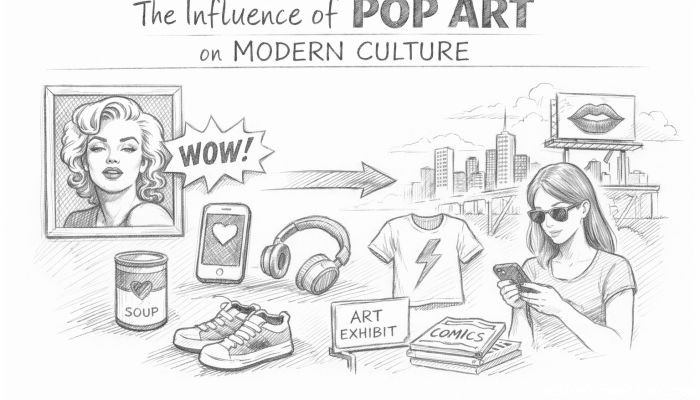
Pop Art is characterized by its use of bold colors, clear lines, repetitive imagery, and incorporation of commercial and popular culture motifs. Themes often centered on consumerism, celebrities, media saturation, and the ubiquity of mass-produced goods. Artists employed irony and satire to critique or celebrate the superficiality and excesses of modern life. The use of familiar images such as soup cans, comic strips, and advertising slogans made Pop Art accessible to the general public, breaking down elitist barriers in the art world. Its fusion of high art techniques with lowbrow content created a new visual lexicon that continues to influence contemporary media and culture.
Key Figures of Pop Art: Icons Who Shaped the Movement
Several artists played crucial roles in defining and popularizing Pop Art. Andy Warhol, often deemed the movement’s most famous figure, revolutionized art through his silkscreen prints of everyday objects and famous personalities, emphasizing repetition and commodification. Roy Lichtenstein used comic book aesthetics to parody mass media and explore the relationship between popular and fine art. Claes Oldenburg transformed mundane objects into large-scale sculptures, challenging perceptions of art and value. British artists like Richard Hamilton and Peter Blake contributed a more conceptual and graphic angle to the movement. Together, these figures expanded the horizons of artistic expression and cultural critique, laying a foundation for Pop Art’s pervasive influence.
Pop Art and the Rise of Celebrity Culture
Pop Art intensified the cult of celebrity by elevating famous figures such as Marilyn Monroe, Elvis Presley, and Elizabeth Taylor into subjects of fine art. Andy Warhol’s repeated portraits of Monroe, with their vibrant and sometimes ghostly colors, highlighted the relationship between fame, media representation, and commodification. This obsession with celebrity culture mirrored and amplified society’s increasing fixation on public figures, social media personas, and visual iconography. Pop Art anticipated today’s influencer culture by recognizing that fame and image were not only entertainment but also powerful cultural currencies.
The Impact of Pop Art on Advertising and Commercial Design
Pop Art’s engagement with consumer imagery made a profound impact on advertising, which began to adopt its bold visuals, irony, and playfulness. The movement blurred the stylistic lines between commercial art and fine art, influencing marketing campaigns to become more visually striking and conceptually clever. Advertising borrowed Pop Art’s vibrant color palettes, repetition, and cheeky slogans to capture consumer attention in increasingly saturated markets. The symbiotic relationship between Pop Art and advertising contributed to the development of branding strategies that leverage art and culture to create memorable and emotionally resonant consumer experiences.
Pop Art’s Influence on Fashion and Streetwear
Pop Art’s bold aesthetics and playful iconography found a natural home in fashion, particularly from the 1960s onward. Designers incorporated vibrant colors, graphic prints, and pop culture references into clothing, turning garments into wearable art. Later, streetwear brands drew on Pop Art’s themes and visuals to appeal to urban youth cultures, marrying art with lifestyle. Collaborations between fashion houses and Pop Art estates—like Warhol’s partnership with Calvin Klein—further cemented this influence. Today, Pop Art continues to inspire fashion designers globally, who use its visual dynamism to capture the spirit of modernity and consumer culture.
Pop Art’s Role in Shaping Contemporary Visual Media
Beyond static art forms, Pop Art’s principles translated seamlessly into the dynamic realm of visual media, including television, film, and digital platforms. Its emphasis on repetition, bright colors, and incorporation of popular culture visuals paved the way for music videos, commercials, and graphic design aesthetics. The movement’s critical stance toward media saturation also prefigured modern commentary on digital overload, memes, and viral imagery. Through its visual language, Pop Art has influenced the way stories are told and images are consumed in digital culture, creating a lasting dialogue between art and media.
The Global Spread of Pop Art and Cross-Cultural Exchanges
While originating in the UK and the USA, Pop Art resonated worldwide, adapting to diverse cultural contexts and artistic traditions. In Japan, artists integrated Pop Art elements with manga and anime styles; in Latin America, it merged with local political and social themes. This global diffusion underscored the universal appeal of consumer imagery and the increasing interconnectedness of media cultures. The movement’s emphasis on everyday objects and popular icons allowed artists worldwide to comment on their own societies’ consumerism and media landscapes, highlighting shared human experiences amid globalization.
Technological Advancements and the Reinterpretation of Pop Art
Modern technologies such as digital printing, graphic software, and social media platforms have reactivated Pop Art’s themes and methods in new ways. Digital artists remix classic Pop icons or create new iterations using algorithms, memes, and virtual reality. The reproducibility and accessibility that Pop Art championed now find a natural home in digital culture, where images proliferate rapidly and widely. This technological synergy has kept Pop Art’s relevance alive, allowing new generations to engage critically with mass culture and media through the familiar but continually evolving language of Pop Art.
Pop Art’s Legacy in Contemporary Art and Culture
Pop Art has left an indelible mark on contemporary art and culture. Its challenge to traditional art hierarchies, embrace of popular imagery, and ironic commentary continue to inspire artists globally. Contemporary creators often reference or appropriate Pop Art aesthetics to explore themes of consumerism, identity, and media influence. The movement’s democratic ethos encouraged a blurring of genres and disciplines, facilitating collaborations across art, design, music, and technology. Pop Art’s legacy is a vibrant testament to the evolving relationship between art and everyday life, reflecting ongoing cultural shifts and the pervasive power of images in society.
Pop Art and Political Commentary
Although often seen as playful and celebratory, Pop Art also serves as a platform for political and social critique. Many artists used its accessible imagery to challenge consumerism, question materialism, and expose the superficiality of mass media narratives. Warhol’s work, for example, subtly highlighted issues of commodification and the loss of individuality in a consumer society. Later artists have continued this tradition, using Pop Art aesthetics to comment on identity politics, environmental issues, and globalization. By embedding critique within popular imagery, Pop Art makes political statements more accessible and impactful.
Pop Art in the Era of Social Media and Digital Culture
In the 21st century, social media platforms have become the new visual marketplaces, echoing the media landscape Pop Art originally responded to. Memes, viral images, and influencer culture all trace their lineage to the principles of Pop Art—image repetition, visual boldness, and celebrity elevation. Instagram filters, emojis, and GIFs function as contemporary pop icons, democratizing image creation and consumption. This democratization mirrors Pop Art’s early challenge to art elitism, encouraging continuous reinterpretations and participatory culture. Social media thus acts as a living laboratory for Pop Art’s ideals, highlighting its enduring influence in contemporary cultural expression.
Conclusion
Pop Art revolutionized not only the art world but also the broader cultural landscape by embracing and interrogating the pervasive power of consumerism, mass media, and popular imagery. From its mid-century origins through its pioneers like Warhol and Lichtenstein, Pop Art challenged traditional notions of art, celebrity, and commerce, creating a visual language that remains strikingly relevant today. Its influence permeates fashion, advertising, digital media, and political discourse, reflecting and shaping the complexities of modern culture. As technology and society continue to evolve, Pop Art’s legacy endures, inviting ongoing dialogue about the intersection of art, culture, and consumerism. Ultimately, Pop Art reminds us that the everyday world—full of images, icons, and narratives—is itself a rich canvas for creativity, critique, and connection.
 How to Make the Most of Your Holiday Break
 The Best Winter Destinations for a Cozy Getaway
 How to Organize Your Holiday Travel Plans with Ease
 The Ultimate Guide to Cooking for a Crowd
 How to Make Healthy Comfort Food Without the Guilt
 5 Delicious Vegan Breakfast Ideas You Can Make in Minutes