How to Curate a Music Playlist for Every Occasion
Music has a quiet but powerful way of shaping our experiences. A single song can transform an ordinary evening into a memory, energize a workout, calm anxious thoughts, or set the mood for celebration. Yet curating the perfect playlist isn’t as simple as adding your favorite tracks to a queue. It’s about intention, atmosphere, and emotional flow. The right playlist doesn’t just play in the background—it enhances the moment.
Learning how to curate a music playlist for every occasion is both an art and a skill. Whether you’re planning a party, organizing a road trip, hosting a dinner, or winding down after a long day, thoughtfully chosen music elevates the experience. In this guide, we’ll explore practical steps to craft playlists that feel cohesive, emotionally resonant, and perfectly suited to any setting. With the right approach, you can turn music into a powerful tool for connection, focus, and joy.
- Start With the Mood, Not the Songs
- Consider the Occasion and Setting
- Know Your Audience
- Build a Strong Opening
- Create Flow With Thoughtful Transitions
- Balance Familiar Hits and Hidden Gems
- Pay Attention to Tempo and Energy Levels
- Avoid Overcrowding the Playlist
- Use Music to Tell a Story
- Customize Playlists for Specific Occasions
- Keep It Updated and Evolving
- Leverage Technology Without Losing Personal Touch
- Test the Playlist in Real Time
- Conclusion: Music as a Tool for Connection and Atmosphere
- More Related Topics
Start With the Mood, Not the Songs
The foundation of any great playlist is mood. Before adding a single track, ask yourself: How should this moment feel?
Is it energetic and celebratory? Calm and reflective? Romantic and intimate? Defining the emotional tone first ensures your song choices align with the atmosphere you want to create. A playlist is less about individual hits and more about the collective vibe.
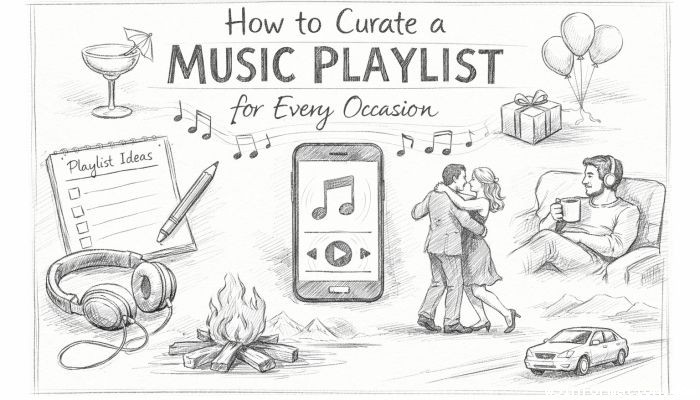
Consider the Occasion and Setting
Every occasion carries its own rhythm. A workout playlist demands high energy, while a dinner party requires softer background tunes.
Think about volume levels, tempo, and lyrical intensity. For example, instrumental or mellow tracks work well during conversations, while upbeat anthems shine at social gatherings. Context shapes curation.
Know Your Audience
Curating a playlist for yourself differs from creating one for a group.
Consider the age range, musical preferences, and cultural background of your audience. Mixing familiar favorites with new discoveries keeps listeners engaged. The goal is connection—not confusion.
Build a Strong Opening
The first few songs set expectations. A compelling opening draws listeners in immediately.
Start with tracks that establish the mood clearly without overwhelming. Avoid abrupt transitions at the beginning; ease your audience into the experience.
Create Flow With Thoughtful Transitions
A playlist should feel like a journey, not a shuffle.
Pay attention to tempo, key, and genre shifts. Gradual transitions maintain cohesion, while sudden changes can disrupt the atmosphere. Think of it as storytelling through sound.
Balance Familiar Hits and Hidden Gems
Popular songs create instant connection, while lesser-known tracks add uniqueness.
Blending both keeps your playlist fresh without alienating listeners. Too many mainstream hits can feel predictable, while too many obscure tracks may feel disconnected.
Pay Attention to Tempo and Energy Levels
Energy matters more than genre. Even within one style, tempo can vary widely.
For parties, build momentum gradually, peaking mid-playlist. For relaxation playlists, maintain steady calmness without sudden spikes. Emotional pacing keeps the playlist engaging.
Avoid Overcrowding the Playlist
More isn’t always better. An overly long playlist can dilute its impact.
Focus on quality over quantity. Curate intentionally and remove songs that disrupt flow. Editing is just as important as adding.
Use Music to Tell a Story
The most memorable playlists feel intentional, almost cinematic.
Think about beginning, middle, and end. For example, a road trip playlist might start upbeat, dip into nostalgic tracks during sunset, and close with reflective songs at night.
Customize Playlists for Specific Occasions
Different occasions call for different styles. Consider these examples:
-
Workout playlists: High BPM, motivational lyrics, driving beats.
-
Dinner party playlists: Instrumental jazz, acoustic covers, soft pop.
-
Romantic evenings: Slow tempo, warm tones, emotionally expressive vocals.
-
Study sessions: Ambient, lo-fi, classical, or instrumental tracks.
Tailoring playlists enhances each experience meaningfully.
Keep It Updated and Evolving
Music trends shift, and personal tastes change.
Revisit your playlists periodically to refresh them. Add new discoveries and remove songs that no longer fit. A dynamic playlist remains relevant and exciting.
Leverage Technology Without Losing Personal Touch
Streaming platforms offer algorithms and curated suggestions that simplify discovery.
Use these tools wisely—but don’t rely entirely on them. The best playlists reflect human intuition, not just automated recommendations. Personal curation adds authenticity.
Test the Playlist in Real Time
Before finalizing, listen through the playlist as if you were your audience.
Notice transitions, volume consistency, and emotional shifts. Adjust as needed. Testing ensures the playlist performs as intended in its setting.
Conclusion: Music as a Tool for Connection and Atmosphere
Curating the perfect playlist for every occasion is more than a practical task—it’s a creative expression. When done thoughtfully, a playlist transforms ordinary moments into meaningful experiences. It shapes energy, deepens connection, and sets emotional tone.
By starting with mood, understanding your audience, balancing familiarity with discovery, and crafting intentional flow, you can elevate any event with music. The key lies in awareness and authenticity—choosing songs that fit the moment while reflecting your unique taste.
In a world where streaming makes music instantly accessible, the true art lies not in access but in curation. And when your playlist feels seamless, intentional, and emotionally aligned, you’ll know you’ve created more than a collection of songs—you’ve created an atmosphere that lingers long after the final track fades.
 How to Make the Most of Your Holiday Break
 The Best Winter Destinations for a Cozy Getaway
 How to Organize Your Holiday Travel Plans with Ease
 The Ultimate Guide to Cooking for a Crowd
 How to Make Healthy Comfort Food Without the Guilt
 5 Delicious Vegan Breakfast Ideas You Can Make in Minutes