How to Create Real-World Projects Using Networking in 2025
In the fast-paced and interconnected world of 2025, networking is more than just a technical discipline; it is a catalyst for innovation, collaboration, and growth. Networking allows individuals and organizations to connect, exchange ideas, and solve problems by creating projects that have a real impact on the world. In this article, we will guide you through creating real-world projects using networking, covering everything from selecting the right technologies to inspiring success stories that demonstrate the power of networking.
- Understanding the Networking Landscape in 2025
- Identifying Real-World Problems Suitable for Networking Solutions
- Choosing the Right Networking Technologies and Platforms
- Planning Network Architecture for Scalability and Reliability
- Harnessing Edge Computing for Real-Time Data Processing
- Integrating AI and Machine Learning in Networking Projects
- Prioritizing Cybersecurity and Data Privacy
- Collaborating Across Disciplines for Enhanced Innovation
- Utilizing Cloud and Hybrid Networking Models
- Implementing Standards and Interoperability Practices
- Testing, Deployment, and Continuous Improvement
- Case Studies: Successful Real-World Networking Projects in 2025
- Conclusion
- More Related Topics
Understanding the Networking Landscape in 2025
Before diving into creating projects, it’s essential to have a solid understanding of the current networking landscape. In 2025, the networking environment is characterized by the widespread adoption of 5G, advancements in edge computing, the integration of Artificial Intelligence (AI) into networks, and the growth of the Internet of Things (IoT). The evolution of cloud-native technologies and microservices architectures further influences networking paradigms, making networks more scalable, flexible, and intelligent than ever before. Staying informed about these developments will allow you to make better decisions when planning and implementing your networking projects.

Identifying Real-World Problems Suitable for Networking Solutions
The first step in creating impactful projects is to identify problems that networking can solve. Think about the challenges you or your organization face, or explore areas where networking technologies can bring improvements. Problems like smart city infrastructure, healthcare monitoring, supply chain optimization, and environmental monitoring are perfect examples of issues that networking can effectively address. By focusing on tangible, urgent problems that could benefit from connected systems and devices, you will ensure your project has a clear purpose and audience.
Choosing the Right Networking Technologies and Platforms
Selecting the appropriate networking technologies and platforms is crucial for the success of your project. The range of options includes wireless communication protocols (such as Wi-Fi 6, Zigbee, LoRaWAN), cloud-based networking services, and network virtualization tools, among others. Factors like coverage area, power consumption, data throughput, scalability, and budget will guide your choices. For instance, if you’re building a long-range, low-power IoT sensor network, LoRaWAN might be an excellent choice, while Wi-Fi 6 is more suitable for high-throughput, indoor applications. This stage may require research, consultation with experts, and trade-offs between cost, complexity, and future-proofing.
Planning Network Architecture for Scalability and Reliability
A well-designed network architecture is the backbone of any successful real-world project. Scalability ensures that your system can handle increased demand or additional devices, while reliability guarantees consistent performance and availability. Adopting a modular approach, with microservices and cloud-native components, can help facilitate flexible scaling. Decentralized architectures, leveraging edge computing, can also improve performance by processing data closer to the source and reducing latency. During this phase, it is crucial to consider redundancy, load balancing, and security to avoid potential bottlenecks and vulnerabilities.
Harnessing Edge Computing for Real-Time Data Processing
Edge computing, which brings data processing closer to the point of data generation, is a game-changer in many real-world networking projects. By reducing latency and bandwidth consumption, it enables immediate responses, crucial in applications like autonomous vehicles, industrial automation, or health devices. Integrating edge nodes into your project allows you to filter, analyze, and summarize data locally before sending only relevant information to centralized servers or cloud services, thus increasing efficiency and privacy.
Integrating AI and Machine Learning in Networking Projects
AI and machine learning are increasingly being integrated into networking projects, providing capabilities such as predictive analytics, anomaly detection, and adaptive optimization. AI can be employed to manage network traffic dynamically, predict potential failures, or even personalize service quality based on user behavior and context. For example, in smart agriculture projects, AI algorithms can analyze data from IoT sensors to optimize irrigation schedules and resource use. Integrating AI into your project will require access to datasets, computational resources, and expertise, but it can significantly enhance the project’s capabilities and value.
Prioritizing Cybersecurity and Data Privacy
As networking projects often involve a large number of devices and handle sensitive data, cybersecurity should be a top priority. Implement robust security measures such as encryption, multi-factor authentication, and continuous monitoring to protect your project from potential cyber threats. Additionally, it is crucial to comply with data privacy regulations, like GDPR or CCPA, especially when dealing with personal or sensitive information. Incorporating security and privacy considerations from the design phase, rather than as an afterthought, will result in a more resilient and trustworthy system.
Collaborating Across Disciplines for Enhanced Innovation
Networking projects often require a multidisciplinary approach, bringing together experts in networking engineering, software development, domain-specific knowledge, and even end-users. Such collaboration can lead to more innovative solutions that address practical concerns while leveraging the technical possibilities to their fullest. Engaging stakeholders early on and maintaining transparent communication throughout the project can help build consensus, minimize risks, and speed up the deployment process. Tools like shared repositories, virtual whiteboards, and project management platforms can facilitate effective collaboration in today’s globally distributed teams.
Utilizing Cloud and Hybrid Networking Models
Cloud computing offers scalable resources and advanced services that can be an integral part of your networking project, providing centralized data analytics, global device management, or even machine learning capabilities. Hybrid architectures, combining cloud and on-premises infrastructure, can offer a balance of flexibility, control, and cost optimization. In some cases, sensitive data might be stored locally for security reasons, while less critical information is stored in the cloud for easy accessibility. Understanding how to design and architect these integrated models is essential to maximize their performance and resilience.
Implementing Standards and Interoperability Practices
Using standardized protocols and ensuring interoperability with existing systems is crucial for the long-term success of your networking project. By following widely accepted standards like IPv6, MQTT, or HTTP/3, you can ensure compatibility with various devices and services, avoiding vendor lock-in and future-proofing your project. Moreover, adopting open APIs and a modular design approach can facilitate future upgrades and collaboration with other projects. Sticking to best practices in this area will not only improve the project’s longevity but also the overall user satisfaction.
Testing, Deployment, and Continuous Improvement
Testing your networking project before and after deployment is critical to ensuring it functions as intended in real-world conditions. Simulations, pilot programs, and phased rollouts can help you identify and resolve issues early. After deployment, continuous monitoring and feedback loops will allow for ongoing optimization and improvement. Since network conditions and user needs are constantly evolving, your project should be adaptable and ready to evolve. Automated performance tracking and anomaly detection tools can help streamline maintenance and ensure your project remains efficient and relevant throughout its lifecycle.
Case Studies: Successful Real-World Networking Projects in 2025
Studying recent successful real-world networking projects can provide you with valuable insights and inspiration. Look for projects that exemplify strategic planning, innovative technology use, and effective teamwork, such as smart transportation systems using 5G to reduce congestion, IoT-enabled healthcare networks that improve patient monitoring, or environmental sensor networks that aid in climate research. Learning from the successes and failures of others can help you avoid common pitfalls and demonstrate the transformative power of networking.
Conclusion
Creating real-world projects using networking in 2025 requires a comprehensive understanding of the latest technologies, meticulous planning, and a commitment to collaboration, security, and continuous learning. The convergence of 5G, edge computing, AI, and cloud services has created an environment where networking can be used to address complex challenges and build scalable, resilient, and intelligent systems. By focusing on real-world problems, selecting the right technologies, and fostering interdisciplinary teams, you can create projects that not only work well technically but also provide tangible benefits and have a positive impact on society. As the networking landscape continues to evolve rapidly, embracing adaptability and a commitment to learning will be key to ensuring that your projects remain relevant and effective in the future. Networking has the power to unlock a future where connectivity drives creativity, efficiency, and progress.
 Big O Notation Explained for Beginners
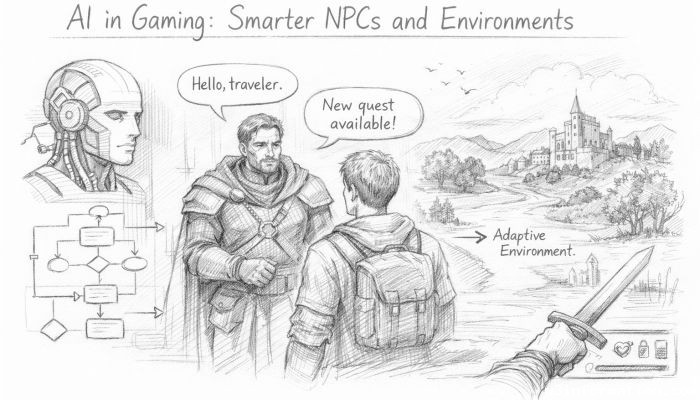 AI in Gaming: Smarter NPCs and Environments
 Understanding Bias in AI Algorithms
 Introduction to Chatbots and Conversational AI
 How Voice Assistants Like Alexa Work
 Federated Learning: AI Without Sharing Data