The Evolution of Programming Languages
In an age where technology is intertwined with nearly every aspect of our lives, from the smartphones that keep us connected to the algorithms that power artificial intelligence, it is easy to forget that these tools are built on the foundation of programming languages. These languages, which have now become ubiquitous and indispensable, have themselves experienced a remarkable evolution and innovation journey. The history of programming languages is a tale of human creativity, problem-solving, and adaptation to ever-changing technological needs and paradigms. In this article, we will explore this history, tracing the path from early machine and assembly languages to contemporary languages that prioritize ease of use, scalability, and efficiency. We will delve into their origins, examine key influences, and look towards future trends and predictions, understanding how programming languages not only drive software development but are also shaped by it, moulding the digital landscape around us.
- The Dawn of Programming: Machine and Assembly Languages
- The Birth of High-Level Languages: FORTRAN and COBOL
- The Emergence of Structured Programming
- Object-Oriented Programming: A Paradigm Shift
- The Rise of Scripting Languages
- The Internet Age and Web-Centric Languages
- Functional Programming and Its Resurgence
- Domain-Specific Languages and Their Growing Importance
- The Influence of Open Source and Community-Driven Development
- The Role of Performance and Compilation Advances
- The Advent of Multi-paradigm Languages
- The Future of Programming Languages: AI and Quantum Computing
- Conclusion
- More Related Topics
The Dawn of Programming: Machine and Assembly Languages
The earliest forms of programming languages were more direct instructions to the computer hardware than languages in the conventional sense. Machine language, written in binary code, allowed computers to perform specific operations but was tedious and highly error-prone. Assembly language, slightly more user-friendly, used mnemonic codes to represent machine instructions. These low-level languages are crucial to the history of programming languages because they established the basic concept of controlling a machine through a sequence of coded instructions, forming the foundation for all later programming languages. However, their complexity and hardware-specific nature made them impractical for developing larger, more complex programs.

The Birth of High-Level Languages: FORTRAN and COBOL
Recognizing the limitations of machine and assembly languages, the 1950s saw the birth of high-level programming languages, which began the process of abstracting coding from hardware specifics. FORTRAN (Formula Translation) was among the first, designed to allow scientists and engineers to write programs using notations closer to mathematical formulas. COBOL (Common Business-Oriented Language), developed around the same time, targeted business data processing needs with an emphasis on readability and ease of use. These pioneering languages enabled programmers to write instructions closer to natural language, dramatically improving productivity and accessibility, while the use of compilers translated these high-level instructions into machine code.
The Emergence of Structured Programming
As programming projects grew in size and complexity through the 1960s and 1970s, maintaining code became a significant challenge. Structured programming emerged as a methodology to improve clarity and reduce errors, discouraging the use of free-form “goto” statements in favor of control structures like loops and conditionals. Languages like Algol, Pascal, and later C embodied these ideas, providing mechanisms to organize code into blocks and functions. This shift not only made code more readable and understandable but also laid the groundwork for modular and systematic software development practices.
Object-Oriented Programming: A Paradigm Shift
The 1980s saw the rise of object-oriented programming (OOP), a paradigm that organizes software design around objects, which encapsulate data and behavior. Languages like Smalltalk and C++ popularized this concept, making it easier for developers to model real-world entities and their interactions. OOP introduced key principles such as inheritance, encapsulation, and polymorphism, which facilitated code reuse and made large, complex systems more understandable and maintainable. This approach revolutionized programming by aligning software design with human cognitive models and enabling the development of large-scale applications.
The Rise of Scripting Languages
The late 1980s and 1990s witnessed the rise of scripting languages as lightweight, easy-to-use tools for automating tasks and developing web applications. Languages like Perl, Python, and JavaScript allowed programmers to write code more quickly and with less boilerplate than their compiled counterparts. Their interpreted nature supported quick iteration and flexibility, making them invaluable for tasks like system administration, prototyping, and client-side web scripting. This period marked a democratization of programming, as the low barrier to entry opened software creation to a much broader community.
The Internet Age and Web-Centric Languages
The rapid growth of the internet in the 1990s and early 2000s required new languages and frameworks designed specifically for web development. JavaScript became the lingua franca of the web browser, enabling dynamic and interactive websites. Meanwhile, languages like PHP and Ruby (with its Rails framework) made server-side scripting fast and accessible, and Java’s “write once, run anywhere” promise aimed to standardize cross-platform programming. These languages and their accompanying tools not only shaped the architecture of the modern web but also influenced language design priorities, emphasizing portability, security, and performance.
Functional Programming and Its Resurgence
Functional programming, which models computation as the evaluation of mathematical functions and avoids changing-state and mutable data, has its roots in the early language Lisp from the late 1950s. This programming style was long considered niche and academic but has experienced a resurgence in the 21st century with languages like Haskell, Scala, and the integration of functional features in mainstream languages like JavaScript and Python. Functional programming emphasizes immutability, statelessness, and declarative coding, which make it easier to write reliable and predictable code—qualities especially beneficial in concurrent and parallel computing environments.
Domain-Specific Languages and Their Growing Importance
As software systems became more complex and specialized, domain-specific languages (DSLs) emerged to address the needs of particular application domains with tailored syntax and semantics. Languages like SQL for database queries, HTML/CSS for markup and styling on the web, and MATLAB for mathematical computing are prime examples. DSLs make it more intuitive and efficient to develop software within specialized contexts by abstracting away general-purpose programming complexities. The evolution of DSLs highlights the growing importance of balancing general-purpose language flexibility with domain-specific expressiveness.
The Influence of Open Source and Community-Driven Development
The open-source movement in recent decades has had a profound impact on the evolution of programming languages. The growth of languages such as Python, Ruby, and Rust owes much to vibrant, community-driven ecosystems contributing libraries, tools, and frameworks. Open collaboration accelerates innovation, drives language adoption, and ensures that languages evolve in response to real user needs. This democratized model of development has also paved the way for programming languages to become more inclusive, accessible, and adaptable to various industries.
The Role of Performance and Compilation Advances
While ease of use is critical, performance remains a key driver of language evolution, particularly in systems programming, gaming, and high-frequency trading. Languages like C and C++ continue to dominate these domains where speed and fine-grained resource control are essential. However, newer languages such as Rust aim to combine performance with safety features to minimize common programming errors without sacrificing efficiency. Meanwhile, Just-In-Time (JIT) compilation and advances in virtual machine technology, as seen in Java and the .NET platform, have blurred the line between interpreted flexibility and compiled speed, illustrating the complex trade-offs language designers must balance.
The Advent of Multi-paradigm Languages
The diverse demands of modern programming increasingly require a synthesis of programming paradigms to address varied challenges. Languages like Python, JavaScript, Kotlin, and Scala are multi-paradigm, integrating procedural, object-oriented, and functional programming styles. This allows developers to choose the most appropriate approach for specific problems, fostering both creativity and efficiency. The trend towards multi-paradigm languages reflects a recognition that no single programming style is sufficient for all contexts, and highlights a pragmatic approach to language design.
The Future of Programming Languages: AI and Quantum Computing
As we venture into the frontiers of artificial intelligence and quantum computing, programming languages must once again adapt and evolve. Tools for AI-driven code completion and generation, powered by machine learning algorithms, are beginning to reshape how programmers write and debug code, influencing language syntax and development environments. Meanwhile, quantum programming languages like Q# and Quipper are being developed to harness the principles of quantum mechanics, representing a new and potentially transformative frontier. The future will likely see languages that integrate AI assistance more seamlessly and embrace new computational models.
Conclusion
The evolution of programming languages is a testament to the ongoing interplay between human ingenuity and technological advancement. From the rigid binary codes of early machine language through the rise of high-level abstractions, structured and object-oriented paradigms, to the present-day focus on multi-paradigm flexibility and domain-specific expressiveness, each phase in the history of programming languages addresses an increase in complexity and a shift in needs. This evolution has been driven by a quest for greater expressiveness, efficiency, reliability, and accessibility, and has been shaped by a wide array of cultural, academic, and industrial forces. As we stand at the threshold of new AI and quantum computing breakthroughs, understanding the history of programming languages not only enriches our appreciation of how these languages empower software development but also how they actively shape our digital future. Programming languages are more than mere tools; they are the living, evolving language of human creativity itself.
 Big O Notation Explained for Beginners
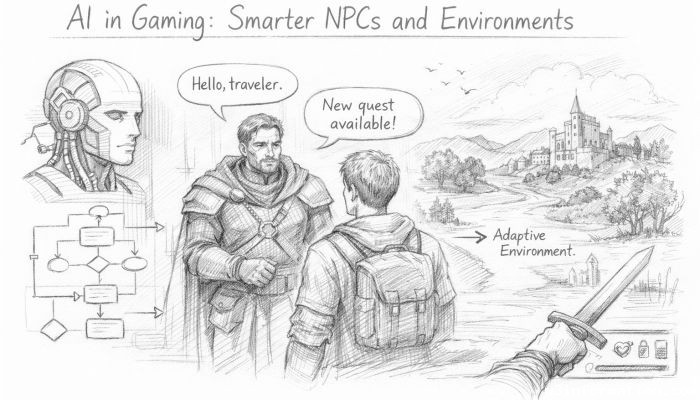 AI in Gaming: Smarter NPCs and Environments
 Understanding Bias in AI Algorithms
 Introduction to Chatbots and Conversational AI
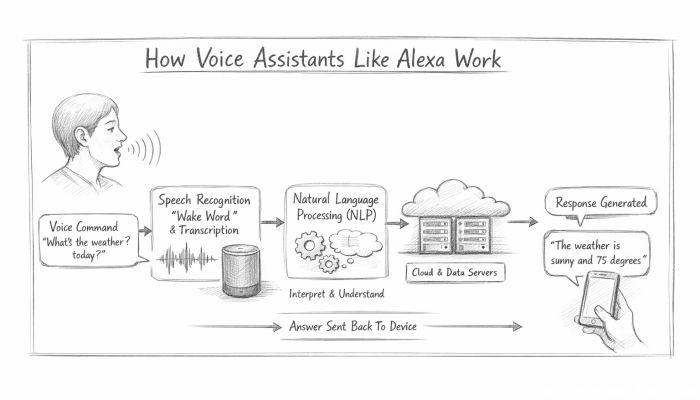 How Voice Assistants Like Alexa Work
 Federated Learning: AI Without Sharing Data