Research Developments in Cloud Computing in 2025
Cloud computing has become an integral part of the modern digital landscape. This technology’s ubiquitous nature drives consistent innovation and adoption by businesses of all sizes and industries. In 2025, cloud computing is at the crossroads of several key trends that aim to expand and accelerate digital transformation. With the integration of artificial intelligence, edge computing, and quantum computing, cloud platforms are redefining business models. In this article, we present the top research developments in cloud computing in 2025. Cloud computing is no longer just about data storage and processing power. Advanced solutions are emerging to deliver more security, scalability, and intelligence in managing computing resources. This year promises to be an exciting one for cloud computing, with new architectures, algorithms, and methodologies that will challenge the status quo. We cover the top trends and emerging research areas that are likely to define the future of cloud computing, including cutting-edge insights and expert opinions.
- AI-Driven Cloud Orchestration
- Edge-Cloud Hybrid Architectures
- Quantum Computing Integration
- Enhanced Cloud Security Protocols
- Green Cloud Computing Initiatives
- Multi-Cloud and Cross-Cloud Management
- Serverless Computing Evolution
- Cloud-Native AI Frameworks
- Advanced Data Analytics and Real-Time Processing
- Cloud Robotics and Automation
- Privacy-Preserving Cloud Technologies
- Cloud Service Customization via Digital Twins
- Conclusion
- More Related Topics
AI-Driven Cloud Orchestration
Artificial intelligence (AI) algorithms are making inroads into cloud computing. Research in 2025 has focused on the automation of resource management, workload distribution, and failure prediction. AI-optimized cloud orchestration promises self-healing infrastructures that actively monitor their performance and automatically respond to anomalies or threats. This could significantly improve the reliability and energy efficiency of cloud services by minimizing downtime and maximizing resource utilization. AI also paves the way for more responsive cloud services that are able to adapt to changing user demands.

Edge-Cloud Hybrid Architectures
Edge computing is another area that is being integrated with cloud computing in 2025. Edge computing involves using networked devices with computing capabilities close to the data source. The emerging trend is to develop edge-cloud hybrid architectures that can balance the strengths of both paradigms. These hybrid models will support applications that require low latency and high bandwidth. For example, researchers have explored how to use edge computing and the cloud in tandem for autonomous vehicles and smart city applications. A key enabler of this trend is distributed ledger technology that provides secure and decentralized coordination between the edge and the cloud.
Quantum Computing Integration
Quantum computing is one of the most cutting-edge areas in cloud computing research in 2025. While quantum computers are still in their infancy, there is growing interest in using them for certain types of computations that are difficult or impossible for classical computers. Quantum cloud computing provides users access to quantum processors via a cloud interface. Researchers are working on hybrid classical-quantum algorithms that can be used in cloud computing. Such algorithms could help solve complex problems such as cryptography, optimization, and molecular simulation.
Enhanced Cloud Security Protocols
The security of cloud computing platforms is a perennial issue that is receiving a great deal of attention in 2025. This year’s research has focused on using advanced security protocols and tools to make cloud infrastructures more resilient. AI-driven security solutions are being developed to improve threat detection and prevention. Additionally, research has focused on how to use blockchain technology for identity management in multi-cloud environments. Homomorphic encryption is also being explored as a way to allow computations on encrypted data without decrypting it.
Green Cloud Computing Initiatives
Energy efficiency and sustainability are becoming increasingly important for cloud computing in 2025. Research has been focused on developing more energy-efficient cooling systems and hardware for data centers. Workload scheduling is also being optimized to minimize energy consumption. In addition, there is a growing interest in using renewable energy sources to power cloud data centers. Carbon footprint tracking tools are also being integrated into cloud management platforms to help cloud providers and users measure their environmental impact.
Multi-Cloud and Cross-Cloud Management
The complexity of modern IT infrastructures is making it increasingly common for organizations to use services from multiple cloud providers. Research in 2025 has focused on developing tools and frameworks that can help manage multi-cloud and cross-cloud environments. This includes AI-powered cloud management platforms that can automate resource management, load balancing, and security across multiple cloud environments. Cross-cloud orchestration frameworks are also being developed to improve interoperability between different cloud platforms.
Serverless Computing Evolution
Serverless computing has been one of the most popular cloud computing research topics in 2025. Serverless architectures provide a way to build and run applications without having to manage the underlying infrastructure. This year’s research has been focused on reducing latency and improving cold start performance to make serverless computing more suitable for enterprise applications. There is also a lot of research into how to integrate stateful functions and persistent storage into serverless computing environments.
Cloud-Native AI Frameworks
Cloud computing and artificial intelligence (AI) are two technologies that are becoming increasingly intertwined in 2025. The cloud provides an ideal environment for deploying and running machine learning models, and there is a growing demand for cloud-native AI frameworks. These frameworks make it easier to develop, scale, and manage machine learning models in the cloud. Research in 2025 has been focused on providing integrated toolchains that can cover the entire lifecycle of a machine learning model from data ingestion to model training, testing, and deployment.
Advanced Data Analytics and Real-Time Processing
Data analytics is another area that is being increasingly integrated with cloud computing in 2025. Cloud providers are investing heavily in improving their real-time analytics capabilities, with a particular focus on reducing latency and improving the accuracy of predictive analytics. Hybrid transactional/analytical processing (HTAP) systems are also maturing, which will enable organizations to perform both transactional processing and analytics within the same platform. Reinforcement learning algorithms are being explored as a way to improve the adaptability of data workflows.
Cloud Robotics and Automation
Robotics is another area that is being increasingly integrated with cloud computing in 2025. Cloud robotics is an emerging research area that focuses on using cloud infrastructure for tasks such as heavy computation, global data sharing, and software updates. The cloud can augment the capabilities of robotic systems deployed in various settings such as manufacturing, healthcare, and logistics. Research in this area is focused on developing frameworks that can support low-latency communication between robots and cloud resources.
Privacy-Preserving Cloud Technologies
Privacy is another important area of cloud computing research in 2025. There is a growing demand for privacy-preserving technologies that can help protect sensitive data. This includes techniques such as data anonymization, encrypted computation, and zero-knowledge proofs. There is also a growing interest in secure multi-party computation (SMPC), which is a technique that enables parties to jointly compute a function over their inputs without revealing those inputs to each other.
Cloud Service Customization via Digital Twins
Digital twins are another area that is being increasingly used in cloud computing in 2025. Digital twins are virtual replicas of physical systems that can be used to optimize operations, predict failures, and model user experiences. Cloud providers and their clients can use advanced simulations to test configurations and deployment scenarios before making any changes to the actual systems. This can reduce the risks and costs associated with making changes to live environments.
Conclusion
Cloud computing research in 2025 is moving at a fast pace, with new architectures, algorithms, and methodologies emerging to challenge the status quo. Cloud computing is no longer just about providing data storage and processing power. Advanced solutions are being developed to deliver more security, scalability, and intelligence in managing computing resources. Sustainability and multi-cloud strategies are becoming more important in 2025 as organizations strive to become more agile and resilient. AI-native cloud frameworks, advanced data analytics, cloud robotics, and digital twins are some of the other exciting trends that will likely gain more traction in the years to come. Overall, the cloud computing research developments in 2025 promise to optimize current computational paradigms and open up new possibilities for global connectivity, data democratization, and technological sustainability.
 Big O Notation Explained for Beginners
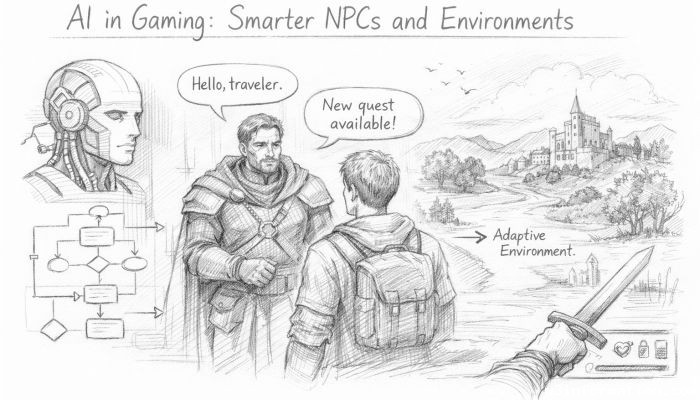 AI in Gaming: Smarter NPCs and Environments
 Understanding Bias in AI Algorithms
 Introduction to Chatbots and Conversational AI
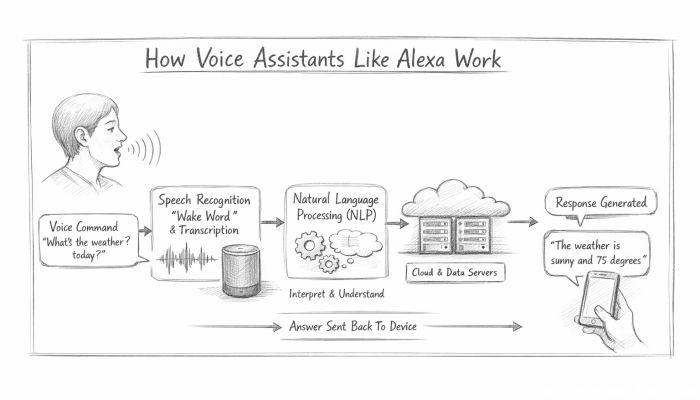 How Voice Assistants Like Alexa Work
 Federated Learning: AI Without Sharing Data