How to Test Real-World Projects Using Software Engineering in 2025
Testing is a crucial aspect of software engineering in 2025. It involves the systematic evaluation of a software system to ensure that it meets specified requirements, functions correctly, and is reliable, secure, and efficient. In the rapidly evolving landscape of 2025, where software engineering encompasses diverse domains and technologies, testing becomes even more critical. Whether developing real-world projects, AI-driven systems, cloud-native applications, or Internet of Things (IoT) devices, engineers rely on robust testing methodologies to deliver high-quality software. This article explores how software engineers can leverage testing techniques, best practices, and tools to ensure the success of their real-world projects in 2025.
Importance of Testing in Software Engineering
Testing is essential for several reasons. First, it helps to detect and fix errors or defects in software, ensuring that it functions as intended and meets user requirements. Second, it verifies the software’s correctness and accuracy, ensuring that it produces the expected outputs. Third, it improves the quality of software by identifying areas for optimization, refinement, and enhancement. Fourth, it increases the reliability and stability of software, reducing the likelihood of failures, crashes, or unexpected behavior. Fifth, it enhances the security and robustness of software, preventing unauthorized access, data breaches, or malicious attacks. Sixth, it facilitates software maintenance and evolution by making it easier to identify changes, bugs, and regressions. Seventh, it enables software verification and validation, ensuring that the software meets the defined specifications, standards, and regulations.

Types of Testing in Software Engineering
In software engineering, several types of testing can be conducted to ensure that software is free from defects and meets user requirements. Some of the common types of testing include:
Unit testing: This type of testing is performed to validate the functionality of individual units or components of software.
Integration testing: This type of testing is performed to validate the interaction between different components or modules of software.
System testing: This type of testing is performed to validate the entire software system as a whole.
Acceptance testing: This type of testing is performed to validate the acceptance of software by the end-users.
Regression testing: This type of testing is performed to ensure that recent changes to software have not introduced new defects or issues.
Performance testing: This type of testing is performed to evaluate the performance, scalability, and stability of software.
Functional testing: This type of testing is performed to validate the functional requirements of software.
Non-functional testing: This type of testing is performed to validate the non-functional requirements of software, such as performance, usability, and security.
User Interface (UI) testing: This type of testing is performed to ensure that the user interface of software is working as expected.
Software Testing Methodologies
Software testing methodologies are sets of principles, practices, and techniques used to guide the testing process. Some of the popular software testing methodologies in 2025 include:
Waterfall model: This is a linear and sequential approach to software testing, where each phase must be completed before the next phase can begin.
Agile testing: This is an iterative and incremental approach to software testing that emphasizes collaboration, flexibility, and adaptability.
Test-driven development (TDD): This is a methodology that involves writing tests before writing code, and then refactoring the code to make it pass the tests.
Behavior-driven development (BDD): This is a methodology that involves defining the desired behavior of software using a natural language syntax and then writing tests to validate that behavior.
Exploratory testing: This is an approach to software testing that involves testing software without any predefined test cases or plans.
Pair testing: This is an approach to software testing that involves two testers working together to test software.
Software Testing Tools and Technologies
Software testing tools are software applications that help testers to automate and streamline various aspects of the testing process. Some of the popular software testing tools in 2025 include:
Selenium: This is an open-source software testing tool that is used for automating web application testing.
JUnit: This is an open-source software testing tool that is used for automating unit testing in Java.
TestNG: This is an open-source software testing tool that is used for automating functional and regression testing in Java.
Appium: This is an open-source software testing tool that is used for automating mobile application testing.
LoadRunner: This is a commercial software testing tool that is used for performance testing.
JUnit: This is an open-source software testing tool that is used for automating unit testing in Java.
Postman: This is a commercial software testing tool that is used for API testing.
Best Practices for Software Testing in 2025
To ensure effective software testing in 2025, it is important to follow some best practices. Some of the best practices for software testing in 2025 include:
Plan and design the testing process carefully.
Define clear and measurable test objectives and criteria.
Use automated testing tools and scripts wherever possible.
Write clean and maintainable test code.
Perform testing early and often in the software development lifecycle.
Collaborate and communicate effectively with developers, project managers, and other stakeholders.
Document and report the testing results and findings.
Learn from past testing experiences and improve the testing process.
Conclusion
Testing is a critical component of software engineering, and in 2025, it plays a crucial role in ensuring the quality and success of real-world projects. By using various types of testing, following software testing methodologies, using software testing tools and technologies, and following best practices for software testing, software engineers can ensure that their software is reliable, secure, and meets user requirements. Testing in 2025 is not only about finding defects but also about preventing them and building quality software from the ground up.
 Big O Notation Explained for Beginners
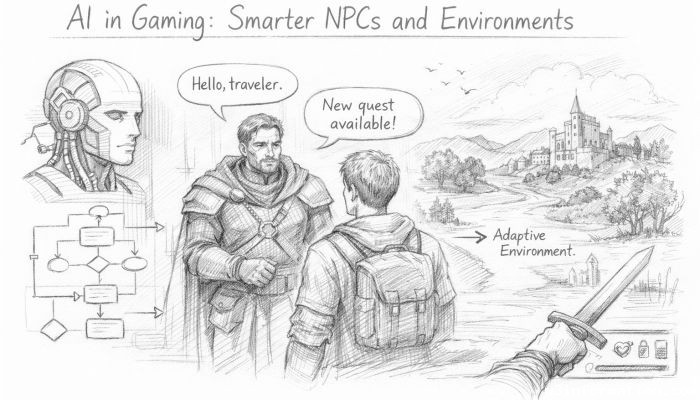 AI in Gaming: Smarter NPCs and Environments
 Understanding Bias in AI Algorithms
 Introduction to Chatbots and Conversational AI
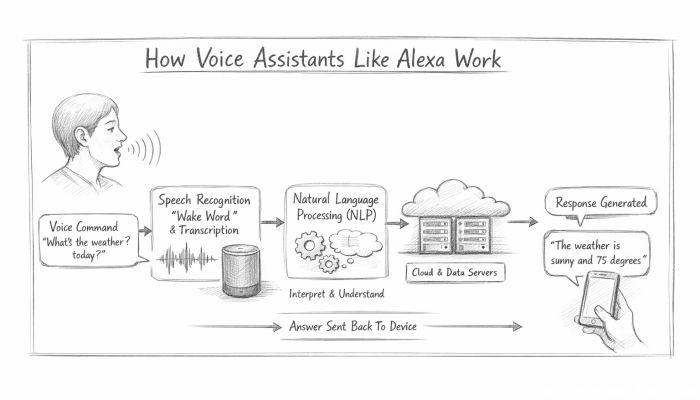 How Voice Assistants Like Alexa Work
 Federated Learning: AI Without Sharing Data