The Power of Automation in Modern Software Development
In today’s competitive landscape, efficiency, speed, and quality are not just buzzwords—they’re requirements. As the demand for reliable software grows, businesses are facing greater pressure to develop and deliver at scale. Automation is an essential part of this process, enabling software teams to write, test, deploy, and maintain software faster and more efficiently than ever before. In this comprehensive guide, we’ll explore how developers can leverage automation tools and best practices to gain a competitive edge in 2025 and beyond. From continuous integration and deployment (CI/CD) to automated testing and infrastructure as code (IaC), discover how automation is redefining software development for the better.
- Defining Automation in Software Development
- Importance of Automation in Modern Software Development
- Embracing Automation in the Software Industry
- Automation Use Cases in Software Development
- Types of Automation in Software Development
- Infrastructure as Code (IaC) Overview
- Selecting Automation Tools in 2025
- Integrating Automation Into DevOps Culture
- Top Automation Frameworks
- Automated Code Generation
- Automated Code Generation Use Cases
- Achieving Automation Culture
- Automated Coding Platforms
- Conclusion
- More Related Topics
Defining Automation in Software Development
In the context of software development, automation refers to the use of technology to perform repetitive tasks or processes without human intervention. This can include activities such as testing, deployment, code integration, and monitoring. Automation involves replacing manual steps in a development workflow with automated processes that run consistently and accurately. By automating manual tasks, development teams can focus on higher-value activities such as problem-solving and feature development. Automation is not about eliminating jobs but making humans work more efficiently.
Importance of Automation in Modern Software Development
Automation is becoming increasingly important in modern software development for several reasons:
Automation of repetitive tasks frees up valuable time for developers to focus on complex problem-solving and innovation. It accelerates the development process by allowing tasks to be completed in parallel and reduces time-to-market. Automated testing and deployment can help teams maintain higher quality and consistency in their software. Automation reduces the risk of human error and inconsistencies caused by manual processes. Automated testing, monitoring, and deployment ensure security standards are met consistently. Automation makes software easier to scale by allowing changes to be made quickly and reliably.

Embracing Automation in the Software Industry
The demand for software products and services is growing rapidly, and businesses are under pressure to deliver software at a faster pace without compromising on quality. Automation is a key enabler in meeting these expectations. Integrating automation into a software development organization can yield several benefits:
Teams can use automation tools to speed up testing, deployment, and development processes, and shorten the feedback loop. Automation helps increase the accuracy and reliability of processes by reducing the risk of human errors and inconsistencies. Automated testing and deployment ensure that the software is consistently meeting quality and security standards. Automation can streamline the development workflow, freeing up more time for teams to focus on problem-solving and feature development. Automation supports agile development by enabling teams to deliver updates and changes more frequently and reliably.
Automation Use Cases in Software Development
Automation has many use cases in software development, such as:
Automated testing is a crucial aspect of modern software development and involves running tests on the code to ensure its functionality, reliability, and quality. Automated testing tools can be integrated into CI/CD pipelines, running tests after each commit to catch bugs and issues early. Automated deployment is the process of using scripts or tools to deploy code changes to production environments automatically. Automated deployments reduce the risk of human error and inconsistencies, improve quality and consistency, and make deployments more repeatable. Infrastructure as code (IaC) is the practice of managing and provisioning computing infrastructure through code rather than manual processes. IaC allows teams to automate environment setup, configuration, and management tasks, making infrastructure more scalable and consistent. Code linting tools automatically analyze code to check for syntax errors, bugs, and coding standard violations. Linting tools can be integrated into the development workflow to catch issues early in the development cycle. Automated code review uses tools to analyze code and suggest improvements or catch issues that human reviewers may have missed. Automated code review tools can help catch coding standard violations, syntax errors, and security issues early in the development cycle.
Types of Automation in Software Development
Automation in software development can be categorized into four main types:
Continuous integration (CI) is an automation process that involves automatically building, testing, and merging code changes into a shared repository multiple times a day. CI aims to catch integration issues early and reduce the time it takes to deliver code changes. Continuous deployment (CD) is an extension of CI that automates the deployment of validated code changes to production environments. CD pipelines allow teams to deliver new features and updates to users more frequently and reliably. Infrastructure as code (IaC) is a type of automation that involves managing and provisioning infrastructure resources through code. IaC allows teams to automate environment setup, configuration, and management tasks. Build automation is the process of automating the build process for software development. Build automation tools can compile code, run tests, and generate artifacts automatically.
Infrastructure as Code (IaC) Overview
Infrastructure as Code (IaC) is an approach to infrastructure management that involves managing and provisioning infrastructure resources through code. IaC tools allow development teams to define infrastructure configurations in code, which can then be version-controlled, tested, and deployed automatically. Some popular IaC tools include Terraform, Ansible, and AWS CloudFormation. IaC has several benefits, including faster environment setup, consistent configuration across environments, and more scalable infrastructure management.
Selecting Automation Tools in 2025
Choosing the right automation tools is crucial to successfully implementing automation in a software development organization. Some popular automation tools in software development include Jenkins, GitHub Actions, GitLab CI/CD, CircleCI, and Travis CI for CI/CD pipelines. Selenium, Cypress, and JUnit are popular tools for automated testing. Terraform, Ansible, and Puppet are some of the most popular tools for Infrastructure as code. Selecting the right combination of tools depends on several factors, such as the specific needs of the project, the existing technology stack, and the expertise of the development team. It’s important to consider factors like ease of use, scalability, integration capabilities, community support, and costs when choosing automation tools.
Integrating Automation Into DevOps Culture
Automation is a fundamental part of DevOps culture, a set of principles and practices that promotes collaboration, continuous improvement, and iterative delivery. Integrating automation into a DevOps culture can help teams achieve several goals, such as faster software delivery, more reliable software quality, and improved developer productivity. Automation tools can be integrated into DevOps culture through several best practices, such as implementing CI/CD pipelines, automating testing and deployment, and using Infrastructure as code. Another important aspect of integrating automation into a DevOps culture is building a culture of collaboration and experimentation, where automation is seen as a tool to help teams work more effectively and efficiently.
Top Automation Frameworks
Automation frameworks provide a structured and standardized way of implementing automation in software development. Some popular automation frameworks in software development include:
Behavior-driven development (BDD) is an approach to software development that emphasizes collaboration between developers, testers, and business stakeholders. BDD focuses on defining software features in a clear, understandable language that can be easily tested and validated. Test-driven development (TDD) is a software development approach that emphasizes writing tests before writing code. TDD aims to ensure that code changes are tested thoroughly and meet the desired functionality. Selenium is an open-source automation framework that allows testers to write and execute automated tests for web applications. Selenium supports multiple programming languages and integrates with popular testing frameworks such as JUnit and TestNG. Puppet is an Infrastructure as code tool that automates the management and provisioning of infrastructure resources. Puppet uses a declarative language to define infrastructure configurations, which can be version-controlled, tested, and deployed automatically. Ansible is an open-source Infrastructure as code tool that automates the management and provisioning of infrastructure resources. Ansible uses a simple, human-readable language to define infrastructure configurations, which can be version-controlled, tested, and deployed automatically.
Automated Code Generation
Automated code generation refers to the process of generating source code automatically using specialized tools or frameworks. Automated code generation can help software teams in several ways, such as speeding up development, improving code quality, and reducing the risk of human error. Automated code generation tools work by using templates, models, or specifications to generate source code. Some popular automated code generation tools include:
Powershell is a scripting language that automates code generation and management tasks for Windows systems. Bootstrap is a front-end framework that automates the creation of HTML, CSS, and JavaScript code for web applications. Yeoman is a scaffolding tool for Node.js that automates the creation of JavaScript applications. Model-Driven Architecture (MDA) is a software development approach that uses models as the primary means of expressing software requirements, designs, and functionality. Apex is an automated code generation framework for Salesforce applications.
Automated Code Generation Use Cases
Automated code generation has several use cases in software development, such as:
Automating code generation for repetitive tasks and boilerplate code, such as CRUD operations and user interfaces. Generating code for microservices and APIs based on API specifications. Generating code for database access and management, such as object-relational mapping (ORM) code. Generating code for testing, such as unit tests, integration tests, and end-to-end tests. Generating code for DevOps workflows, such as deployment scripts and configuration management code.
Achieving Automation Culture
Automation culture refers to a software development environment where automation is a core part of the team’s processes and workflows. Achieving an automation culture in software development requires a mindset shift in how teams work. Automation culture promotes the following principles:
Automation is everyone’s responsibility, and team members should be encouraged to automate tasks. Automation should be iterative and continuous, with automation efforts continually improving and expanding over time. Automation should be designed with security, quality, and reliability in mind. Automation is a tool to help teams work more efficiently, not a replacement for human intelligence or problem-solving skills.
Automated Coding Platforms
Automated coding platforms are tools that automate software development tasks using code templates, pre-built components, and code generation technologies. Automated coding platforms can help software development teams in several ways, such as accelerating development, reducing errors, and improving code quality. Some popular automated coding platforms include:
GitHub Copilot is an AI-powered coding assistant that suggests code snippets and automates coding tasks. Visual Studio is an integrated development environment (IDE) that automates coding tasks such as debugging, testing, and version control. Salesforce is a cloud-based CRM platform that automates coding tasks such as testing, deployment, and monitoring. Ruby on Rails is a web application framework that automates coding tasks such as testing, deployment, and code generation.
Conclusion
Automation is an essential part of modern software development, enabling software teams to work more efficiently, deliver faster, and maintain higher quality. Automation tools and best practices have become increasingly sophisticated, allowing software teams to automate everything from code integration and testing to deployment and infrastructure management. By building an automation culture in your development organization and selecting the right combination of tools, your team can unlock the full potential of automation in software development and maintain a competitive edge for years to come.
 Big O Notation Explained for Beginners
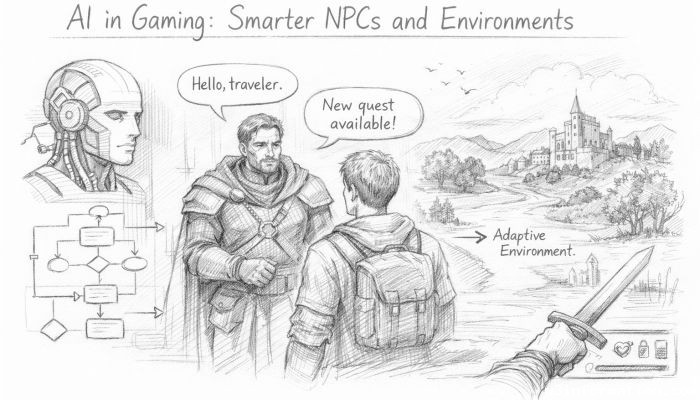 AI in Gaming: Smarter NPCs and Environments
 Understanding Bias in AI Algorithms
 Introduction to Chatbots and Conversational AI
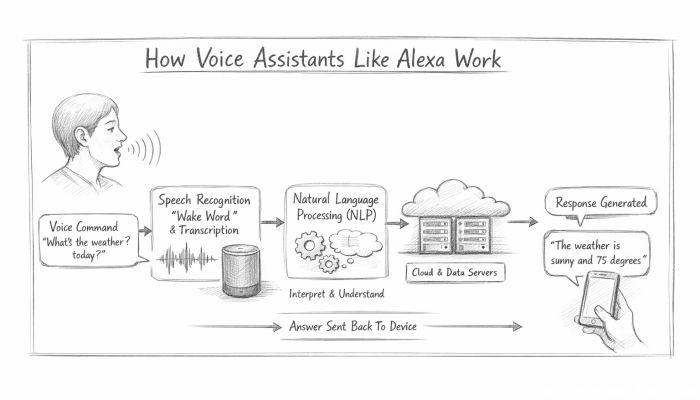 How Voice Assistants Like Alexa Work
 Federated Learning: AI Without Sharing Data