The Role of Data Structures in Efficient Algorithms
In the realm of computer science, the concepts of data structures and algorithms are two sides of the same coin. While algorithms are procedures for solving problems, data structures provide the means to organize and store data efficiently, which algorithms then manipulate. The effectiveness of an algorithm is often contingent on the data structure chosen to represent the problem space. By 2025, as software systems become increasingly complex and data-intensive, understanding this interdependence will be paramount for developers aiming to write optimized code that runs swiftly and scales effectively. This article delves into how data structures underpin efficient algorithms, offering insights, examples, and practical advice on applying these fundamental principles.
- Understanding Data Structures and Their Importance
- Arrays and Their Role in Algorithm Efficiency
- Linked Lists for Dynamic Data Management
- Stacks and Queues in Algorithm Design
- Hash Tables for Fast Data Retrieval
- Trees and Hierarchical Data Processing
- Graphs for Complex Relationship Mapping
- Heaps and Priority Queues for Optimization
- Choosing the Right Data Structure for an Algorithm
- Impact on Time and Space Complexity
- Real-World Applications of Data Structures in Algorithms
- Continuous Learning and Algorithmic Optimization
- Conclusion: The Symbiotic Relationship Between Data Structures and Efficient Algorithms
- More Related Topics
Understanding Data Structures and Their Importance
A data structure is a particular way of organizing data in a computer so that it can be used effectively. Different types of data structures are suited to different kinds of applications, and some are highly specialized to specific tasks. Data structures are critical because they provide a means to manage large amounts of data efficiently for uses such as large databases and internet indexing services. In 2025, a solid grasp of data structures will remain essential for developers to solve problems in a way that saves both time and space.

Arrays and Their Role in Algorithm Efficiency
An array is a data structure that stores elements in a linear order, and it is one of the simplest and most commonly used structures. Arrays allow quick access to their elements, making them very efficient for certain algorithms like sorting and searching. However, they can be inefficient if they need to grow dynamically or when performing operations that require elements to be shifted, such as insertions or deletions in the middle of the array. Understanding when and how to use arrays is crucial for writing efficient algorithms in 2025.
Linked Lists for Dynamic Data Management
Linked lists are a series of connected nodes that together represent a sequence. Each node contains data and a reference to the next node in the sequence. This structure allows for efficient insertions and deletions since elements do not need to be shifted as in arrays. However, accessing an element in a linked list is slower because it requires sequential access from the beginning of the list. Linked lists are particularly useful in 2025 for dynamic data sets where the size is unknown or changes frequently.
Stacks and Queues in Algorithm Design
Stacks and queues are abstract data types with a simple yet powerful structure. A stack is a collection of elements that follows the Last-In-First-Out (LIFO) principle, while a queue is based on First-In-First-Out (FIFO). They are widely used in algorithms for various applications, such as parsing expressions, managing tasks, and more. In 2025, developers will continue to use stacks and queues to manage data in algorithms that require specific access orders.
Hash Tables for Fast Data Retrieval
Hash tables, also known as hash maps, are data structures that store key-value pairs. They use a hash function to compute an index into an array of buckets or slots, from which the desired value can be found. Hash tables are incredibly efficient for lookup operations, making them essential for algorithms that need to retrieve data quickly. As we approach 2025, hash tables remain a go-to choice for developers in need of speed in data retrieval.
Trees and Hierarchical Data Processing
Trees are a hierarchical data structure with a parent-child relationship between the elements. Trees are widely used in algorithms for tasks that involve hierarchical data, such as sorting, searching, and maintaining structured data. Some common types of trees include binary trees, binary search trees, AVL trees, and B-trees. In 2025, trees will be indispensable for developers dealing with complex data structures that require efficient organization and retrieval.
Graphs for Complex Relationship Mapping
Graphs are a collection of nodes (vertices) and edges that connect pairs of nodes. They are used in algorithms to represent relationships between objects, such as social networks, geographic maps, or network routing. Understanding how to use graphs and related algorithms like depth-first search (DFS) and breadth-first search (BFS) is vital for developers in 2025 who need to solve complex relational problems.
Heaps and Priority Queues for Optimization
Heaps are a specialized tree-based data structure that satisfies the heap property. In a max heap, for instance, the value of each node is greater than or equal to the values of its children. Priority queues are abstract data types that operate similarly to a regular queue but with an added feature that each element has a priority associated with it. In 2025, heaps and priority queues will be crucial for developers looking to implement efficient algorithms for tasks such as scheduling and resource management.
Choosing the Right Data Structure for an Algorithm
The key to efficient algorithm design is selecting the appropriate data structure. Consider the operations the algorithm needs to perform and choose a data structure that can handle these operations in the most efficient manner. As we move into 2025, this decision-making process becomes even more critical as the scale and complexity of data continue to grow.
Impact on Time and Space Complexity
The choice of data structure has a direct impact on an algorithm’s time and space complexity. For example, using a hash table for lookups can significantly reduce the time complexity compared to a list or an array. In 2025, developers will need to be more aware than ever of these complexities to write algorithms that are not just correct but also efficient and scalable.
Real-World Applications of Data Structures in Algorithms
Data structures are not just academic concepts; they have practical applications that affect our daily lives. For example, the algorithms behind search engines, social media platforms, and even the operating systems on our computers rely heavily on the use of data structures. In 2025, the applications will be even more varied and complex, making a practical understanding of data structures all the more important.
Continuous Learning and Algorithmic Optimization
The field of computer science is always advancing, and by 2025, new data structures and algorithms will have emerged. Staying informed and continuously learning is essential for developers who want to keep their skills sharp and their algorithms optimized. Practicing and applying these concepts in real-world scenarios will be key to mastering efficient algorithm design.
Conclusion: The Symbiotic Relationship Between Data Structures and Efficient Algorithms
Data structures are foundational to the development of efficient algorithms. The right choice of data structure can lead to significant improvements in the performance of an algorithm, both in terms of speed and memory usage. As we look to the future, specifically towards 2025, the importance of understanding and applying the right data structures in algorithm design cannot be overstated. For students, developers, and seasoned software engineers alike, mastering data structures is a critical step in ensuring that the algorithms they write are not only correct but also performant and scalable.
 Big O Notation Explained for Beginners
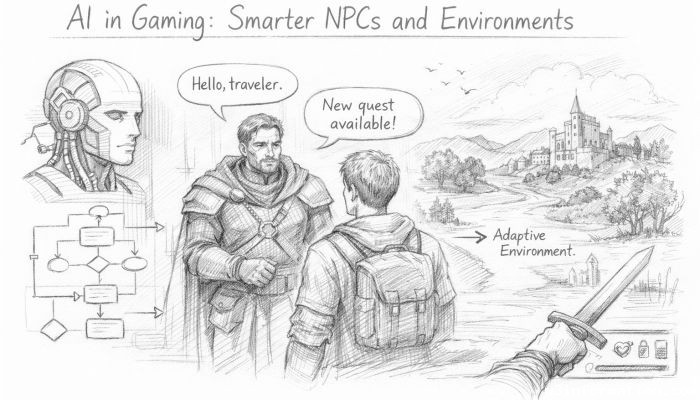 AI in Gaming: Smarter NPCs and Environments
 Understanding Bias in AI Algorithms
 Introduction to Chatbots and Conversational AI
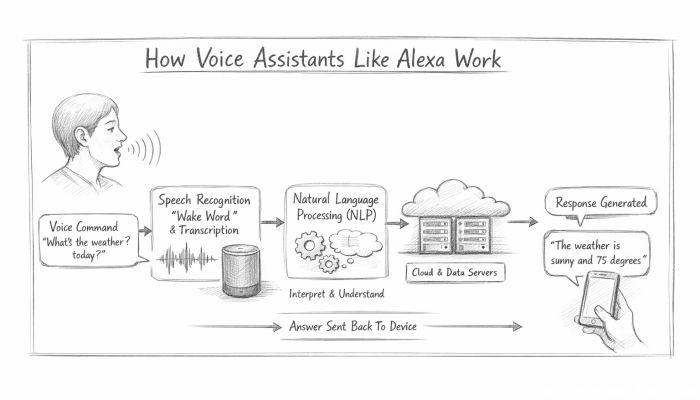 How Voice Assistants Like Alexa Work
 Federated Learning: AI Without Sharing Data