How to Implement Real-World Projects Using Machine Learning in 2025
Machine Learning Implementation Project for Developers and Beginners Guide 2025 Machine learning (ML) has become an essential part of problem-solving in various industries, for businesses, researchers, and developers. Beyond being a hype or a buzzword, ML can now be implemented in real-world scenarios such as predictive analytics, natural language processing, computer vision, and autonomous systems, in 2025. However, building real-world ML projects involves more than just understanding how to code. It requires a deep understanding of the project lifecycle, data management, algorithm selection, evaluation, deployment, and maintenance. Whether you want to build recommendation systems, financial models, healthcare applications, or other types of ML solutions, this guide will show you how to plan, build, and deploy real-world ML projects that are scalable, secure, and impactful. As a developer, this article will be your ultimate guide to everything you need to know about the practical implementation of ML for solving real-world problems in 2025, using industry-best practices, tools, and methodologies. Let’s get started on this exciting journey and see how ML can transform your projects and industries.
- Understanding the Machine Learning Landscape in 2025
- Defining Clear Objectives and Project Scope
- Collecting and Preparing High-Quality Data
- Choosing the Right Machine Learning Algorithms
- Building and Training ML Models
- Evaluating Model Performance
- Handling Bias, Fairness, and Ethical Concerns
- Implementing Scalable and Efficient Infrastructure
- Deploying ML Models in Production
- Continuous Monitoring and Maintenance
- Integrating Security and Privacy Measures
- Iteration, Feedback, and Continuous Learning
- Conclusion: Building Real-World ML Projects in 2025
- More Related Topics
Understanding the Machine Learning Landscape in 2025
Before starting any ML project, it’s important to understand the ML landscape. ML is now used in various industries such as healthcare, finance, retail, transportation, and more. Advancements in AI frameworks, cloud computing, and pre-trained models make it easier than ever to build and deploy scalable ML solutions. As a developer, you need to keep up with the latest trends in ML such as explainable AI, edge ML, federated learning, and more. By understanding the ML ecosystem, you can better select the right tools and technologies and anticipate the challenges that you might face when building real-world ML projects. This will help you build projects that are not only technologically advanced but also aligned with real-world needs.

Defining Clear Objectives and Project Scope
A successful ML project starts with clear objectives. Define the problem you want to solve, the expected outcome, and how you will measure success. Scope your project to avoid scope creep and manage resources efficiently. For example, if you’re building a predictive maintenance system, your objective could be to reduce equipment downtime by 20%. If you are building a recommendation engine, your objective could be to increase click-through rates. Clearly defining objectives and scope helps you stay focused and ensures your project delivers measurable and meaningful results. In 2025, aligning your ML objectives with your business or research goals is essential for successful real-world implementations.
Collecting and Preparing High-Quality Data
Data is the backbone of any ML project. In 2025, collecting and preparing high-quality data is crucial for building accurate ML models. Gather data from reliable sources and ensure it’s clean, structured, and unbiased. Preprocess the data by cleaning, normalizing, and handling missing values, using tools like Python Pandas, TensorFlow Data Validation, or cloud data pipelines. Consider using synthetic data generation techniques to augment your real-world datasets. Spend time preparing your data well to ensure your ML model can learn effectively and generalize well to real-world scenarios.
Choosing the Right Machine Learning Algorithms
Selecting the right ML algorithm is key to your project’s success. Choose an algorithm based on the problem type: classification, regression, clustering, or reinforcement learning. Consider the trade-offs between model complexity, accuracy, interpretability, and computational requirements. In 2025, complex real-world applications might require hybrid models that combine deep learning with traditional ML algorithms. Tools like scikit-learn, PyTorch, and TensorFlow offer flexible frameworks for experimenting with different algorithms. Evaluate the strengths, weaknesses, and suitability of each algorithm for your specific problem.
Building and Training ML Models
Model building involves designing the model architecture, selecting features, and training the model on your prepared dataset. Use hyperparameter tuning, cross-validation, and iterative experimentation to optimize model performance. In 2025, techniques like transfer learning and pre-trained models make it faster and easier to build and train models while reducing resource requirements. Consider model efficiency, accuracy, and scalability during training to ensure the model performs well in real-world scenarios.
Evaluating Model Performance
Evaluation is crucial to ensure your ML model meets your project objectives. Use appropriate evaluation metrics such as accuracy, precision, recall, F1 score, ROC-AUC, or mean squared error depending on your problem. Besides traditional evaluation metrics, use tools and techniques for explainability and model interpretability such as SHAP or LIME. In 2025, rigorous evaluation is important for ensuring models are robust, fair, and reliable, especially when deployed in sensitive or high-stakes applications.
Handling Bias, Fairness, and Ethical Concerns
ML projects have real-world impacts on people, so ethics and fairness are critical considerations. Training data bias can result in unfair or discriminatory models. Use techniques like bias detection and correction, fairness constraints, and diverse data collection to address bias and fairness. In 2025, regulations and ethical guidelines for responsible AI use will become more stringent, and organizations will be expected to demonstrate fair and unbiased AI practices. Address these issues during the development process to build ML solutions that are trustworthy and socially acceptable.
Implementing Scalable and Efficient Infrastructure
Real-world ML projects often need scalable and efficient computing infrastructure. Cloud platforms like AWS SageMaker, Google Cloud AI, and Azure Machine Learning offer elastic infrastructure for efficient training and deployment. Containerization using Docker and orchestration with Kubernetes ensure portability and reproducibility of your ML workflows. In 2025, having scalable infrastructure will be essential for handling large datasets, complex models, and high user traffic without performance issues.
Deploying ML Models in Production
Deployment is the stage where your ML solution delivers real-world value. Production-ready models need to be able to handle live data, integrate with other systems, and meet low-latency requirements. Deploy your model as APIs, microservices, or using serverless computing to simplify integration and scaling. Monitoring tools and dashboards help track model performance, detect data drift, and trigger retraining when needed. In 2025, a robust deployment strategy will ensure that your ML solutions are reliable, responsive, and scalable, delivering ongoing value to end-users and stakeholders.
Continuous Monitoring and Maintenance
ML models degrade over time due to changing data patterns, a phenomenon known as model drift. Continuous monitoring helps you detect performance drops and take action such as retraining the model. Collect predictions and feedback from live data, and use them to improve and maintain your model. Automated retraining pipelines, along with real-time data analytics, will be crucial for ensuring models remain accurate and adaptive to changing real-world conditions in 2025.
Integrating Security and Privacy Measures
Security and privacy are essential considerations in real-world ML projects, especially when dealing with sensitive data. Ensure compliance with data protection regulations like GDPR, CCPA, and HIPAA. Use techniques like differential privacy, encryption, and secure multi-party computation to secure data during training and deployment. In 2025, privacy and security considerations will become even more critical as ML projects touch more sensitive data, and organizations will need to build security and privacy into their ML workflows to build trust and avoid legal and financial repercussions.
Iteration, Feedback, and Continuous Learning
Machine learning is an iterative process. Continuous iteration, feedback, and performance analysis help you refine your models, workflows, and processes. Stay updated with new tools, frameworks, and algorithms to improve your ML projects. Continuous learning, both for the model and the development team, is key for long-term success in 2025, and will be necessary for keeping your ML projects competitive and impactful in rapidly changing industries.
Conclusion: Building Real-World ML Projects in 2025
Implementing real-world machine learning projects requires a holistic approach that combines technical skills with strategic planning and practical deployment knowledge. From understanding the ML landscape and defining your objectives to data preparation, algorithm selection, model training and deployment, and monitoring, each step in the process is important. By emphasizing ethical and fairness considerations, scalability, security, privacy, and continuous learning, developers and businesses can build ML solutions that are not just accurate but also reliable, efficient, and transformative. Machine learning is no longer just an academic exercise; it’s a practical tool to solve real-world problems and drive real-world impacts across industries. By following this guide on ML implementation for developers and beginners in 2025, you can ensure your ML projects are delivering measurable real-world value.
 Big O Notation Explained for Beginners
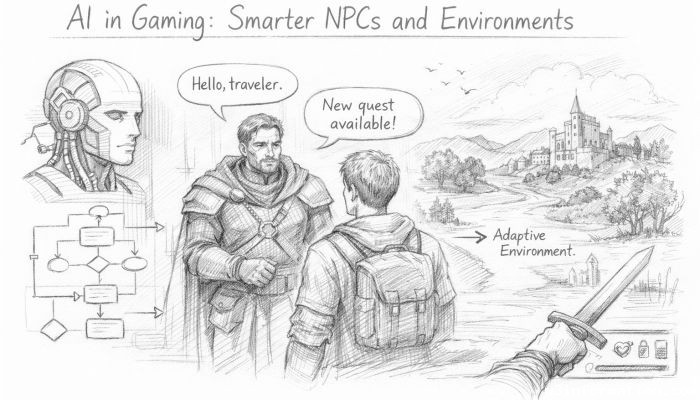 AI in Gaming: Smarter NPCs and Environments
 Understanding Bias in AI Algorithms
 Introduction to Chatbots and Conversational AI
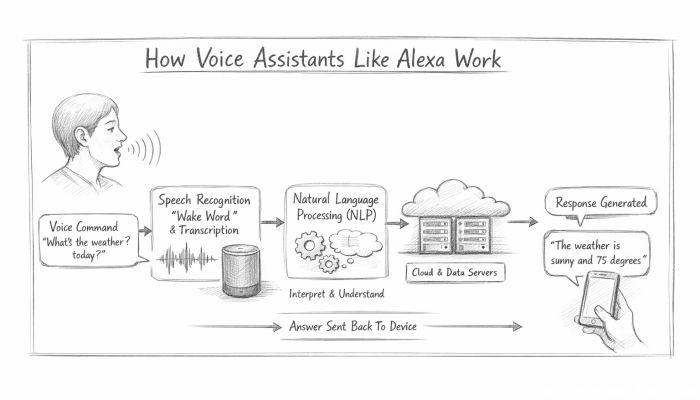 How Voice Assistants Like Alexa Work
 Federated Learning: AI Without Sharing Data