Ethics and Impacts of Computer Graphics in 2025
Computer graphics have come a long way since their inception, evolving from simple pixelated images to highly realistic 3D renderings and immersive virtual reality experiences. In 2025, the field of computer graphics is expected to be deeply integrated into daily life, revolutionizing the way people interact with digital content, from gaming and entertainment to design and education. The rapid advancements in artificial intelligence, real-time rendering, and interactive visualizations present both exciting opportunities and ethical considerations. This article explores the state of computer graphics in 2025, delving into the ethical questions and societal impacts of this transformative technology.
- The Evolution of Computer Graphics and Its Influence in 2025
- Photorealism and the Challenge of Authenticity
- Deepfakes and Misinformation: A Darker Side of Graphics
- Impact on Social Perception and Mental Health
- Accessibility and Inclusion Through Computer Graphics
- Environmental Footprint of High-Performance Graphics
- Intellectual Property and Ownership Challenges
- The Role of Computer Graphics in Education and Training
- Privacy Concerns in Virtual and Augmented Realities
- Cultural Representation and Ethical Storytelling
- Gamification and Behavioral Influence
- Future Directions: Responsible Innovation in Computer Graphics
- Conclusion
- More Related Topics
The Evolution of Computer Graphics and Its Influence in 2025
Computer graphics have undergone significant evolution over the decades, from basic bitmap displays to sophisticated computer-generated imagery (CGI) and virtual worlds. By 2025, this evolution is driven by AI algorithms, GPU advancements, and user demand for seamless real-time simulations. The cultural influence of computer graphics is widespread, evident in blockbuster films, video game graphics, product design visualization, user interface aesthetics, and even in how people communicate on social media platforms.
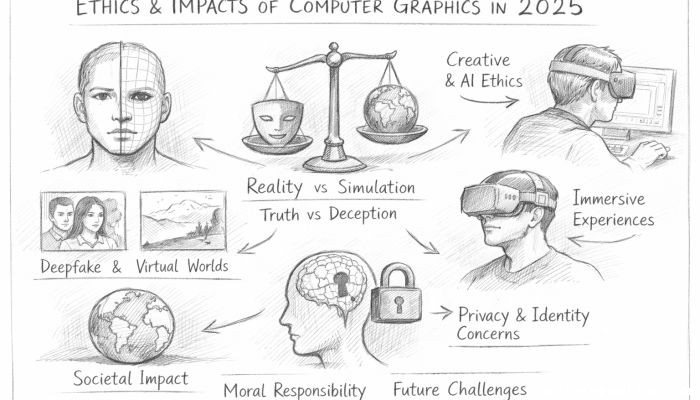
Photorealism and the Challenge of Authenticity
Achieving photorealism in computer graphics is a notable achievement, where digital images are indistinguishable from photographs. By 2025, CGI films, virtual influencers, and computer-generated actors are common in the media landscape. The ethical challenge with photorealism lies in the potential for deception, manipulation of images, and the erosion of trust in media when viewers are unable to distinguish between real and artificial visuals.
Deepfakes and Misinformation: A Darker Side of Graphics
Deepfake technology is a direct offshoot of computer graphics, allowing for the creation of highly realistic synthetic media. While it holds promise for film, video production, and virtual meetings, it also has a darker side. By 2025, deepfakes have been weaponized for disinformation campaigns, social media harassment, identity theft, and fraud. The ethical implications of deepfakes involve privacy concerns, consent issues, and the spread of false information.
Impact on Social Perception and Mental Health
The abundance of idealized and often digitally enhanced images in the media affects societal perceptions of beauty, success, and normalcy. The use of computer graphics to create unattainably perfect images and lifestyles can impact mental health, particularly among young people, contributing to issues like anxiety, depression, and identity crises. Ethical considerations revolve around the responsibilities of content creators and the need for digital literacy education.
Accessibility and Inclusion Through Computer Graphics
Computer graphics can enhance accessibility for people with disabilities, such as visual aids, real-time captioning, or interactive overlays. By 2025, these technologies are further empowered with customization and AI-driven adaptation. Ethical practices in graphics design call for inclusivity, ensuring that digital content is accessible and usable by all individuals, regardless of ability.
Environmental Footprint of High-Performance Graphics
Rendering complex computer graphics and supporting advanced AR/VR experiences require substantial computational power and energy. As the use of computer graphics grows in streaming services, gaming, and content creation, so do concerns about its environmental impact. Ethical considerations in 2025 involve developing energy-efficient algorithms, using renewable energy sources, and promoting industry-wide environmental standards.
Intellectual Property and Ownership Challenges
The creation, manipulation, and distribution of computer graphics raise questions about ownership and intellectual property. By 2025, issues around who owns a digitally rendered object, a virtual world, or an AI-generated image are increasingly common in legal and creative circles. Ethical practices in the use of computer graphics require clear attribution, respect for creator rights, and protection against misuse and exploitation.
The Role of Computer Graphics in Education and Training
In education, computer graphics are essential tools for creating immersive simulations, virtual laboratories, and interactive visualizations. By 2025, they are fundamental to remote learning and professional training, especially in fields that require complex visualizations such as medicine, engineering, and art. The ethical considerations here include ensuring equitable access, avoiding information overload, and balancing virtual learning with real-world experiences.
Privacy Concerns in Virtual and Augmented Realities
Virtual and augmented reality applications blend digital and physical worlds using advanced computer graphics. These applications often collect personal data, including biometric and behavioral information. In 2025, ethical considerations around these technologies involve ensuring informed consent, secure data handling, and user control over personal information.
Cultural Representation and Ethical Storytelling
Computer graphics shape cultural narratives through movies, video games, and virtual worlds. Accurate and respectful representation of different cultures is an ethical consideration, with efforts being made in 2025 to avoid stereotypes, appropriation, or erasure through inclusive development processes and diverse creative teams.
Gamification and Behavioral Influence
Computer graphics are used to design gamified experiences, which are integrated into various applications, including fitness apps, educational tools, and marketing campaigns. The ethical question here is the potential for manipulation, particularly with vulnerable audiences such as children. By 2025, there is a call for transparency, user control, and ethical guidelines to ensure that gamification techniques do not become coercive.
Future Directions: Responsible Innovation in Computer Graphics
The future of computer graphics in 2025 is not just about technological advancement but also about responsible innovation. Collaboration between developers, ethicists, policymakers, and users can ensure that computer graphics technology is used for the greater good. Ethical considerations must include transparency, inclusivity, sustainability, and respect for individual rights.
Conclusion
In 2025, computer graphics continue to be a powerful tool with the potential to enrich and enhance human experiences. However, this power comes with a responsibility to address the ethical considerations and societal impacts they bring. As computer graphics become more realistic and immersive, they raise questions about authenticity, mental health, privacy, inclusion, environmental sustainability, and cultural representation. Navigating this landscape requires a commitment to ethical practices, inclusive design, and responsible innovation. By doing so, computer graphics can continue to be a force for positive change, shaping a future where technology and ethics coexist harmoniously.
 How to Make the Most of Your Holiday Break
 The Best Winter Destinations for a Cozy Getaway
 How to Organize Your Holiday Travel Plans with Ease
 The Ultimate Guide to Cooking for a Crowd
 How to Make Healthy Comfort Food Without the Guilt
 5 Delicious Vegan Breakfast Ideas You Can Make in Minutes