10 Cutting-Edge Tech Innovations to Look Out for in 2025
In recent years, the pace of technological innovation has accelerated dramatically, setting the stage for a new wave of breakthroughs that will redefine industries and shape the future. As the digital transformation of various sectors continues to gather momentum, emerging technologies are set to drive exponential growth, unlock unprecedented opportunities, and solve some of the world’s most pressing challenges. From the advent of quantum computing to advancements in biotechnology, space exploration, and sustainable energy, the future is poised for a technological revolution like no other. In this article, we delve into ten of the most anticipated future tech trends that will shape the world in 2025, exploring their potential to create a brighter, more sustainable future.
- Quantum Computing Breakthroughs
- General Artificial Intelligence (AI) Emergence
- 6G Connectivity and Hyperconnectivity
- Biotechnology and Gene Editing Innovations
- Augmented Reality (AR) in Everyday Life
- Sustainable Technologies and Green Energy
- Autonomous Vehicles and Next-Generation Mobility
- Brain-Computer Interfaces (BCIs) and Neurotechnology
- Space Exploration and Off-World Technologies
- Cybersecurity and Privacy in the Digital Age
- Conclusion
- More Related Topics
Quantum Computing Breakthroughs
Quantum computing has the potential to solve complex problems that are infeasible for classical computers, offering breakthroughs in cryptography, drug discovery, and materials science. By leveraging quantum bits, or qubits, these powerful machines will perform computations at unparalleled speeds and scale. As quantum computing becomes more accessible, industries will benefit from enhanced problem-solving capabilities, leading to innovations in fields such as artificial intelligence, finance, and logistics. Quantum computing promises to unlock new frontiers of human knowledge and accelerate scientific progress.

General Artificial Intelligence (AI) Emergence
The development of general artificial intelligence, capable of understanding and learning across a wide range of tasks, is on the horizon. Unlike narrow AI systems designed for specific applications, general AI will possess the ability to reason, adapt, and generalize knowledge, revolutionizing industries and transforming society. With advancements in machine learning, neural networks, and natural language processing, AI systems in 2025 will exhibit greater intelligence, enabling breakthroughs in fields such as autonomous driving, healthcare, and personalized education. However, the emergence of general AI also raises important ethical considerations and challenges that must be addressed responsibly.
6G Connectivity and Hyperconnectivity
Building upon the widespread deployment of 5G networks, the future will witness the emergence of 6G connectivity, characterized by even faster speeds, ultra-low latency, and advanced spectrum management. This next-generation network will enable a hyperconnected world, where devices seamlessly communicate with one another, fostering advancements in areas like immersive virtual reality, smart cities, and the Internet of Things (IoT). With the widespread adoption of 6G, society will experience unprecedented levels of connectivity, leading to new business models, enhanced user experiences, and improved quality of life for individuals worldwide.
Biotechnology and Gene Editing Innovations
The fields of biotechnology and gene editing are poised for significant breakthroughs, with far-reaching implications for healthcare, agriculture, and environmental sustainability. Techniques such as CRISPR will enable precise manipulation of genetic material, paving the way for advanced therapies, disease prevention, and personalized medicine. By leveraging artificial intelligence and biotechnology, society will witness the development of targeted treatments, innovative vaccines, and sustainable approaches to food production and environmental conservation.
Augmented Reality (AR) in Everyday Life
Augmented reality technology will become more advanced, seamless, and integrated into our daily lives in 2025. AR systems, powered by machine learning and computer vision, will overlay digital content onto the physical world, enhancing user experiences in various domains. From education and entertainment to workplace productivity and navigation, AR will revolutionize the way we interact with information and the world around us. The widespread adoption of AR will create new possibilities for communication, commerce, and entertainment, blurring the lines between the physical and digital realms.
Sustainable Technologies and Green Energy
As the world grapples with the challenges of climate change and environmental degradation, sustainable technologies and green energy will become increasingly important in shaping a more sustainable future. Innovations in renewable energy generation, storage, and smart grid technologies will drive the transition to a low-carbon economy. Energy-efficient solutions, electric vehicles, and sustainable materials will become more prevalent, reducing our carbon footprint and promoting eco-friendly practices. Sustainable technologies will play a crucial role in building a more resilient and environmentally conscious society.
Autonomous Vehicles and Next-Generation Mobility
The transportation sector will witness significant advancements with the widespread adoption of autonomous vehicles and next-generation mobility solutions. Level 4 and Level 5 autonomous vehicles, characterized by their ability to navigate complex environments with minimal human intervention, will become more common in urban areas. Innovations in sensor technology, artificial intelligence, and vehicle-to-everything (V2X) communication will enhance safety, efficiency, and accessibility in transportation. Autonomous drones, delivery robots, and intelligent traffic management systems will also contribute to revolutionizing logistics and reducing congestion on the roads.
Brain-Computer Interfaces (BCIs) and Neurotechnology
The convergence of neuroscience and technology will lead to the development of brain-computer interfaces and advanced neurotechnology, opening up new possibilities for human-computer interaction and cognitive enhancement. BCIs will enable direct communication between the human brain and external devices, empowering individuals with disabilities and providing novel experiences in entertainment and education. Neurotechnology will also play a critical role in mental health, neurological disorder therapies, and personalized learning, unlocking the full potential of the human mind.
Space Exploration and Off-World Technologies
Space exploration and the development of off-world technologies will experience a new era of growth and innovation. Ambitious missions to the Moon, Mars, and beyond will drive advancements in propulsion systems, sustainable life support, and autonomous robotics. The commercialization of space travel and satellite constellations will expand, creating economic opportunities in low Earth orbit and beyond. Space technologies will enable a deeper understanding of the universe while also supporting global communication, earth observation, and resource management.
Cybersecurity and Privacy in the Digital Age
In an increasingly interconnected world, cybersecurity and privacy will remain top priorities as emerging technologies present both opportunities and risks. In 2025, the battle between cyber attackers and defenders will intensify, driving innovations in AI-driven threat detection, quantum-resistant encryption, and adaptive network security. Privacy-enhancing technologies, decentralized systems, and secure data sharing frameworks will empower users to control their digital identities and data. Industries and governments will adopt a zero-trust security model, safeguarding critical infrastructure and user data from advanced cyber threats.
Conclusion
The future is brimming with exciting possibilities as emerging technologies continue to push the boundaries of what is possible. The ten future tech trends highlighted in this article provide a glimpse into the transformative power of innovation and its potential to create a better world. From quantum computing and artificial intelligence to augmented reality, sustainable technologies, and space exploration, the future will bring a host of advancements that will redefine industries, empower individuals, and solve global challenges. As we look forward to 2025 and beyond, it is imperative that we embrace these technological innovations responsibly, with a focus on ethical considerations, inclusivity, and the greater good. By staying informed, adaptable, and open to collaboration, we can shape a future where technology not only accelerates progress but also fosters a more sustainable, equitable, and human-centered world.
 Big O Notation Explained for Beginners
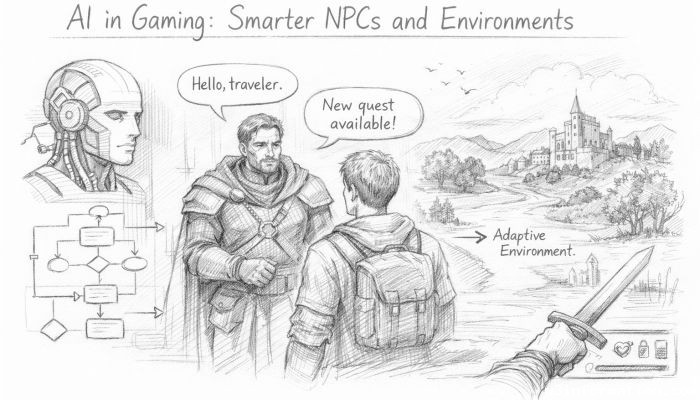 AI in Gaming: Smarter NPCs and Environments
 Understanding Bias in AI Algorithms
 Introduction to Chatbots and Conversational AI
 How Voice Assistants Like Alexa Work
 Federated Learning: AI Without Sharing Data