The Future of Cryptocurrency and Blockchain Technology
Cryptocurrency and blockchain technology have surged from niche concepts to revolutionary forces reshaping the global financial and technological landscape. What began with Bitcoin’s mysterious inception in 2009 has since expanded into a multifaceted ecosystem influencing finance, governance, supply chains, and even art. As the technologies evolve, questions about their long-term impact, adoption hurdles, and potential transformations have grown increasingly urgent. This article explores the future of cryptocurrency and blockchain technology, examining their emerging trends, challenges, and prospects. We will dive deep into how these innovations could reshape economies, disrupt traditional institutions, and empower individuals worldwide, while also considering regulatory, technical, and societal implications. Whether you are an enthusiast, investor, policymaker, or casual observer, understanding this rapidly developing space is crucial to grasp the shape of tomorrow’s digital world.
- Evolution from Bitcoin to a Diverse Ecosystem
- Smart Contracts and Decentralized Applications
- Decentralized Finance (DeFi) Reshaping the Financial Industry
- Scalability Solutions: Layer 2 and Sharding
- Interoperability Between Blockchain Networks
- Central Bank Digital Currencies (CBDCs)
- Blockchain’s Role in Supply Chain Transparency
- NFTs and the Future of Digital Ownership
- Challenges: Security, Regulation, and Environmental Concerns
- Decentralized Governance and DAOs
- Integration with Emerging Technologies: AI, IoT, and More
- The Path to Mass Adoption: Education and Usability
- Conclusion
- More Related Topics
Evolution from Bitcoin to a Diverse Ecosystem
Bitcoin’s launch laid the groundwork for decentralized digital money, but the blockchain ecosystem has since diversified dramatically. Today, thousands of cryptocurrencies exist, each serving different purposes—from Ethereum enabling smart contracts to newer tokens focusing on privacy or scalability. This evolution signifies a maturation from experimentational cryptocurrency to a broad toolkit for decentralized applications (dApps). Various consensus mechanisms such as Proof of Stake (PoS), Delegated Proof of Stake (DPoS), and others now complement the energy-intensive Proof of Work (PoW), improving efficiency without sacrificing security. This expanding ecosystem highlights blockchain's adaptability and potential far beyond its original financial use case.

Smart Contracts and Decentralized Applications
Smart contracts are self-executing agreements with the contract terms directly written into code. Ethereum pioneered them, enabling decentralized applications (dApps) that operate without intermediaries. This innovation opens possibilities in sectors like finance (DeFi), gaming, identity management, and supply chains. Smart contracts increase transparency and reduce costs by automating agreements. Future developments aim to enhance usability, expand cross-chain interoperability, and embed artificial intelligence to make contracts more adaptable and "intelligent," further catalyzing blockchain's integration into everyday digital life.
Decentralized Finance (DeFi) Reshaping the Financial Industry
DeFi platforms use blockchain to recreate traditional financial instruments like lending, borrowing, trading, and insurance but without banks or brokers. By democratizing access to financial services, DeFi empowers unbanked populations and challenges the dominance of centralized financial institutions. Innovations such as decentralized exchanges (DEXs) and yield farming have attracted billions in capital. However, scalability issues, security risks, and regulatory uncertainty remain significant challenges. The future of DeFi depends on resolving these and fostering collaboration between blockchain developers and regulators.
Scalability Solutions: Layer 2 and Sharding
One of the biggest technical hurdles blockchain faces is scalability—processing larger volumes of transactions quickly and cheaply. Layer 2 solutions like rollups and sidechains are being developed to handle transactions off the main chain, alleviating congestion and lowering fees. Additionally, sharding partitions blockchain networks into smaller, manageable pieces that process transactions in parallel. Ethereum 2.0’s upcoming beacon chain and sharding integration exemplify efforts to enhance scalability without compromising security. These advancements will be vital for supporting mass adoption and high-demand applications.
Interoperability Between Blockchain Networks
The future blockchain economy will comprise numerous chains optimized for different tasks, necessitating seamless interoperability. Interoperability protocols and bridges enable data and token transfers across disparate blockchains, preventing ecosystem fragmentation. Projects like Polkadot, Cosmos, and Chainlink focus on cross-chain communication, facilitating a more connected and versatile framework. Enhanced interoperability promotes collaboration, broadens functionality, and fosters innovation by allowing developers and users to leverage strengths of various blockchains simultaneously.
Central Bank Digital Currencies (CBDCs)
Governments worldwide are exploring Central Bank Digital Currencies (CBDCs)—digital forms of national currencies issued and regulated by central banks. CBDCs promise enhanced payment efficiency, financial inclusion, and improved monetary policy tools. Unlike cryptocurrencies, they operate within regulated frameworks and retain sovereign trust. China’s digital yuan pilot and several other initiatives indicate serious commitment. CBDCs could bridge gaps between traditional finance and decentralized blockchain-based finance but also raise important questions around privacy, surveillance, and financial sovereignty.
Blockchain’s Role in Supply Chain Transparency
Beyond finance, blockchain’s inherent qualities of immutability and transparency make it ideal for supply chain management. It enables tracking products from origin to consumer, combating fraud, enhancing traceability, and ensuring ethical sourcing. Companies like IBM and Maersk have implemented blockchain-based supply chain solutions, improving efficiency and trust. As consumers demand more transparency about product provenance, blockchain adoption in supply chains is poised to expand significantly, promoting sustainability and corporate responsibility.
NFTs and the Future of Digital Ownership
Non-fungible tokens (NFTs) have revolutionized digital ownership by providing verifiable proof of authenticity and scarcity for digital assets like art, music, and collectibles. While early NFT markets exploded in 2021, the technology’s potential extends far beyond speculation. NFTs can enable new business models for creators, decentralized identity verifications, and new types of virtual economies within the metaverse. As the tools become more accessible and integrated with other blockchain advancements, NFTs could fundamentally transform how digital content and intellectual property are managed and monetized.
Challenges: Security, Regulation, and Environmental Concerns
Despite its promise, blockchain faces notable challenges that will shape its trajectory. Security vulnerabilities in smart contracts and wallets have led to significant losses, highlighting the need for better auditing and standards. Regulatory uncertainty persists globally, as governments seek to balance innovation with consumer protection and financial stability. Environmental concerns, especially regarding energy usage of PoW blockchains, have spurred interest in greener protocols. Addressing these issues transparently is critical to achieving broader trust and sustainable growth in the blockchain space.
Decentralized Governance and DAOs
Decentralized Autonomous Organizations (DAOs) represent a novel governance model where rules are encoded in smart contracts, and decisions are made collectively by token holders. DAOs enable transparent, democratic control of projects and funds, challenging traditional corporate hierarchies and centralization. They are already facilitating community-driven development in DeFi, NFT projects, and social causes. The future will likely see more sophisticated DAO frameworks with improved scalability, voting mechanisms, and legal recognition, driving new forms of organization and collaboration on a global scale.
Integration with Emerging Technologies: AI, IoT, and More
Blockchain will increasingly integrate with other transformative technologies like artificial intelligence (AI), the Internet of Things (IoT), and 5G networks. For example, blockchain can provide secure, decentralized data management for IoT devices, ensuring data integrity and privacy. AI can analyze blockchain data for smarter contract execution or fraud detection, while fast 5G connectivity improves real-time blockchain transactions. This convergence creates opportunities for unprecedented innovation across industries, new business models, and enhanced user experiences.
The Path to Mass Adoption: Education and Usability
For blockchain and cryptocurrency to realize their full potential, mass adoption hinges on making the technology user-friendly and understandable. Current barriers include complex user interfaces, lack of awareness, and misconceptions about volatility and security. Education initiatives, simpler wallets, regulated custodial services, and consumer protections will be vital. Additionally, collaboration between developers, regulators, and mainstream financial institutions can foster trust and drive broader adoption, enabling blockchain to extend beyond early adopters into the global mainstream.
Conclusion
The future of cryptocurrency and blockchain technology is rich with promise and challenges alike. From transforming finance and governance to revolutionizing supply chains and digital ownership, the potential applications are vast and profound. Achieving this future requires overcoming technical hurdles like scalability and interoperability, navigating complex regulatory landscapes, and addressing environmental and security concerns. Simultaneously, innovations like smart contracts, DeFi, NFTs, and DAOs continue to expand the paradigm of decentralized trust and empowerment.
As blockchain integrates with complementary technologies such as AI and IoT, its influence will likely become even more pervasive, touching everyday life in ways we are just beginning to imagine. However, mass adoption demands enhanced usability, transparent regulation, and ongoing education to build the necessary trust and understanding. Ultimately, cryptocurrency and blockchain may not just redefine transactions or data management but could reshape societal structures themselves—ushering in an era of decentralization, inclusivity, and innovation. The journey ahead promises to be transformative, and staying informed and engaged will be key to harnessing these groundbreaking technologies for a better tomorrow.
 Big O Notation Explained for Beginners
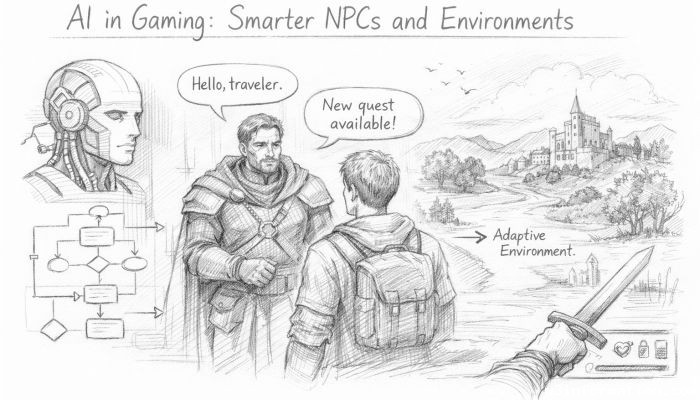 AI in Gaming: Smarter NPCs and Environments
 Understanding Bias in AI Algorithms
 Introduction to Chatbots and Conversational AI
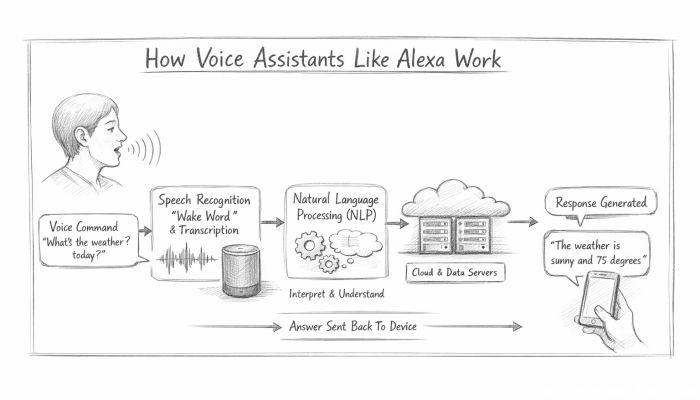 How Voice Assistants Like Alexa Work
 Federated Learning: AI Without Sharing Data