How to Write Your First Smart Contract Using Blockchain
In the rapidly evolving landscape of technology, blockchain stands out as a revolutionary innovation redefining how we think about digital transactions, security, and decentralized applications. At the heart of this transformation lies the concept of smart contracts—self-executing contracts with the terms of the agreement directly written into code. Whether you are an aspiring developer, an entrepreneur, or simply a tech enthusiast eager to understand the mechanics behind blockchain automation, learning how to write your first smart contract is an essential step. This article will guide you through the process of creating your own smart contract, from understanding the basics to deploying a functioning contract on a blockchain network. By the end, you will have the knowledge and confidence to begin your journey into blockchain development.
- Understanding Blockchain and Smart Contracts
- Key Components of a Smart Contract
- Choosing the Right Blockchain Platform
- Introduction to Solidity: The Language of Ethereum Smart Contracts
- Setting Up Your Development Environment
- Writing Your First Simple Smart Contract
- Understanding Gas and Transaction Costs
- Testing Your Smart Contract
- Deploying Your Smart Contract to a Test Network
- Interacting with Your Deployed Contract
- Exploring Use Cases and Next Steps in Smart Contract Development
- Security Best Practices for Smart Contracts
- The Future of Smart Contract Development
- Conclusion
- More Related Topics
Understanding Blockchain and Smart Contracts
Before diving into coding, it is crucial to understand what blockchain and smart contracts are. Blockchain is a decentralized, distributed ledger technology that records transactions securely across many computers. This decentralized nature ensures transparency and immutability. Smart contracts, introduced by Ethereum in 2015, are programs stored on the blockchain that run when predetermined conditions are met. These contracts autonomously execute transactions, reducing the need for intermediaries, thus optimizing efficiency and trustworthiness.
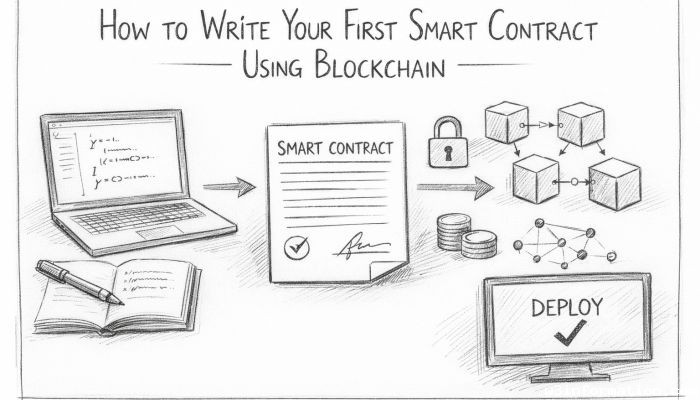
Key Components of a Smart Contract
A smart contract typically comprises a set of functions and state variables. Functions define the behaviors or actions the contract can perform—for example, transferring tokens or confirming a payment. State variables store specific data tied to the contract such as user balances or ownership records. Understanding these components is fundamental, as they govern what the contract can do and how it manages data.
Choosing the Right Blockchain Platform
Different blockchains support smart contracts, including Ethereum, Binance Smart Chain, Polkadot, and Solana. Ethereum is the most widely used and offers extensive documentation, making it ideal for beginners. However, it’s important to consider factors such as transaction fees (gas fees), platform popularity, and the programming language used before selecting your blockchain.
Introduction to Solidity: The Language of Ethereum Smart Contracts
For Ethereum, Solidity is the most prevalent programming language. It is a high-level, contract-oriented language similar in syntax to JavaScript and C++. Solidity enables developers to write robust contracts capable of handling various tasks. Familiarity with basic programming concepts like variables, functions, and control flow will greatly help as you approach writing your first smart contract.
Setting Up Your Development Environment
Before coding, you need a suitable development environment. Tools like Remix IDE, an online Solidity compiler and editor, are perfect for beginners because they require no installation. Alternatively, frameworks like Truffle or Hardhat provide more advanced features for local development and testing. Additionally, setting up MetaMask, a browser extension wallet, will allow you to interact with the Ethereum blockchain by managing your accounts and signing transactions.
Writing Your First Simple Smart Contract
Start with a simple contract that stores and retrieves a number. This classic example introduces you to the syntax and structure of Solidity contracts. You will learn how to declare variables, write getter and setter functions, and use modifiers like `public` and `private`. This contract demonstrates state management as data written to the blockchain persists between function calls.
Understanding Gas and Transaction Costs
Executing smart contracts involves computational work on the blockchain, which costs “gas” — a unit reflecting the amount of computation. Understanding gas helps you optimize your contract’s efficiency and manage transaction costs. Different operations consume varying amounts of gas, so writing clean, efficient code minimizes expenses, an essential skill for any contract developer.
Testing Your Smart Contract
Testing ensures your smart contract functions as intended before deploying it on a live network. Remix IDE offers built-in testing tools, where you can simulate transactions and check results. For more comprehensive testing, frameworks like Truffle allow you to write automated test scripts. Testing protects against bugs, unexpected behavior, and security vulnerabilities.
Deploying Your Smart Contract to a Test Network
Once confident in your contract, deploy it to a blockchain test network such as Ropsten or Rinkeby. These networks mimic Ethereum’s mainnet environment without the cost of real Ether, providing a safe sandbox for experimentation. Deployment involves compiling your contract, creating a deployment script or using Remix’s deploy feature, and broadcasting the transaction using your wallet.
Interacting with Your Deployed Contract
After deployment, you can interact with your contract by calling its functions through your wallet or a web interface connected to the blockchain. This step helps you confirm that the contract responds correctly to inputs and produces expected outputs. Tools like Web3.js or Ethers.js libraries simplify this interaction by enabling communication between your web apps and the blockchain.
Exploring Use Cases and Next Steps in Smart Contract Development
Once you understand the basics, dive deeper into creating smart contracts for various use cases like token creation (ERC-20 tokens), decentralized finance (DeFi) protocols, voting systems, or supply chain management. Expand your skills by learning Solidity’s advanced features, employing modular contract designs, and enhancing security practices. Engage with blockchain communities and contribute to open-source projects to grow your expertise.
Security Best Practices for Smart Contracts
Smart contracts are immutable and handle value directly, making security paramount. Vulnerabilities such as reentrancy attacks, integer overflows, and improper access control can lead to severe losses. Familiarize yourself with common security pitfalls, use established tools like Mythril, and follow industry-recognized guidelines such as those promoted by OpenZeppelin to make your contracts resilient.
The Future of Smart Contract Development
The blockchain space continues to evolve with innovations like Layer 2 solutions, cross-chain interoperability, and new programming paradigms that aim to improve scalability, user experience, and security. Keeping abreast of these developments will shape how you design and deploy smart contracts moving forward. The growing adoption of blockchain across industries promises an exciting future for smart contract developers.
Conclusion
Embarking on your journey to write your first smart contract is both challenging and rewarding. Starting from a foundational understanding of blockchain and smart contract principles, through selecting the right tools, coding, testing, and deploying your contract, this process demystifies an essential blockchain technology pillar. Smart contracts automate agreements with transparency and efficiency, unlocking innovative business models and applications. Mastery of this craft not only opens doors within the blockchain ecosystem but also contributes to the broader shift toward decentralized digital infrastructure. As you continue to explore and experiment, remember that learning, security, and community engagement remain vital companions on your path to becoming a proficient smart contract developer.
 Big O Notation Explained for Beginners
 AI in Gaming: Smarter NPCs and Environments
 Understanding Bias in AI Algorithms
 Introduction to Chatbots and Conversational AI
 How Voice Assistants Like Alexa Work
 Federated Learning: AI Without Sharing Data