How to Use Cloud Computing for Small Business Efficiency
In today's fast-paced and technology-driven world, small businesses face constant pressure to innovate and optimize their operations. Cloud computing has emerged as a vital tool, enabling businesses to access powerful resources, streamline processes, and compete more effectively without the heavy costs traditionally associated with advanced IT infrastructure. For small businesses, leveraging cloud computing means not only improving efficiency but also gaining flexibility, scalability, and security, which can transform how operations are managed and services are delivered. This article explores the comprehensive ways small businesses can harness cloud computing to boost efficiency, reduce overheads, and drive growth, laying out practical insights and strategies to help business owners make the most of this transformative technology.
- Understanding Cloud Computing: A Primer for Small Businesses
- Key Benefits of Cloud Computing for Small Businesses
- Choosing the Right Cloud Service Model: IaaS, PaaS, and SaaS
- Streamlining Operations with Cloud-Based Productivity Tools
- Enhancing Customer Relationship Management (CRM) Through the Cloud
- Cloud Storage and Data Backup: Safeguarding Business Information
- Facilitating Remote Work and Flexibility
- Reducing IT Maintenance and Support Costs 0
- Leveraging Cloud Security Features to Protect Your Business
- Integrating Cloud Computing with Existing Business Systems
- Using Cloud Analytics for Informed Decision-Making
- Planning for Scale: Preparing Your Small Business for Growth
- Conclusion
- More Related Topics
Understanding Cloud Computing: A Primer for Small Businesses
Cloud computing refers to the delivery of computing services—such as servers, storage, databases, networking, software, and analytics—over the internet (“the cloud”). Instead of owning and maintaining physical hardware or software, businesses can access these resources on demand from service providers. This on-demand model eliminates the need for significant upfront investment, allowing small businesses to pay only for the services they use. Understanding the basics of cloud computing is the first step to realizing how it can revolutionize business efficiency, offering greater flexibility, collaboration capabilities, and innovation pathways.
Key Benefits of Cloud Computing for Small Businesses
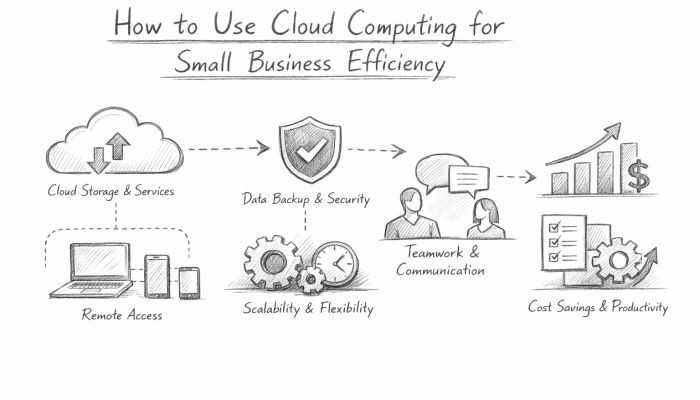
The primary advantages of cloud computing for small businesses include cost savings, scalability, accessibility, and enhanced collaboration. By outsourcing IT infrastructure to cloud providers, businesses avoid costly hardware and software purchases and reduce maintenance expenses. Cloud services scale easily, allowing businesses to adjust resources according to demand without interrupting operations. Moreover, cloud platforms enable employees to access files and applications from anywhere with an internet connection, facilitating remote work and real-time collaboration. These benefits collectively empower small businesses to operate more efficiently and adapt swiftly to changing market conditions.
Choosing the Right Cloud Service Model: IaaS, PaaS, and SaaS
Cloud services are generally categorized into Infrastructure as a Service (IaaS), Platform as a Service (PaaS), and Software as a Service (SaaS). IaaS offers virtualized computing resources like servers and storage, giving businesses control over their infrastructure without physical management. PaaS provides development tools and platforms to build, test, and deploy applications efficiently. SaaS delivers ready-to-use applications hosted in the cloud, such as email, customer relationship management (CRM), and accounting software. Small businesses should evaluate their specific needs and technical capabilities to choose the most appropriate service model or combination thereof for their operations.
Streamlining Operations with Cloud-Based Productivity Tools
Cloud computing supports a wide array of productivity tools that simplify everyday tasks and communication. Platforms like Google Workspace and Microsoft 365 offer cloud-based email, document creation, spreadsheets, presentations, and calendars that sync effortlessly across devices. These tools enable employees to collaborate in real-time, reduce version control issues, and increase overall productivity. For small businesses, adopting these cloud productivity suites can eliminate inefficiencies stemming from fragmented workflows and enhance team coordination.
Enhancing Customer Relationship Management (CRM) Through the Cloud
Managing customer relationships is critical for business growth, and cloud-based CRM systems bring efficiency and automation to this process. Platforms such as Salesforce, HubSpot, and Zoho CRM allow businesses to track sales leads, automate marketing campaigns, and provide better customer service—all accessible remotely. By centralizing customer data in the cloud, small businesses gain insights into customer behavior and preferences, enabling targeted marketing and personalized engagement to boost retention and sales.
Cloud Storage and Data Backup: Safeguarding Business Information
Data is a valuable asset for any business, and ensuring its security and availability is paramount. Cloud storage services like Dropbox, Google Drive, and Amazon S3 offer scalable and secure solutions for storing files and databases. These services provide automatic backup and disaster recovery options, minimizing the risk of data loss due to hardware failure, theft, or natural disasters. For small businesses with limited IT resources, cloud-based data storage ensures business continuity and peace of mind.
Facilitating Remote Work and Flexibility
One of the most transformative impacts of cloud computing is facilitating remote work. Cloud solutions enable employees to access files, apps, and communication platforms regardless of their location, fostering flexibility and work-life balance. During the COVID-19 pandemic, remote work became essential, and many small businesses realized the cloud's power to maintain productivity outside traditional office settings. Supporting remote work through cloud computing not only improves employee satisfaction but also expands hiring possibilities by tapping into a broader talent pool.
Reducing IT Maintenance and Support Costs 0
Maintaining physical IT infrastructure can be costly and time-consuming, especially for small businesses without dedicated IT departments. Cloud computing shifts this responsibility to service providers, who manage hardware updates, security patches, and system uptime. This managed environment reduces the burden on small business owners and employees, allowing them to focus on core business activities. Moreover, predictable subscription-based pricing helps manage budgets more effectively.
Leveraging Cloud Security Features to Protect Your Business
Security concerns remain a top consideration when adopting cloud computing. Reputable cloud providers implement robust security measures including encryption, multi-factor authentication, intrusion detection, and regular audits. For small businesses, these advanced security capabilities often exceed what they could achieve on their own. However, it's critical to understand shared responsibility models—while providers secure infrastructure, businesses must enforce strong access controls and maintain employee security awareness to prevent breaches.
Integrating Cloud Computing with Existing Business Systems
Small businesses often operate with a mix of legacy systems and modern applications. Successfully integrating cloud solutions with existing software and hardware is essential to ensure seamless workflows and avoid data silos. Many cloud services offer APIs and integration tools that connect with popular accounting software, e-commerce platforms, and marketing tools. Proper integration enhances data consistency, reduces manual entry, and optimizes overall system performance.
Using Cloud Analytics for Informed Decision-Making
Cloud computing powers advanced analytics platforms that process large volumes of data to reveal actionable insights. Small businesses can utilize tools like Google Analytics, Power BI, or Tableau embedded in cloud environments to analyze customer behavior, measure campaign effectiveness, and track financial performance. Making data-driven decisions backed by cloud analytics helps businesses optimize operations, refine strategies, and respond proactively to market trends.
Planning for Scale: Preparing Your Small Business for Growth
The scalability of cloud computing means small businesses can easily expand resources as they grow without significant infrastructure investment. Whether it's increasing storage, computational power, or user licenses, cloud platforms offer flexibility to accommodate fluctuating demands. This scalability supports business growth strategies such as launching new products, entering new markets, or scaling up marketing efforts without typical IT bottlenecks, positioning the business to seize opportunities swiftly.
Conclusion
Cloud computing presents an unparalleled opportunity for small businesses to increase efficiency, reduce costs, and enhance their competitive edge in an increasingly digital economy. By understanding cloud concepts, carefully selecting service models, and leveraging cloud-based tools for productivity, customer management, and data security, small businesses can transform their operations and unlock new growth avenues. As remote work and digital transformation continue to shape the business landscape, embracing cloud technology is no longer just an option but a strategic imperative. Ultimately, the cloud empowers small businesses not only to survive but thrive by fostering innovation, agility, and resilience in a rapidly evolving marketplace.
 Big O Notation Explained for Beginners
 AI in Gaming: Smarter NPCs and Environments
 Understanding Bias in AI Algorithms
 Introduction to Chatbots and Conversational AI
 How Voice Assistants Like Alexa Work
 Federated Learning: AI Without Sharing Data