How to Deploy Applications on Cloud Platforms
In today’s digitally driven world, the cloud has revolutionized the way businesses develop, deploy, and manage applications. The shift from traditional on-premise infrastructure to cloud platforms offers unprecedented scalability, flexibility, and cost efficiency. Deploying applications on cloud platforms is no longer a niche skill; it’s a critical competency for developers, IT teams, and businesses aiming to stay competitive. Whether you’re launching a simple web app or orchestrating a complex microservices architecture, understanding how to deploy applications effectively in the cloud is essential. This article will guide you through the crucial stages of cloud deployment, from choosing the right platform and preparing your application to managing it post-deployment, ensuring your journey is smooth and successful.
- Understanding Cloud Platforms and Their Types
- Choosing the Right Cloud Provider
- Preparing Your Application for the Cloud
- Containerization: The Modern Deployment Staple
- Continuous Integration and Continuous Deployment (CI/CD)
- Setting Up the Cloud Environmen
- Deploying to Virtual Machines and Managed Services
- Leveraging Serverless Architectures
- Managing Security in Cloud Deployments
- Monitoring, Logging, and Performance Optimization
- Handling Scaling and Load Balancing
- Cost Management and Optimization
- Troubleshooting Common Deployment Issues
- Embracing DevOps Culture in Cloud Deployments
- Conclusion
- More Related Topics
Understanding Cloud Platforms and Their Types
Before diving into deployment, it's important to differentiate between the various cloud platform types: Infrastructure as a Service (IaaS), Platform as a Service (PaaS), and Software as a Service (SaaS). IaaS providers like AWS EC2 or Google Compute Engine offer raw computing resources, allowing you to control the underlying infrastructure. PaaS services such as Heroku or Google App Engine abstract much of the infrastructure management, focusing on application development and deployment. SaaS, on the other hand, delivers fully packaged services to end-users. Identifying which cloud model suits your application needs deeply influences your deployment strategy.
Choosing the Right Cloud Provider
Selecting an appropriate cloud provider is foundational to your deployment’s success. Major providers like Amazon Web Services (AWS), Microsoft Azure, and Google Cloud Platform (GCP) dominate the market, each offering unique features, pricing models, and global infrastructure reach. Considering factors such as compliance requirements, regional availability, service ecosystem, and support will help you align your choice with your application’s needs. For example, AWS boasts the largest market share and extensive services, while Azure integrates seamlessly with Microsoft products—an advantage for enterprises entrenched in the Microsoft ecosystem.

Preparing Your Application for the Cloud
Cloud environments often differ fundamentally from local development setups. To ensure smooth deployment, your application must be “cloud-ready.” This process includes decoupling tightly integrated components, adopting stateless service architectures when possible, and externalizing configuration settings. Preparing for horizontal scaling involves designing applications that can handle multiple instances running in parallel. Employing environment variables for sensitive data and configuration ensures that your application behaves appropriately across different environments without code modifications.
Containerization: The Modern Deployment Staple
In the era of cloud-native development, containerization has become pivotal. Technologies like Docker enable you to package your application and its dependencies into a lightweight, portable container image. Containers ensure consistency across development, testing, and production environments, reducing the infamous "works on my machine" problem. Furthermore, containers are compatible with container orchestration platforms like Kubernetes, which facilitate automated deployment, scaling, and management of containerized applications on the cloud.
Continuous Integration and Continuous Deployment (CI/CD)
Automation plays a crucial role in cloud application deployment. CI/CD pipelines streamline the process from code commit to production release by automatically building, testing, and deploying your application. Tools such as Jenkins, GitHub Actions, GitLab CI, or CircleCI integrate well with cloud platforms and container registries. Implementing CI/CD reduces human error, accelerates release cycles, and supports agile development practices, empowering teams to deploy new features or fixes rapidly and reliably.
Setting Up the Cloud Environmen
Once prepared, you need to establish the cloud environment where your application will run. This entails provisioning necessary resources such as virtual machines, databases, storage buckets, or serverless functions, depending on your architecture. Infrastructure-as-Code (IaC) tools like Terraform or AWS CloudFormation enable you to define your infrastructure declaratively, making deployments reproducible and manageable. Proper environment setup ensures your application has access to the right resources and enables smoother scaling and maintenance down the line.
Deploying to Virtual Machines and Managed Services
For applications hosted on IaaS platforms, the deployment process generally involves uploading code or container images to virtual machines (VMs) and configuring the runtime environment. Managed services, available on many cloud platforms, abstract much of this complexity; examples include AWS Elastic Beanstalk or Azure App Service. These services handle much of the operational workload such as provisioning, load balancing, and patching, allowing developers to focus more on core application logic rather than infrastructure management.
Leveraging Serverless Architectures
Serverless computing offers a compelling choice for deploying lightweight applications or specific backend functions without managing servers. Platforms such as AWS Lambda, Azure Functions, or Google Cloud Functions automatically scale your code in response to demand, and you only pay for execution time. Serverless architectures can decrease operational overhead and increase agility but may require rethinking application design to fit event-driven, stateless execution models.
Managing Security in Cloud Deployments
Security is paramount when deploying any application to the cloud. Cloud platforms provide various native tools to help secure your applications, such as identity and access management (IAM), encryption services, and virtual private clouds (VPCs). Best practices involve enforcing the principle of least privilege for resource access, implementing secure secrets management, and conducting regular vulnerability assessments. Securing communication channels with SSL/TLS and setting up proper monitoring for anomalous activity further bolster your application’s defense.
Monitoring, Logging, and Performance Optimization
Once deployed, continuous visibility into your application’s performance and health is critical. Cloud platforms offer integrated monitoring and logging solutions like AWS CloudWatch, Azure Monitor, or Google Cloud Operations Suite. These tools provide metrics, logs, alerts, and dashboards that help diagnose issues and preempt outages. Performance optimization involves monitoring resource utilization, scaling up or down as needed, and applying updates or patches to maintain high availability and responsiveness.
Handling Scaling and Load Balancing
One of the cloud’s greatest advantages is the ability to scale your application dynamically. Exploiting auto-scaling features allows your deployment to accommodate fluctuations in traffic without manual intervention. Load balancers distribute incoming traffic across multiple instances to optimize resource use and enhance fault tolerance. Deciding the right scaling strategy depends on your application’s architecture—stateless applications are easier to scale, whereas stateful systems may require additional considerations such as session management or database clustering.
Cost Management and Optimization
Deploying applications on the cloud involves ongoing costs that must be managed carefully to avoid budget overruns. Understanding the pricing models for compute, storage, and networking helps in predicting expenses. Implementing resource tagging and budgeting tools enables better cost tracking and allocation. Optimization strategies include rightsizing instances, leveraging spot instances for non-critical workloads, and choosing serverless options when applicable. Regularly reviewing and adjusting your resource usage ensures cost-effectiveness without compromising performance.
Troubleshooting Common Deployment Issues
Even with careful planning, deployment issues can arise. Common challenges include misconfigured permissions, network connectivity problems, dependency conflicts, or environment mismatches. Effective troubleshooting requires systematically analyzing logs, verifying configuration settings, and testing components in isolation. Employing good documentation and leveraging community forums or support channels can accelerate resolution. Learning from each deployment and incident improves the robustness of your infrastructure and application over time.
Embracing DevOps Culture in Cloud Deployments
Finally, deploying applications to the cloud is closely intertwined with adopting a DevOps mindset. DevOps promotes collaboration between development and operations teams to automate repetitive tasks and enhance the quality and speed of software delivery. Embracing practices such as infrastructure as code, CI/CD, automated testing, and continuous monitoring helps organizations capitalize fully on cloud benefits. This cultural shift supports innovation, reduces time to market, and improves the overall user experience.
Conclusion
Deploying applications on cloud platforms is a multifaceted process that requires a strategic approach to technology, architecture, and culture. Choosing the right cloud provider and preparing your application for cloud environments form the foundation. Utilizing modern tools such as containerization, serverless functions, and CI/CD pipelines streamlines deployment and fosters agility. Managing security, monitoring performance, scaling effectively, and controlling costs are ongoing priorities that sustain cloud success. Most importantly, embedding a DevOps culture bridges the gap between development and operations, unlocking cloud potential to accelerate innovation. By mastering these principles, teams can confidently navigate their cloud deployment journeys—transforming ideas into scalable, resilient applications that meet the demands of today's dynamic digital landscape.
 Big O Notation Explained for Beginners
 AI in Gaming: Smarter NPCs and Environments
 Understanding Bias in AI Algorithms
 Introduction to Chatbots and Conversational AI
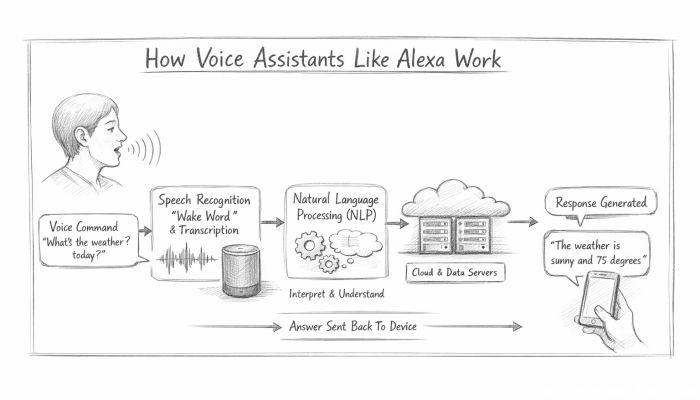 How Voice Assistants Like Alexa Work
 Federated Learning: AI Without Sharing Data