Applications of AI in Daily Life
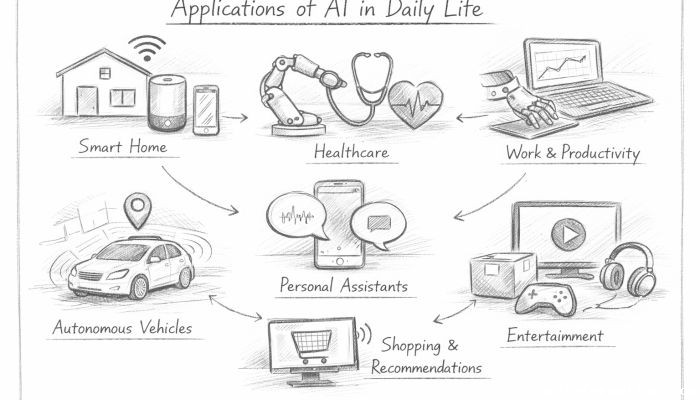
In today’s fast-paced, technology-driven world, Artificial Intelligence (AI) has moved beyond the realm of science fiction into tangible reality, transforming how we live, work, and interact. AI—a branch of computer science focused on creating machines capable of performing tasks that typically require human intelligence—is now seamlessly embedded in everyday experiences. From the moment we wake up to the time we go to bed, AI quietly influences countless aspects of our daily routines. This article explores the multifaceted applications of AI in daily life, highlighting not only its convenience but also its potential to enhance productivity, safety, and overall well-being. By examining various sectors including communication, transportation, healthcare, home automation, and entertainment, we delve into the pervasive impact AI exerts and the exciting future it promises.
- AI in Personal Assistants and Communication
- AI in Smart Home Automation
- AI in Healthcare: Diagnosis and Treatment
- AI in Transportation and Navigation
- AI in E-commerce and Personalized Shopping Experiences
- AI in Education and E-learning
- AI in Social Media and Content Curation
- AI in Financial Services and Fraud Detection
- AI in Entertainment and Media
- AI in Everyday Problem Solving and Productivity Tools
- AI in Environmental Monitoring and Sustainability
- Ethical Considerations and Challenges of AI in Daily Life
- Conclusion
- More Related Topics
AI in Personal Assistants and Communication
Artificial intelligence powers the ubiquitous personal assistants such as Siri, Google Assistant, Alexa, and Cortana, which have become integral to many households. These voice-activated helpers streamline communication by responding to queries, setting reminders, sending messages, and even controlling smart home devices. These AI assistants use natural language processing (NLP) to understand and respond in human-like dialogue, making interactions intuitive. This application not only saves time but also connects users to information instantly, supports multitasking, and enhances accessibility for individuals with disabilities or mobility issues.
AI in Smart Home Automation
Smart homes leverage AI to create environments that adapt to residents’ lifestyles, preferences, and needs. AI-driven devices like smart thermostats, lighting systems, and security cameras learn user behavior patterns to optimize comfort, energy efficiency, and safety. For example, Nest thermostats adjust temperature based on daily routines, while AI-enabled security systems can differentiate between residents and potential intruders by recognizing faces or unusual activity patterns. Such automation enhances energy management and personal security, often reducing utility costs and improving quality of life.
AI in Healthcare: Diagnosis and Treatment
AI has revolutionized healthcare by improving diagnostic accuracy and personalized treatment. Machine learning algorithms analyze vast datasets of medical images, genetic information, and patient histories to assist doctors in identifying diseases more quickly and accurately. AI systems have been used effectively in early cancer detection, predicting patient outcomes, and recommending treatment plans tailored to individual needs. Furthermore, AI-powered chatbots provide accessible initial consultations, symptom checking, and mental health support, extending healthcare reach and reducing system burdens.
AI in Transportation and Navigation
The advent of AI has reshaped transportation with intelligent navigation systems, autonomous vehicles, and traffic management solutions. GPS apps like Google Maps and Waze use AI to analyze real-time traffic data, suggesting optimal routes and predicting traffic jams. Autonomous cars, though still emerging, promise safer roads by reducing human error and enhancing situational awareness through sensors and AI-driven decision-making. AI also aids public transit through demand prediction and efficient scheduling, improving urban mobility and reducing congestion.
AI in E-commerce and Personalized Shopping Experiences
Online shopping platforms employ AI to create highly personalized and convenient experiences for consumers. Recommendation algorithms analyze browsing behaviors, purchase history, and preferences to suggest items uniquely suited to each customer. AI chatbots assist with queries and streamline customer service, while visual search tools enable users to find products through images rather than text input. Additionally, AI optimizes inventory management and pricing strategies for retailers, ensuring timely availability and competitive offers.
AI in Education and E-learning
Educational systems increasingly integrate AI to tailor learning experiences and improve student engagement. Adaptive learning platforms assess individual strengths and weaknesses, customizing content and pacing accordingly. AI-powered tutoring systems offer targeted assistance, helping learners grasp difficult concepts outside the traditional classroom environment. Language learning apps utilize AI speech recognition and correction to enhance pronunciation skills. These applications democratize education, offering personalized support that addresses diverse learning styles.
AI in Social Media and Content Curation
Social media platforms harness AI to curate content feeds, detect harmful or inappropriate material, and personalize advertising. Algorithms analyze user interactions to identify interests and suggest relevant posts, videos, or articles, keeping users engaged longer. AI also plays a critical role in moderating content, using image recognition and natural language processing to flag misinformation, hate speech, or violent content. While these tools improve user experience and platform safety, concerns about filter bubbles and privacy persist, underscoring the double-edged nature of AI’s social media role.
AI in Financial Services and Fraud Detection
Financial institutions utilize AI for risk assessment, fraud detection, and customer service. Machine learning models analyze transaction patterns to identify anomalous activities indicative of fraud or cybercrime, enabling rapid intervention. AI-driven chatbots assist clients with queries, account management, and financial advice. Additionally, robo-advisors employ AI to manage investment portfolios based on individual goals and market trends, making financial services more accessible and cost-effective for a broader population.
AI in Entertainment and Media
AI significantly impacts entertainment through personalized content recommendations on streaming platforms like Netflix, Spotify, and YouTube. By analyzing user preferences and behavior, AI curates playlists, movies, and shows that align with individual tastes. Moreover, AI is used in content creation—from generating music and artwork to enhancing video game realism through intelligent non-player characters (NPCs). This fusion of creativity and technology expands artistic possibilities and transforms consumer interaction with media.
AI in Everyday Problem Solving and Productivity Tools
Beyond specific domains, AI tools enhance productivity and problem solving in everyday tasks. Applications like Grammarly improve writing by providing grammar and style suggestions. AI-driven scheduling tools optimize calendar management, while smart email assistants automatically prioritize messages and suggest responses. These intelligent utilities save time, reduce errors, and allow users to focus on higher-level cognitive work, amplifying efficiency in both personal and professional spheres.
AI in Environmental Monitoring and Sustainability
Artificial intelligence aids environmental efforts by monitoring climate patterns, detecting pollution, and optimizing resource use. AI-powered sensors collect environmental data, which algorithms analyze to predict natural disasters or assess air and water quality. In agriculture, AI guides precision farming techniques, optimizing irrigation and fertilizer application to minimize waste. These applications of AI play a vital role in addressing global sustainability challenges by supporting informed decision-making and resource conservation.
Ethical Considerations and Challenges of AI in Daily Life
While AI offers numerous benefits, its integration into daily life raises important ethical questions and challenges. Issues of privacy, data security, algorithmic bias, and transparency require careful regulation and oversight. Furthermore, over-reliance on AI could diminish human skills or lead to job displacement in certain sectors. Addressing these concerns involves striking a balance between innovation and responsibility, ensuring AI serves humanity’s best interests while safeguarding individual rights and social well-being.
Conclusion
Artificial intelligence’s infiltration into daily life is both profound and multifaceted, enhancing convenience, efficiency, and personalization across diverse domains. From revolutionizing communication and healthcare to transforming entertainment and sustainability efforts, AI’s applications are expansive and continuously evolving. However, as this powerful technology becomes increasingly integral, it mandates conscientious use, ethical attention, and adaptive governance. Recognizing both AI’s transformative potential and inherent challenges allows society to harness its benefits while minimizing risks. Ultimately, AI in daily life represents not just a technological advance, but a pivotal shift towards augmented human living and problem-solving—a future shaped by synergy between human ingenuity and intelligent machines.
 How to Make the Most of Your Holiday Break
 The Best Winter Destinations for a Cozy Getaway
 How to Organize Your Holiday Travel Plans with Ease
 The Ultimate Guide to Cooking for a Crowd
 How to Make Healthy Comfort Food Without the Guilt
 5 Delicious Vegan Breakfast Ideas You Can Make in Minutes