The Impact of AI on the Job Market
In recent years, artificial intelligence (AI) has surged from the realm of science fiction into a dynamic force reshaping the global job market. As AI technologies advance at an unprecedented pace, they are transforming industries, redefining job roles, and altering the skills required for the workforce of tomorrow. This rapid evolution raises critical questions and invites nuanced discussions: How will AI affect employment rates? Will automation replace human workers or augment their capabilities? What new opportunities might emerge in this AI-driven era? To understand these complex dynamics, it is essential to explore the multifaceted impact of AI on different sectors, the shifting demand for skills, and the broader socio-economic consequences. This article delves into these themes, offering a comprehensive examination of how AI is reshaping the employment landscape today and into the future.
- The Genesis of AI in the Workplace
- Automation and Job Displacement
- AI as a Job Creator
- The Changing Skill Landscape
- Sector-Specific AI Impacts
- Geographic Disparities in AI Adoption
- Ethical Concerns and Workforce Inclusion
- The Gig Economy and AI
- Human-AI Collaboration Models
- The Role of Policy in Shaping AI’s Employment Outcomes
- Long-term Socioeconomic Implications
- Preparing for an AI-Integrated Job Market
- Conclusion
- More Related Topics
The Genesis of AI in the Workplace
Artificial intelligence began as a tool for automating repetitive tasks, but its applications have significantly broadened. Early AI implementations focused on manufacturing lines and data processing, automating routine jobs that required minimal human judgment. Over time, advances in machine learning, natural language processing, and robotics have propelled AI into areas traditionally dominated by human expertise, such as customer service, financial analysis, and even creative industries. This progression marks a foundational shift, where AI is no longer a mere assistant but increasingly a collaborator and, in some cases, a replacement for human labor.
Automation and Job Displacement
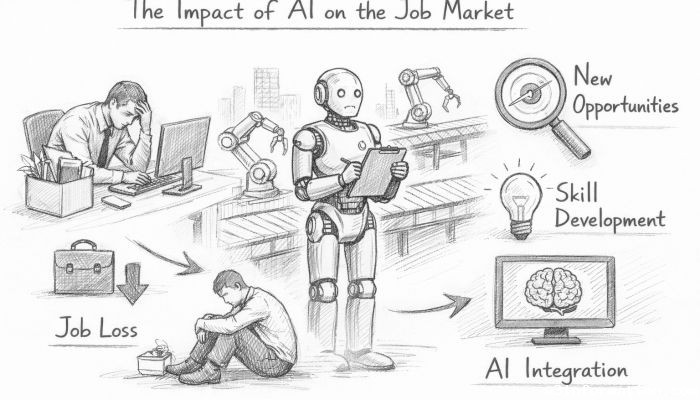
One of the most immediate concerns regarding AI’s impact is job displacement. Automation threatens roles characterized by repetitive and predictable tasks—assembly line work, data entry, and basic administrative functions have been most vulnerable. Studies show that sectors such as manufacturing, retail, and transportation are at higher risk of workforce reductions due to robotic automation and autonomous technologies. Yet, this displacement isn't uniform; AI’s disruptive capacity varies by geography, economic development, and skill availability, underscoring the uneven impact across different job markets.
AI as a Job Creator
Contrary to fears about widespread job loss, AI also acts as a catalyst for job creation. New industries, such as AI development, data science, and machine maintenance, require specialized skill sets that were previously nonexistent. Moreover, AI enables new business models and services that generate employment opportunities—think of AI-driven healthcare diagnostics opening roles for medical data analysts or AI-enhanced customer engagement spawning social media management positions. The evolving job market demands agility and continual learning, rewarding workers who can pivot towards these emerging fields.
The Changing Skill Landscape
As AI takes over routine tasks, it simultaneously elevates the importance of human-centric skills. Emotional intelligence, critical thinking, creativity, and complex problem-solving gain prominence in roles that machines cannot easily replicate. Furthermore, digital literacy becomes a baseline requirement, with proficiency in AI tools and data interpretation critical across sectors. Educational institutions and corporate training programs are tasked with reshaping curricula to prepare the workforce for this shift—highlighting the growing emphasis on lifelong learning and adaptability.
Sector-Specific AI Impacts
AI’s influence is not monolithic; its effects vary considerably across industries. In healthcare, AI assists in diagnostics, streamlining patient data management, and personalized treatment plans, augmenting practitioners' roles rather than replacing them. The financial sector benefits from AI in fraud detection, risk management, and algorithmic trading, elevating the need for tech-savvy analysts. The transportation industry faces profound changes with self-driving vehicles threatening traditional driving jobs while generating new opportunities in AI system oversight. This sector-based differentiation illustrates how AI alters the function and job composition rather than erasing work altogether.
Geographic Disparities in AI Adoption
The rate and impact of AI adoption in the job market also depend heavily on regional and national contexts. Developed economies with robust technological infrastructures and investment capacity are positioned to integrate AI more rapidly, often leading to higher productivity and labor market shifts. In contrast, developing countries face challenges due to limited infrastructure and workforce skill gaps, risking heightened economic disparities. This digital divide raises significant policy concerns about equitable distribution of AI’s benefits and reinforces the need for international cooperation and domestic investment in education and technology access.
Ethical Concerns and Workforce Inclusion
AI’s growing role in employment raises pressing ethical questions, especially around bias, surveillance, and worker autonomy. Algorithmic decision-making in hiring or performance evaluation can perpetuate existing inequalities if not carefully audited. Additionally, automation may marginalize vulnerable worker groups lacking access to reskilling opportunities. Addressing these concerns involves transparent AI governance, responsible deployment practices, and inclusive workforce development strategies to ensure that AI-driven economic progress benefits all demographics fairly.
The Gig Economy and AI
AI technologies significantly influence the gig economy, altering how freelance and contract work is conducted. Platforms powered by AI optimize job matching, pricing, and task allocation, increasing efficiency but also amplifying worker precarity due to algorithmic control. While AI enables flexible working arrangements and expands opportunities, it also necessitates new regulatory frameworks to protect gig workers’ rights in an increasingly automated labor environment.
Human-AI Collaboration Models
A compelling narrative emerging in the AI-job market discourse focuses on collaboration rather than replacement. Human-AI hybrids leverage the strengths of each: humans provide contextual understanding and empathy, while AI contributes speed and accuracy. Examples include AI-assisted legal research allowing lawyers to focus on strategy or AI-enhanced design tools helping artists experiment more freely. Fostering such symbiotic relationships requires reimagining work processes and investing in training that integrates AI fluency into daily job functions.
The Role of Policy in Shaping AI’s Employment Outcomes
Governments and policymakers play a pivotal role in shaping how AI impacts employment. Proactive policies can mitigate risks by supporting workforce transition programs, incentivizing ethical AI adoption, and ensuring social safety nets for displaced workers. Policies encouraging private-public partnerships in tech education and infrastructure development are critical for building resilient labor markets. Thoughtful regulation balances innovation facilitation with protections, enabling societies to harness AI’s economic potential while safeguarding human dignity and livelihood.
Long-term Socioeconomic Implications
Beyond immediate job market transformations, AI’s integration portends broad socioeconomic shifts. Increased productivity driven by AI could lead to higher standards of living but may also exacerbate wealth inequality if gains concentrate among capital owners rather than workers. Universal basic income (UBI) and alternative redistribution mechanisms are increasingly discussed as potential responses to AI-induced labor displacement. The evolving social contract between employers, workers, and governments will be central to navigating this new era responsibly.
Preparing for an AI-Integrated Job Market
Preparation for an AI-driven future involves multi-layered strategies encompassing education reform, corporate responsibility, and individual adaptability. Reskilling and upskilling initiatives must go beyond technical subjects to cultivate creativity and interpersonal skills vital in hybrid work environments. Organizations should foster cultures of continuous learning and innovation, while individuals embrace lifelong growth mindsets. Policymakers can facilitate frameworks encouraging equitable access to these resources, ensuring that technological progress translates into broad-based prosperity.
Conclusion
The impact of artificial intelligence on the job market is profound, multifaceted, and ongoing. While AI presents undeniable challenges—job displacement, increased inequality, and ethical dilemmas—it also offers immense opportunities for job creation, enhanced productivity, and new forms of human-machine collaboration. Navigating this landscape demands thoughtful stakeholder engagement, from policymakers orchestrating inclusive labor policies to educators redesigning curricula for future skills. Ultimately, the successful integration of AI into the workforce hinges on balancing innovation with social responsibility and embracing change with resilience and foresight. The future of work will not merely be defined by the presence of AI but by how society adapts, evolves, and harnesses this transformative technology for collective benefit.
 How to Make the Most of Your Holiday Break
 The Best Winter Destinations for a Cozy Getaway
 How to Organize Your Holiday Travel Plans with Ease
 The Ultimate Guide to Cooking for a Crowd
 How to Make Healthy Comfort Food Without the Guilt
 5 Delicious Vegan Breakfast Ideas You Can Make in Minutes