Social Engineering: Tricks Hackers Use
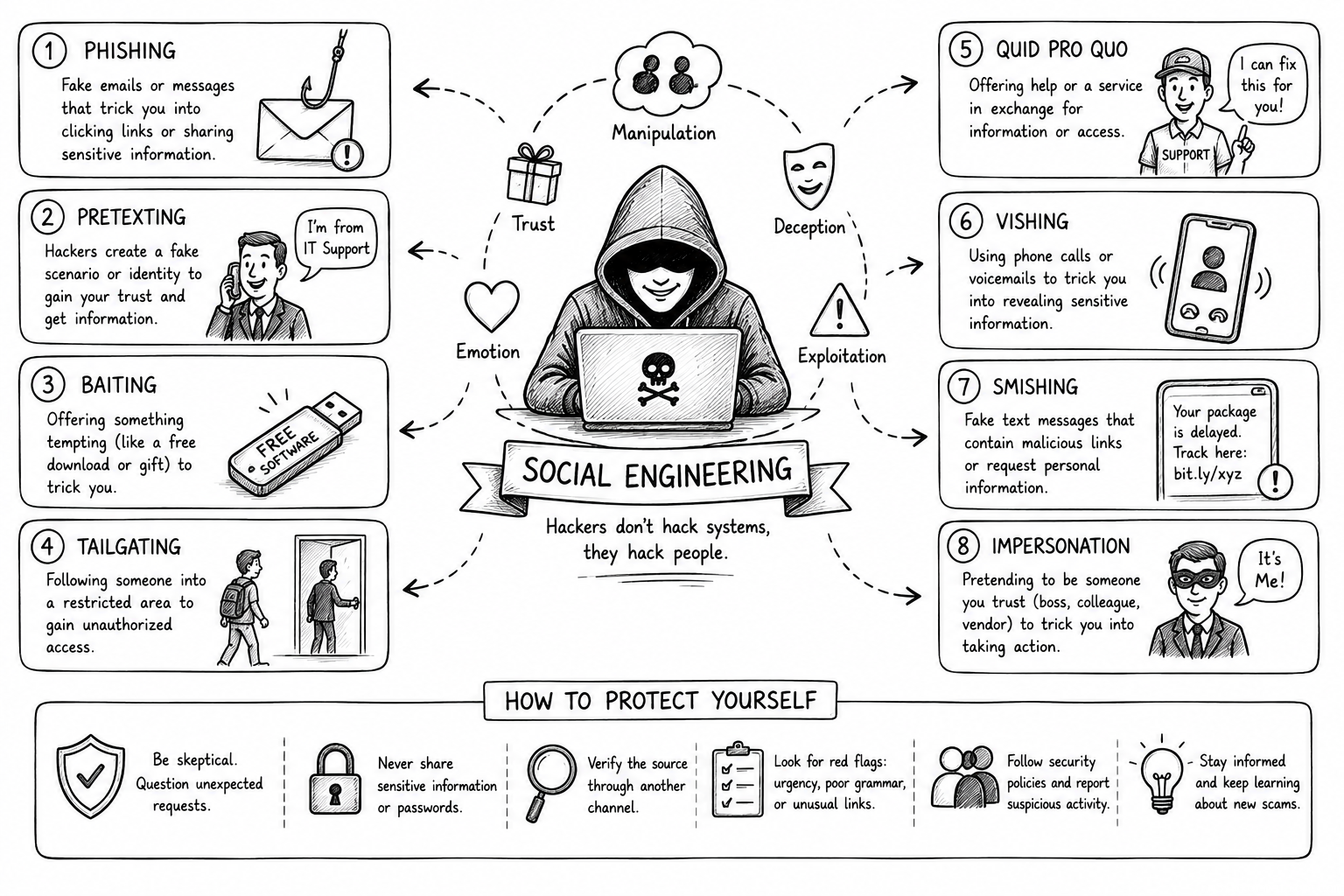
In today’s interconnected digital landscape, the battleground for security extends beyond complex software vulnerabilities and firewalls. One of the most insidious and effective methods hackers use to infiltrate systems is social engineering—a psychological manipulation technique designed to exploit human trust and behavior. Unlike traditional hacking, which targets machines, social engineering targets people, preying on natural tendencies such as curiosity, empathy, fear, and authority. Understanding these deceptive strategies is essential in the ongoing fight to protect personal, corporate, and governmental data. This article delves into the diverse tactics employed in social engineering, how hackers trick victims, and ways to defend against these psychological breaches.
- What is Social Engineering?
- The Psychology Behind Social Engineering
- Phishing: The Classic Social Engineering Attack
- Spear Phishing: Targeted and Personal
- Pretexting: Creating a False Identity
- Baiting: Playing on Curiosity
- Quizzes and Surveys: Harvesting Data Under the Guise of Fun
- Tailgating: Physical Social Engineering
- Impersonation Calls: Voice-based Deception
- Scareware: Seizing Control Through Fear
- Dumpster Diving: Extracting Secrets from Trash
- Defending Against Social Engineering
- The Role of Organizational Culture in Social Engineering Defense
- Future Trends in Social Engineering
- Conclusion
- More Related Topics
What is Social Engineering?
Social engineering is a manipulation technique that exploits human psychology rather than technical hacking methods to gain access to sensitive information or systems. Instead of targeting software vulnerabilities, social engineers craft deceptive interactions to trick individuals into divulging confidential data or performing risky actions. This form of attack hinges on establishing trust or creating urgency, making even the most vigilant individuals vulnerable. Understanding the mechanics behind these tactics reveals why even the best cybersecurity infrastructure can be compromised if human factors are ignored.
The Psychology Behind Social Engineering
At the heart of social engineering lies a deep understanding of human behavior. Hackers exploit cognitive biases and emotional triggers such as fear, greed, urgency, and curiosity. For example, creating a sense of urgency pressures victims to bypass rational checks, while appealing to authority persuades them to comply without question. Social engineers exploit the natural human desire to be helpful or avoid conflict, making it easier to manipulate victims into actions that undermine security protocols.
Phishing: The Classic Social Engineering Attack
Phishing remains one of the most widespread and effective social engineering techniques. It involves sending deceptive emails or messages disguised as legitimate communication from trusted sources, such as banks, colleagues, or popular websites. These messages often contain malicious links or attachments that install malware or direct victims to fake websites to harvest credentials. The success of phishing lies in its ability to appear credible and leverage fear—such as threats of account suspension or fraudulent activity—to motivate immediate, unthinking responses.
Spear Phishing: Targeted and Personal
Spear phishing is a more sophisticated version of phishing, targeting specific individuals or organizations with personalized messages. Unlike broad phishing campaigns that cast a wide net, spear phishing uses research and intelligence gathering to craft believable scenarios that resonate with the victim’s role or interests. For instance, an attacker might impersonate a company executive emailing payroll with urgent instructions. This targeted approach significantly increases the odds of success, as the victim is less likely to suspect deception from a familiar or authoritative source.
Pretexting: Creating a False Identity
Pretexting involves fabricating a fictitious scenario or identity to gain the victim’s trust and extract sensitive information. Attackers often pose as colleagues, IT support staff, or law enforcement officials to legitimize their requests. This method relies heavily on the ability to convincingly embody the role and maintain the deception through careful attention to detail. Pretexting is effective because it exploits people’s willingness to cooperate with what appears to be a legitimate inquiry or request.
Baiting: Playing on Curiosity
Baiting exploits human curiosity by offering something enticing to lure victims into a trap. Common examples include leaving infected USB drives in public spaces—hoping someone will pick them up and plug them into their computer, thus unknowingly installing malware. Online, baiting might appear as clickable ads or downloads promising free software, movies, or music. The key to baiting’s success is crafting offers that seem too good to resist, prompting people to circumvent their usual caution.
Quizzes and Surveys: Harvesting Data Under the Guise of Fun
Social engineers often disguise their attacks as lighthearted quizzes or surveys that solicit personal information under the pretense of entertainment or research. Users willingly provide data such as birthdays, pet names, or hometowns without realizing these details can be used to answer security questions or create access credentials. This strategy meticulously gathers small data points that can be combined for more extensive identity theft or account compromises.
Tailgating: Physical Social Engineering
Not all social engineering attacks occur online. Tailgating, or “piggybacking,” is a physical technique where an unauthorized person closely follows an employee into a restricted area without proper credentials. By relying on courtesy or distraction, the attacker bypasses physical security controls. Tailgating underscores the importance of awareness not only in the digital realm but also in physical security practices, as human trust can be the weakest link in layered defense systems.
Impersonation Calls: Voice-based Deception
In impersonation or vishing (voice phishing) attacks, criminals call victims pretending to be a trusted figure such as a bank representative, technical support, or government official. The goal is to extract sensitive data like passwords or convince the victim to install harmful software. Voice deception adds a layer of immediacy and personal connection, creating pressure to comply swiftly. With advances in voice synthesis technology, vishing attacks are becoming increasingly convincing.
Scareware: Seizing Control Through Fear
Scareware tricks victims into believing their computer is infected or compromised, prompting them to purchase fake or malicious software solutions. This type of attack typically involves pop-up messages or fake virus scans that alarm users into panic. Driven by fear and urgency, victims are tricked into downloading harmful applications or paying for worthless services. Scareware leverages emotional manipulation to bypass logical reasoning and safeguard adherence.
Dumpster Diving: Extracting Secrets from Trash
In a more low-tech approach, dumpster diving involves scavenging for discarded documents, notes, or hardware that contain valuable information. Social engineers can piece together passwords, organizational charts, or confidential memos simply by rummaging through office trash or discarded electronics. This method exploits lax information disposal practices and the assumption that sensitive data ceases to be a threat once discarded.
Defending Against Social Engineering
The best defense against social engineering hinges on education and awareness. Training individuals to recognize the signs of deception—such as unsolicited requests for personal information, unusual urgency, or communication from unexpected sources—helps reduce vulnerability. Implementing strict verification procedures, encouraging skepticism, and fostering a security-conscious culture create significant obstacles for attackers. Additionally, integrating technological tools like email filters, multi-factor authentication, and endpoint security adds vital technical layers of defense.
The Role of Organizational Culture in Social Engineering Defense
An organization’s culture profoundly influences its susceptibility to social engineering. Companies that promote open communication, encourage employees to report suspicious activity, and regularly update security policies empower their workforce to become the first line of defense. Conversely, environments where employees feel pressured to comply or lack clarity on security protocols can inadvertently aid social engineers. Cultivating a culture of vigilance and trust combined with clear guidelines reduces human error and enhances resilience.
Future Trends in Social Engineering
As cybersecurity evolves, so do social engineering tactics, increasingly incorporating artificial intelligence and machine learning to craft hyper-personalized attacks. Deepfake technology, for example, can generate realistic audio or video impersonations to fool victims. Moreover, the growing prevalence of remote work creates new opportunities for attackers to exploit isolation and reduced in-person oversight. Staying abreast of these developments requires ongoing education, adaptive security practices, and investment in cutting-edge defense technologies.
Conclusion
Social engineering remains one of the most potent weapons in a hacker's arsenal, deftly bypassing technical safeguards by exploiting human psychology and behavior. From phishing scams to physical impersonation, these tactics prey on trust, curiosity, fear, and authority—universal aspects of human nature. Understanding the diverse methods hackers employ and prioritizing education and culture within organizations can significantly reduce the risk of successful attacks. In an age where technology integrates deeply into daily life, strengthening the human element of security is not just advisable—it is essential for protecting digital and physical assets alike. Vigilance, awareness, and continuous adaptation are the keys to outsmarting those who seek to manipulate and exploit us.
 How to Make the Most of Your Holiday Break
 The Best Winter Destinations for a Cozy Getaway
 How to Organize Your Holiday Travel Plans with Ease
 The Ultimate Guide to Cooking for a Crowd
 How to Make Healthy Comfort Food Without the Guilt
 5 Delicious Vegan Breakfast Ideas You Can Make in Minutes