How to Prevent Data Breaches
In an increasingly digital world, data has become one of the most valuable assets for individuals and organizations alike. From personal details and financial records to intellectual property and sensitive corporate information, data holds immense power—and, consequently, attracts persistent threats. Data breaches, which involve the unauthorized access and exposure of confidential information, can result in severe financial loss, reputational damage, and legal consequences. As cybercriminals grow more sophisticated, understanding how to prevent data breaches has never been more critical. This article provides an in-depth exploration of practical strategies and best practices to safeguard your data, from strong technological defenses to organizational policies and employee awareness. Whether you are an individual, small business owner, or part of a large enterprise, this guide will equip you with the knowledge to reduce risks and maintain the integrity of your digital environment.
- Understand What Constitutes a Data Breach
- Conduct Regular Security Risk Assessments
- Implement Strong Authentication Methods
- Encrypt Data Both in Transit and at Rest
- Keep Software and Systems Up to Date
- Educate and Train Employees
- Restrict Data Access and Use the Principle of Least Privilege
- Implement Strong Firewall and Intrusion Detection Systems
- Secure Mobile Devices and Remote Access
- Create and Test an Incident Response Plan
- Monitor and Audit Systems Continuously
- Backup Data Regularly and Ensure Recovery Capabilities
- Conclusion
- More Related Topics
Understand What Constitutes a Data Breach
Before diving into prevention strategies, it’s essential to define what a data breach is. A data breach occurs when sensitive information is accessed, disclosed, or stolen by unauthorized parties. This can happen through hacking, phishing attacks, physical theft, insider threats, or accidental exposure. Knowing the various forms data breaches can take—such as identity theft, credit card fraud, or corporate espionage—helps frame the necessary protection measures and clarify what you are defending against.
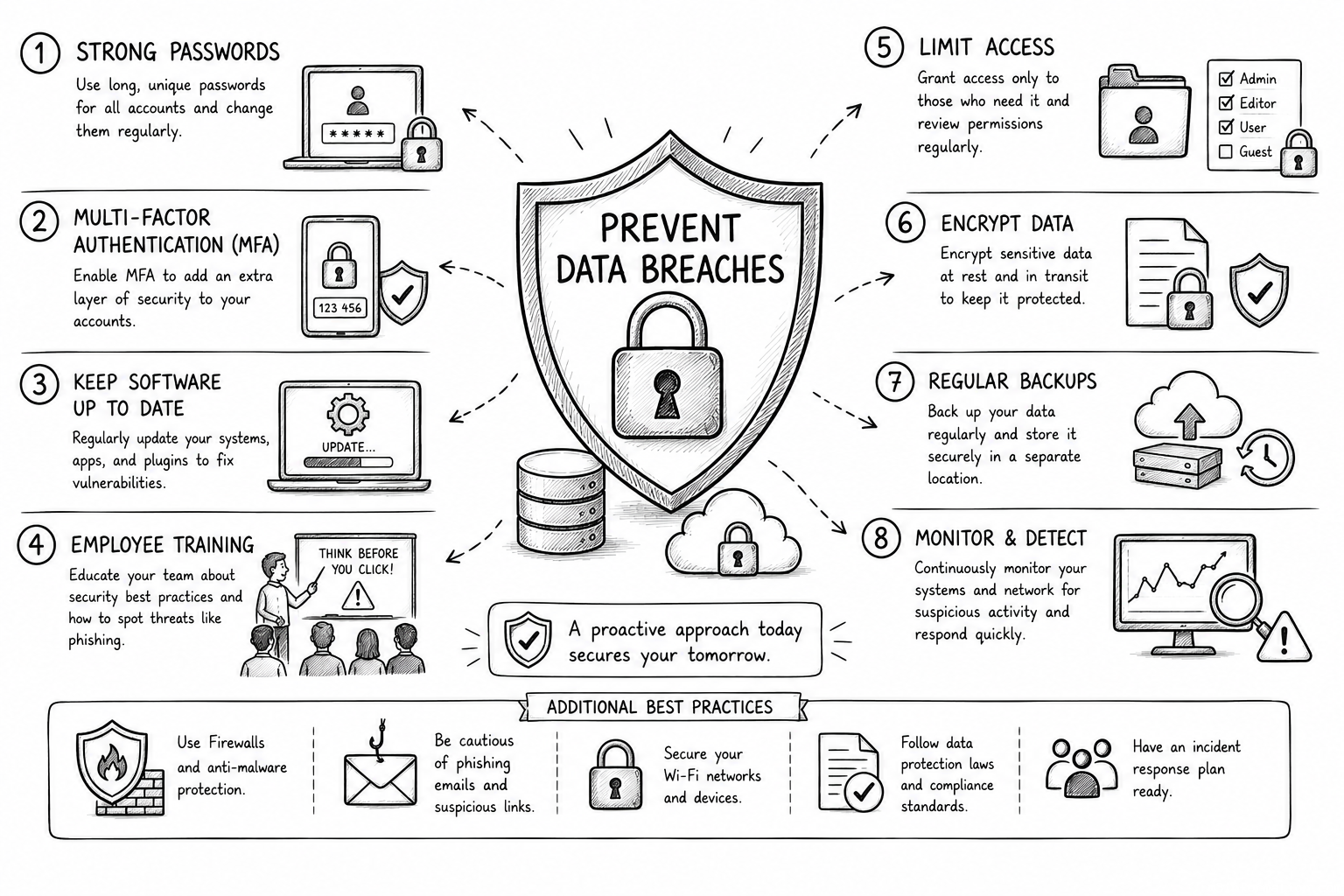
Conduct Regular Security Risk Assessments
Risk assessment is the foundation for effective data protection. By systematically identifying vulnerabilities in your IT infrastructure, software, and processes, you can prioritize areas that require immediate attention. Regular risk assessments involve scanning for weak points such as outdated software, misconfigured servers, or insecure employee practices. This proactive approach enables organizations to address potential security gaps before they lead to breaches, reducing the attack surface.
Implement Strong Authentication Methods
One of the most straightforward yet powerful steps to prevent unauthorized access is the use of robust authentication protocols. Traditional passwords are often the weakest link in security due to poor user habits such as reuse or simplicity. Multi-factor authentication (MFA), which requires additional verification like biometrics or one-time codes, significantly raises the bar for attackers. Enforcing MFA for all access points, especially for administrative systems and remote access, provides an extra layer of defense.
Encrypt Data Both in Transit and at Rest
Encryption is a critical tool for data confidentiality. Data “in transit” refers to information being sent across networks, while data “at rest” means stored data on servers or devices. Encrypting these data ensures that, even if intercepted or stolen, the information remains unreadable without the proper decryption keys. Organizations should use industry-standard encryption protocols such as TLS for transmission and AES for storage to protect sensitive data effectively.
Keep Software and Systems Up to Date
Cyber attackers often exploit known vulnerabilities in outdated software. Regularly updating and patching operating systems, applications, and security software closes these security gaps. Automated patch management tools can streamline this process by providing timely updates and reducing human error. Maintaining an updated IT environment significantly decreases the opportunity for attackers to leverage exploits and launch data breaches.
Educate and Train Employees
Human error remains one of the leading causes of data breaches. Phishing emails, social engineering scams, or careless handling of information can open critical doors to attackers. Comprehensive cybersecurity training educates employees on identifying threats, adhering to security protocols, and reporting suspicious activities. By fostering a culture of security awareness, organizations empower their workforce to act as the first line of defense against breaches.
Restrict Data Access and Use the Principle of Least Privilege
Not every employee needs access to all company data. Implementing the principle of least privilege (PoLP) means granting users the minimum level of access necessary to perform their job functions. Restricting access limits the risk of accidental or malicious data exposure, and reduces internal threats. Role-based access controls (RBAC) and regular audits ensure access permissions remain appropriate over time.
Implement Strong Firewall and Intrusion Detection Systems
Firewalls serve as barriers between trusted internal networks and untrusted external networks. Coupled with intrusion detection and prevention systems (IDPS), these technologies monitor and control inbound and outbound network traffic, identifying suspicious behavior. A layered network defense incorporating firewalls, IDPS, and other security tools helps prevent unauthorized access and alerts administrators to potential attack attempts in real time.
Secure Mobile Devices and Remote Access
With the rise of remote work and mobile device use, securing endpoints beyond the office environment is vital. Mobile Device Management (MDM) solutions enable organizations to enforce security policies, encrypt data on devices, and remotely wipe data if lost or stolen. Use of virtual private networks (VPNs) for remote access ensures communications remain protected from interception. These measures reduce the risk posed by unsecured or compromised personal devices accessing corporate resources.
Create and Test an Incident Response Plan
Despite preventive measures, breaches can still occur. Having a clear, well-practiced incident response plan (IRP) minimizes damage by enabling rapid detection, containment, and remediation. The IRP should define roles and responsibilities, communication protocols, and steps for forensic analysis and notification of affected parties. Regularly simulating breach scenarios helps teams prepare to act decisively under pressure and meet regulatory requirements.
Monitor and Audit Systems Continuously
Ongoing monitoring is essential for early detection of unauthorized activity. Security Information and Event Management (SIEM) platforms collect and analyze logs from various systems to identify anomalies indicative of breaches. Regular audits of security policies, configurations, and compliance status reinforce the integrity of your defenses. Continuous vigilance closes the gap between an attack and response, limiting potential damage.
Backup Data Regularly and Ensure Recovery Capabilities
Finally, data backup is a critical safety net. Reliable and frequent backups allow organizations to restore data in the event of a breach or ransomware attack that encrypts or destroys information. Backups should be stored securely and tested for recoverability. Combined with an incident response strategy, backup plans ensure continuity of operations and limit financial fallout.
Conclusion
Preventing data breaches requires a comprehensive, multi-layered approach that integrates technology, policies, and people. By understanding the nature of data breaches and conducting regular risk assessments, organizations can identify vulnerabilities before adversaries exploit them. Implementing strong authentication, encryption, and access control measures fortifies the perimeter, while employee training builds a human firewall against social engineering. Continuous monitoring, incident preparedness, and reliable backups further strengthen resilience. As cyber threats evolve, maintaining vigilance and adapting security strategies are paramount. Ultimately, preventing data breaches is not just a technical challenge but a critical component of trust and sustainability in our digital age. By proactively embracing these best practices, individuals and organizations can protect their most valuable asset—their data—against ever-growing and sophisticated threats.
 How to Make the Most of Your Holiday Break
 The Best Winter Destinations for a Cozy Getaway
 How to Organize Your Holiday Travel Plans with Ease
 The Ultimate Guide to Cooking for a Crowd
 How to Make Healthy Comfort Food Without the Guilt
 5 Delicious Vegan Breakfast Ideas You Can Make in Minutes