Cloud Security Best Practices
In today’s rapidly evolving digital landscape, cloud computing stands as a transformative force, revolutionizing how businesses operate and individuals manage data. With the promise of scalability, flexibility, and cost-efficiency, cloud services have become integral to countless organizations worldwide. However, this widespread adoption comes with a pressing concern: security. Cloud environments, by their very nature, introduce unique vulnerabilities and complexities that demand vigilant and strategic defense mechanisms. Understanding and implementing cloud security best practices is not just an option but a necessity to protect sensitive data and maintain trust. This article delves into the essential strategies and measures organizations must adopt to safeguard their cloud infrastructure effectively, ensuring a robust shield against evolving cyber threats.
- Understanding Cloud Security: The Basics
- Embracing the Shared Responsibility Model
- Robust Identity and Access Management (IAM)
- Encryption: Protecting Data at Every Stage
- Secure Configuration and Continuous Monitoring
- Leveraging Network Security Controls
- Regular Security Audits and Compliance
- Implementing Automated Security Tools
- Backup, Disaster Recovery, and Incident Response Plans
- Educating and Empowering Employees
- Monitoring Third-Party Risks
- The Role of Zero Trust Architecture in Cloud Security
- Preparing for the Future: Trends in Cloud Security
- Conclusion
- More Related Topics
Understanding Cloud Security: The Basics
Cloud security refers to the collective technologies, policies, controls, and services that protect cloud data, applications, and infrastructure from cyber threats. Unlike traditional on-premises environments, cloud environments are dynamic and distributed, often hosted by third-party providers. This shared responsibility model necessitates a clear understanding of what the cloud provider secures versus what the customer must protect. Fundamental to cloud security is ensuring confidentiality, integrity, and availability of data, which entails protecting data at rest, in transit, and during processing. Comprehensive cloud security also addresses identity management, access control, compliance, and incident response, forming the backbone of any effective security strategy.
Embracing the Shared Responsibility Model
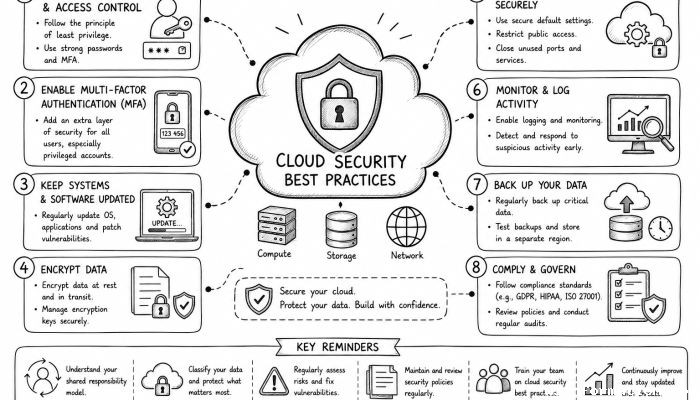
One of the pillars of cloud security is the shared responsibility model, which defines the division of security obligations between the cloud service provider (CSP) and the customer. While CSPs typically secure the physical infrastructure, hardware, software, and networking components, customers are responsible for securing their data, user access, and application-level configurations. Both parties must collaborate to ensure security hygiene; customers must understand their role precisely to prevent gaps. Misconfigurations, overlooked controls, or unclear boundaries can expose vulnerabilities, making knowledge and clear communication about responsibilities critical for maintaining cloud security.
Robust Identity and Access Management (IAM)
Controlling who has access to what is crucial in cloud environments. Identity and Access Management (IAM) systems help define policies and authentication mechanisms to enforce least privilege access. Effective IAM practices include multi-factor authentication (MFA), role-based access control (RBAC), and regularly auditing user permissions to prevent privilege creep. By limiting access rights strictly to necessary resources and continuously monitoring authentication activities, organizations can significantly reduce the risk of unauthorized access or insider threats compromising sensitive cloud assets.
Encryption: Protecting Data at Every Stage
Encryption is a cornerstone of cloud security, providing a powerful line of defense by converting data into unreadable formats unless decrypted with a secure key. To protect information throughout its lifecycle, organizations should implement encryption both at rest and in transit. Modern cloud providers offer built-in encryption tools, but managing encryption keys securely is equally important, often requiring the use of hardware security modules (HSMs) or key management services (KMS). Strong encryption ensures that even if data is intercepted or accessed by malicious actors, it remains unintelligible and unusable.
Secure Configuration and Continuous Monitoring
Incorrect configuration of cloud resources remains a leading cause of security incidents. Services and virtual machines often come with default settings that are permissive and not suitable for production environments. Ensuring secure configuration involves hardening cloud resources by disabling unnecessary ports, enforcing strong password policies, and closing broad network access. Moreover, continuous monitoring using automated tools helps detect anomalies, configuration drifts, or suspicious activities early on. Security Information and Event Management (SIEM) systems integrated with cloud environments empower real-time alerts and proactive threat mitigation.
Leveraging Network Security Controls
Although cloud infrastructure is virtualized, network security remains a critical aspect. Implementing virtual firewalls, segmenting networks through Virtual Private Clouds (VPCs), and using subnet isolation can minimize lateral movement of attackers. Additionally, setting up secure VPNs or private connectivity solutions such as AWS Direct Connect or Azure ExpressRoute facilitates secure communication between on-premises systems and cloud environments. These controls help in filtering traffic, detecting intrusions, and enforcing strict access rules, significantly reducing the cloud attack surface.
Regular Security Audits and Compliance
Compliance with industry standards and regulatory frameworks (e.g., GDPR, HIPAA, PCI-DSS) is often mandated and essential for building customer trust. Regular security audits—either internal or through third-party evaluators—verify that security controls are effective and policies are adhered to. Cloud providers frequently offer compliance certifications, but customers should perform their own audits to evaluate cloud configurations and data handling practices. Creating a culture of continuous assessment and compliance embeds security as a core organizational value rather than a one-time effort.
Implementing Automated Security Tools
Automation enhances security by allowing real-time threat detection and response without human latency. Cloud-native security tools and third-party solutions provide functionalities like automated vulnerability scanning, configuration management, and incident response orchestration. By incorporating automation, organizations improve efficiency, reduce manual errors, and enhance scalability of security processes. Tools such as Cloud Security Posture Management (CSPM) help maintain secure configurations, while Cloud Workload Protection Platforms (CWPP) safeguard running workloads against threats.
Backup, Disaster Recovery, and Incident Response Plans
Even with the best preventive measures, incidents can occur. Hence, having a resilient backup and disaster recovery strategy is vital. Regular backups ensure data can be restored quickly in the event of accidental deletion, ransomware attacks, or system failures. Cloud platforms often provide native solutions for snapshots and replication, facilitating quick restoration. Complementing backup strategies with thorough incident response plans—including detection, containment, eradication, and recovery phases—ensures teams can act decisively and minimize damage after a security breach.
Educating and Empowering Employees
Human factors remain one of the weakest links in security chains. Therefore, continuous education and awareness training for employees are indispensable. Training programs should cover cloud-specific risks, phishing prevention, secure remote access, and reporting suspicious activities. Empowered and informed employees are more vigilant and better equipped to recognize threats, reducing the risk of social engineering attacks or inadvertent misconfigurations. Foster a security culture where everyone understands their role in protecting cloud environments.
Monitoring Third-Party Risks
Many organizations rely on third-party applications and integrations within their cloud environments. These dependencies introduce external risks, as vulnerabilities or breaches in partner systems can cascade. It’s critical to evaluate the security posture of vendors and third-party providers through due diligence, certifications, and continuous monitoring. Employing contracts that mandate security clauses and incident reporting commitments also mitigates risks. By extending security considerations beyond internal boundaries, businesses can safeguard their cloud ecosystems holistically.
The Role of Zero Trust Architecture in Cloud Security
Zero Trust Architecture (ZTA) has become a leading paradigm in modern cloud security, emphasizing that no user or device, inside or outside the network, should be automatically trusted. Implementing Zero Trust involves continuous verification of identities, device health, and context-aware access to cloud resources. By applying micro-segmentation, strict user authentication, and granular policy enforcement, organizations reduce the attack surface and limit the scope of potential breaches. Zero Trust models align well with the dynamic and distributed nature of cloud environments, reinforcing security in a perimeter-less world.
Preparing for the Future: Trends in Cloud Security
As cloud technologies evolve, so do the tactics of cyber adversaries. Future-proofing cloud security requires anticipation of emerging trends such as the integration of artificial intelligence (AI) for threat detection, advancements in quantum-resistant encryption, and the growing importance of container and serverless security. Additionally, regulatory landscapes are expected to tighten, demanding stronger privacy and data protection mechanisms. Organizations committed to continuous innovation and adaptive security strategies will be better positioned to face future challenges and capitalize on the benefits of cloud computing securely.
Conclusion
In an era where data is a prized asset and cloud computing powers vital operations, prioritizing security is indispensable. Adopting best practices in cloud security—spanning robust identity management, encryption, secure configurations, network controls, continuous monitoring, and employee education—creates a resilient defense against an array of cyber threats. The shared responsibility model underscores the need for clarity and cooperation between cloud providers and customers. Moreover, embracing automation, adhering to compliance, and integrating Zero Trust principles further fortify defenses. As threats evolve, so must security strategies, ensuring that cloud environments remain trustworthy platforms for innovation and growth. By diligently implementing these best practices, organizations not only protect their digital assets but also foster confidence and sustainability in an increasingly cloud-dependent world.
 How to Make the Most of Your Holiday Break
 The Best Winter Destinations for a Cozy Getaway
 How to Organize Your Holiday Travel Plans with Ease
 The Ultimate Guide to Cooking for a Crowd
 How to Make Healthy Comfort Food Without the Guilt
 5 Delicious Vegan Breakfast Ideas You Can Make in Minutes