Cybersecurity for Remote Workers
In an era where remote work has transitioned from a niche arrangement to a mainstream mode of employment, cybersecurity for remote workers has become an indispensable concern. As employees swap traditional office cubicles for home offices, coffee shops, or co-working spaces, the digital perimeters that once bolstered organizational data security have blurred. This transformation has opened new vulnerabilities, making it imperative for both employees and employers to prioritize robust cybersecurity practices. This article delves into the challenges and best practices surrounding cybersecurity for remote workers, offering insights into safeguarding sensitive data without stifling productivity. Whether you are an employee navigating this landscape or an organization crafting cybersecurity policies, understanding these dynamics is critical to protecting not just individual devices, but entire corporate ecosystems.
- The Rise of Remote Work and Its Cybersecurity Implications
- Understanding the Unique Threats to Remote Workers
- Securing Home Networks: The First Line of Defense
- The Importance of Virtual Private Networks (VPNs)
- Endpoint Security: Keeping Devices Safe and Updated
- Multi-Factor Authentication: Adding a Strong Layer of Protection
- Cybersecurity Awareness and Training for Remote Employees
- Data Backup Strategies and Incident Preparedness
- Managing Third-Party Risks in Remote Work Environments
- The Role of Zero Trust Architecture in Remote Work Security
- Privacy Considerations and Balancing Monitoring with Trust
- Building a Culture of Cybersecurity in Remote Teams
- Conclusion: Securing the Future of Remote Work
- More Related Topics
The Rise of Remote Work and Its Cybersecurity Implications
The COVID-19 pandemic catalyzed a dramatic shift toward remote work, a trend predicted to persist even as offices reopen. While this model offers flexibility and cost savings, it simultaneously expands the attack surface for cybercriminals. Remote setups often lack the centralized IT controls typical of office environments, potentially exposing networks to unsecured routers, personal devices, and lax security practices. Cyber adversaries exploit this transition, targeting endpoints that may be less monitored or protected. As such, the proliferation of remote work demands a reevaluation of cybersecurity measures beyond traditional office firewalls and physical security to encompass new digital vulnerabilities.
Understanding the Unique Threats to Remote Workers
Remote workers face an array of cybersecurity threats distinctly different or more pronounced than those in office settings. Phishing attacks have become more sophisticated, often tailored to appear as legitimate communications from employers or trusted services. Unsecured Wi-Fi networks, especially public or home networks lacking proper encryption, can be exploited for man-in-the-middle attacks. Additionally, endpoint devices such as laptops and mobile phones may lack updated security patches or antivirus software, making them attractive targets. The isolation of remote workers can also result in slower identification and reporting of breaches, exacerbating potential damages.
Securing Home Networks: The First Line of Defense
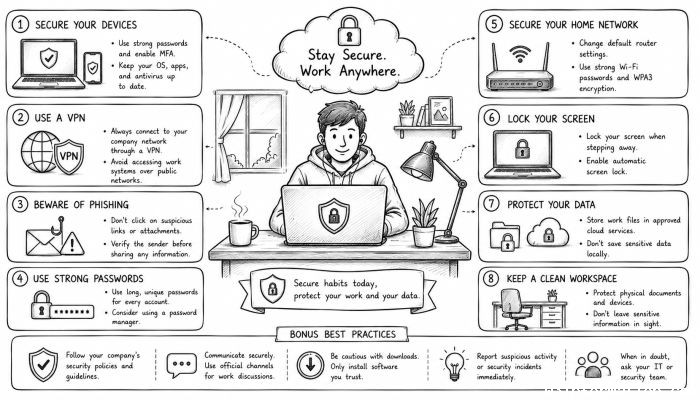
Home networks often represent the primary gateway between remote employees and corporate systems. Unfortunately, many home routers operate with factory-default passwords, outdated firmware, or suboptimal encryption settings, making them vulnerable to intrusion. Remote workers should take proactive measures to secure their Wi-Fi networks by using strong, unique passwords, enabling WPA3 encryption where available, and regularly updating router firmware. Segmenting home networks to separate work devices from personal gadgets can also reduce risk, preventing malware infections on less secure devices from spreading to work-related systems.
The Importance of Virtual Private Networks (VPNs)
A cornerstone of secure remote access is the use of Virtual Private Networks (VPNs). VPNs create an encrypted tunnel between a remote device and the corporate network, protecting data from interception during transmission. For remote workers, activating a VPN ensures that sensitive information such as login credentials, emails, and file transfers remain confidential, even when using unsecured Wi-Fi. Organizations should provide vetted VPN solutions and enforce their use through policies and automated software configurations, minimizing the chance that employees bypass this critical protective layer.
Endpoint Security: Keeping Devices Safe and Updated
Each remote device acts as a potential entry point for cyber threats, making endpoint security a critical facet of remote work cybersecurity. Devices should run reputable antivirus and anti-malware software, with automatic updates enabled to patch known vulnerabilities promptly. Endpoint Detection and Response (EDR) tools can provide an additional layer of monitoring and threat mitigation. Furthermore, remote workers should avoid using personal devices for work when possible, and organizations should consider deploying Mobile Device Management (MDM) systems to ensure compliance with security standards across all endpoints.
Multi-Factor Authentication: Adding a Strong Layer of Protection
Passwords alone no longer suffice to keep accounts secure in today’s threat landscape. Multi-Factor Authentication (MFA) demands users provide two or more verification factors, such as a password plus a fingerprint or a one-time code sent to a mobile device. This significantly reduces the risk of account compromise caused by stolen credentials—a common tactic in cyberattacks targeting remote employees. Organizations should mandate MFA for access to all cloud applications, VPNs, and sensitive internal portals, concurrently educating employees on how to use MFA tools properly.
Cybersecurity Awareness and Training for Remote Employees
A well-informed workforce forms a critical defense line against cyber threats. Regular cybersecurity training tailored for remote workers helps employees recognize phishing attempts, understand secure communication protocols, and learn reporting procedures for suspicious activities. Interactive simulations and scenario-based learning can enhance retention and engagement. Training programs should be ongoing, adapting to emerging threats and reinforcing best practices to cultivate a security-first mindset among remote teams.
Data Backup Strategies and Incident Preparedness
Despite best efforts, breaches and data losses can occur, rendering robust backup solutions indispensable. Remote workers should save critical work data to cloud storage systems with version control and encryption, ensuring that information remains recoverable in case of ransomware attacks or hardware failures. Organizations need to implement comprehensive incident response plans that include remote employee scenarios, enabling swift detection, containment, and recovery from cybersecurity incidents without extensive downtime.
Managing Third-Party Risks in Remote Work Environments
Remote work often involves reliance on third-party tools and platforms, from video conferencing apps to cloud-based productivity suites. Each third-party service introduces potential vulnerabilities if not properly vetted and managed. It's essential for organizations to perform thorough security assessments of these vendors, enforce strict access controls, and monitor integrations continuously. Remote workers should also be cautious about unauthorized software installations or sharing credentials with third parties to avoid inadvertent exposure.
The Role of Zero Trust Architecture in Remote Work Security
Zero Trust Architecture (ZTA) is an emerging cybersecurity paradigm that assumes no implicit trust within or outside the network perimeter. In a remote work context, this model emphasizes verifying every access request based on multiple criteria—identity, device health, location, and behavior patterns. Implementing Zero Trust protocols helps organizations minimize risk by granting access strictly on a least-privilege basis and continuously validating users and devices. This dynamic approach is particularly suited to the distributed nature of remote workforces, where traditional perimeter defenses are less effective.
Privacy Considerations and Balancing Monitoring with Trust
While monitoring remote workers’ digital activities can enhance security, it also raises privacy concerns. Striking a balance between safeguarding organizational assets and respecting employee privacy is crucial. Transparent policies about what data is monitored, how it is collected, and the purpose behind it foster trust and ensure compliance with data protection regulations. Moreover, organizations should limit monitoring to work-related environments and avoid intrusive practices that could erode morale or lead to legal complications.
Building a Culture of Cybersecurity in Remote Teams
Ultimately, technology alone cannot secure remote work; cultivating a culture of cybersecurity awareness and responsibility is fundamental. Leadership must prioritize cybersecurity initiatives, allocate adequate resources, and maintain open communication channels for reporting and feedback. Encouraging collaboration across IT, HR, and management teams helps embed security considerations into daily workflows. Recognizing and rewarding secure behaviors can further motivate employees, turning cybersecurity from a checkbox into a shared organizational value.
Conclusion: Securing the Future of Remote Work
As remote work cements its place in the modern employment landscape, the imperative for robust cybersecurity grows exponentially. Remote workers operate outside the traditional security perimeter, making them susceptible to an evolving array of cyber threats that require targeted, layered defenses. From securing home networks and enforcing VPN use to implementing multi-factor authentication and promoting a culture of cybersecurity, organizations and employees alike must collaborate diligently. By understanding and addressing the unique challenges of remote work security, businesses can protect their valuable data assets, maintain operational continuity, and foster trust in this new working paradigm. The digital frontier of remote work, while rife with risks, also offers opportunities for innovation and resilience—if navigated with vigilance and foresight.
 How to Make the Most of Your Holiday Break
 The Best Winter Destinations for a Cozy Getaway
 How to Organize Your Holiday Travel Plans with Ease
 The Ultimate Guide to Cooking for a Crowd
 How to Make Healthy Comfort Food Without the Guilt
 5 Delicious Vegan Breakfast Ideas You Can Make in Minutes