Importance of Incident Response Planning
In today’s fast-paced digital landscape, organizations face an ever-growing array of cyber threats and security breaches that can disrupt operations, compromise sensitive data, and damage reputations. Incident response planning is a crucial component of a robust cybersecurity strategy, enabling businesses to prepare for, detect, and effectively manage security incidents when they occur. It involves a coordinated approach to identifying threats quickly, minimizing damage, and recovering swiftly, thus safeguarding an organization’s assets and maintaining customer trust. This article delves into the critical importance of incident response planning, exploring its key elements and benefits, and highlighting how an effective plan can be the difference between a controlled resolution and a catastrophic failure.
- Understanding Incident Response Planning
- Why Incident Response Planning is Critical
- Components of an Effective Incident Response Plan
- Preparation: The Cornerstone of Incident Response
- Identification and Detection Techniques
- Containment Strategies to Limit Damage
- Eradication: Removing the Threat
- Recovery and System Restoration
- Post-Incident Analysis and Lessons Learned
- Compliance and Regulatory Considerations
- Communication: Internal and External Coordination
- The Role of Automation and Technology in Incident Response
- Conclusion
- More Related Topics
Understanding Incident Response Planning
Incident response planning refers to the systematic process of preparing for and managing cybersecurity incidents or other disruptive events. The goal is to ensure that any breach, attack, or failure is addressed swiftly and efficiently, reducing damage and restoring normal operations as soon as possible. Rather than reacting haphazardly to threats, organizations develop a structured plan that outlines roles, responsibilities, communication protocols, and technical procedures. This proactive stance empowers businesses to respond to incidents with confidence and clarity, minimizing confusion during high-pressure situations.
Why Incident Response Planning is Critical
The frequency and sophistication of cyberattacks have escalated dramatically in recent years, targeting companies of all sizes and sectors. Without a well-crafted incident response plan, organizations risk extended downtime, data loss, legal repercussions, and irreparable blows to their credibility. A strong response plan not only helps to contain threats more effectively but also reduces recovery costs and limits regulatory penalties. Additionally, it improves stakeholder confidence by demonstrating a commitment to safeguarding information and maintaining continuity.
Components of an Effective Incident Response Plan
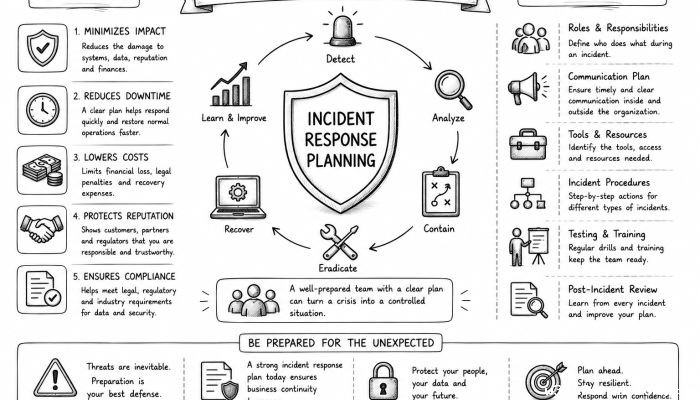
An effective incident response plan includes several essential components: preparation, identification, containment, eradication, recovery, and lessons learned. Preparation involves assembling a response team, establishing communication channels, and acquiring necessary tools. Identification focuses on detecting and classifying incidents properly. Containment aims to limit the spread and impact of the breach. Eradication involves removing the threat from systems, while recovery restores affected systems to operational status. Finally, lessons learned help refine the plan and prevent future incidents. Together, these steps provide a clear roadmap for managing incidents methodically.
Preparation: The Cornerstone of Incident Response
Preparation is arguably the most important phase of incident response planning. It involves assembling a multidisciplinary response team consisting of IT specialists, legal advisors, communication experts, and management personnel. The team must be trained regularly and familiar with their specific roles during an incident. Additionally, organizations should implement and regularly update security policies, maintain inventory of critical assets, and deploy monitoring systems. Having these foundational elements in place allows for a nimble and effective response once an incident occurs.
Identification and Detection Techniques
Prompt identification and accurate detection of security incidents can mean the difference between minor disruptions and widespread damage. Organizations utilize a range of tools such as intrusion detection systems (IDS), security information and event management (SIEM) platforms, and real-time network monitoring to spot anomalies. Employee awareness also plays a vital role; encouraging staff to report suspicious activity bolsters detection capabilities. Establishing clear criteria for what constitutes an incident ensures that the response team can prioritize threats correctly and act swiftly.
Containment Strategies to Limit Damage
Once an incident is identified, immediate containment is essential to prevent further damage. Containment strategies can be short-term, such as isolating affected systems from networks, or long-term, involving patching vulnerabilities to prevent recurrence. The specific approach depends on the nature of the incident—whether it’s malware infiltration, data exfiltration, or insider threats. Quick containment helps to preserve forensic evidence, enabling a thorough investigation while stopping attackers in their tracks.
Eradication: Removing the Threat
After containment, eradication focuses on removing the root cause of the incident from all affected systems. This can include deleting malware, closing exploited vulnerabilities, revoking compromised credentials, or rebuilding servers. Thorough eradication is necessary to prevent attackers from regaining access and to restore the integrity of the organization’s IT environment. Effective collaboration between cybersecurity teams and third-party vendors is often vital at this stage to ensure complete threat removal.
Recovery and System Restoration
The recovery phase deals with restoring normal operations as quickly and securely as possible. This involves verifying that infected systems are clean, reinstalling software, restoring data backups, and continuously monitoring to detect any resurgence of the threat. Recovery also requires detailed communication with stakeholders, including customers, employees, and regulators, to maintain transparency and trust. The speed and thoroughness of recovery can significantly affect the overall impact of the incident on business continuity.
Post-Incident Analysis and Lessons Learned
A successful incident response plan does not conclude once systems are restored. Conducting a post-incident analysis is critical for understanding how the breach occurred, evaluating the effectiveness of the response, and identifying areas for improvement. This reflective process helps organizations update their policies, enhance detection methods, close security gaps, and better prepare for future incidents. Integrating lessons learned fosters a culture of continuous improvement and resilience.
Compliance and Regulatory Considerations
Incident response planning is increasingly mandated or guided by various regulatory frameworks such as GDPR, HIPAA, and PCI-DSS. These regulations often specify requirements related to breach notification timelines, data protection measures, and audit trails. Developing a plan that meets compliance standards helps organizations avoid costly fines and legal actions, while simultaneously enhancing data privacy and security. Moreover, regulatory adherence strengthens trust among customers and partners in an organization’s commitment to responsible data stewardship.
Communication: Internal and External Coordination
Clear communication is a vital aspect of managing security incidents. Internally, coordinated communication ensures that all key team members are informed and able to execute their roles without confusion. Externally, transparent communication with customers, regulatory bodies, media, and partners maintains credibility and facilitates cooperation. Crafting pre-approved messaging templates and defining spokesperson roles in advance can streamline communication and prevent misinformation or panic during a crisis.
The Role of Automation and Technology in Incident Response
Advancements in automation and artificial intelligence have significantly enhanced incident response capabilities. Automated tools can identify threats faster, trigger predefined containment measures, and accelerate system recovery processes. Technologies such as machine learning analyze vast quantities of data to detect subtle patterns indicative of attacks, reducing the risk of human oversight. However, automation must complement, not replace, well-trained response teams; human judgment remains indispensable for complex decision-making and nuanced assessments.
Conclusion
Incident response planning is an indispensable element of modern cybersecurity and organizational risk management. By establishing a clear, structured plan that encompasses preparation, detection, containment, eradication, recovery, and continuous improvement, organizations can manage security incidents with precision and confidence. Effective incident response minimizes operational disruption, financial loss, and reputational damage, while ensuring regulatory compliance and customer trust. As cyber threats continue to evolve, investing in robust incident response planning not only safeguards an organization’s assets but also builds resilience and agility in an unpredictable digital world. Embracing this proactive approach transforms incident response from a reactive necessity into a strategic advantage.
 How to Make the Most of Your Holiday Break
 The Best Winter Destinations for a Cozy Getaway
 How to Organize Your Holiday Travel Plans with Ease
 The Ultimate Guide to Cooking for a Crowd
 How to Make Healthy Comfort Food Without the Guilt
 5 Delicious Vegan Breakfast Ideas You Can Make in Minutes