How to Detect and Respond to Cyber Threats
In today’s digitally interconnected world, cyber threats have become an ever-present danger for individuals, businesses, and governments alike. From sophisticated ransomware attacks that paralyze entire networks to subtle phishing attempts aimed at stealing personal information, the cyber threat landscape is both complex and constantly evolving. Detecting these threats promptly and responding effectively is crucial to minimizing damage, protecting sensitive data, and maintaining trust in digital systems. This comprehensive guide delves into the essential techniques and strategies for identifying cyber threats early and outlines practical steps to take when a security incident occurs. Whether you’re a business leader, IT professional, or an everyday user eager to safeguard your digital footprint, understanding how to detect and respond to cyber threats is a vital skill in today’s cyber-centric era.
- Understanding Cyber Threats: An Overview
- The Importance of Early Detection
- Common Techniques for Detecting Cyber Threats
- Monitoring Network Traffic and Logs
- Implementing Endpoint Detection and Response (EDR)
- Utilizing Threat Intelligence
- Conducting Regular Security Audits and Vulnerability Assessments
- Establishing an Incident Response Plan
- Training Employees and Raising Cybersecurity Awareness
- Leveraging Automation and Artificial Intelligence
- Collaborating Across the Cybersecurity Community
- Post-Incident Analysis and Continuous Improvement
- Ensuring Compliance with Regulatory Requirements
- Conclusion
- More Related Topics
Understanding Cyber Threats: An Overview
Cyber threats refer to malicious attempts to damage or gain unauthorized access to computer systems, networks, or devices. These threats can originate from diverse sources, including individual hackers, organized cybercrime groups, state-sponsored actors, or even disgruntled employees. Common forms of threats include malware, ransomware, phishing, denial-of-service attacks, and more. Recognizing the wide variety of threats and their motives lays the foundation for effective detection and response. By understanding who the attackers are and what they aim to achieve, organizations can tailor their security measures more effectively.
The Importance of Early Detection
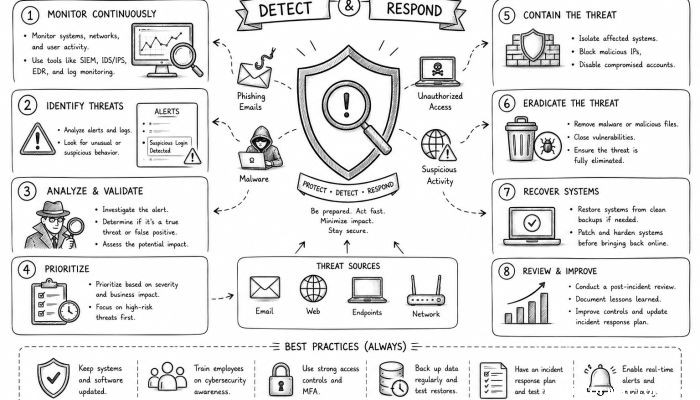
Early detection of cyber threats is critical because the longer a breach goes unnoticed, the greater the potential damage. Attackers can silently extract sensitive data, spread malware further, or disrupt critical operations. Early detection allows security teams to contain the intrusion, prevent further unauthorized access, and initiate remediation steps. Modern cyber defenses often rely on continuous monitoring, threat intelligence feeds, and automated alert systems to detect suspicious activities before they escalate into full-blown attacks.
Common Techniques for Detecting Cyber Threats
Detection methods range from signature-based systems, which rely on known patterns of malicious software, to more advanced behavior-based approaches that identify anomalies in network traffic or user behavior. Antivirus tools, intrusion detection systems (IDS), and security information and event management (SIEM) platforms form the basic toolkit. In recent years, machine learning and artificial intelligence have enhanced threat detection by spotting patterns that human analysts might miss. Combining these tools provides a layered defense, improving the chances of identifying sophisticated threats.
Monitoring Network Traffic and Logs
Network traffic analysis is a central component of threat detection. Monitoring inbound and outbound traffic helps identify unusual patterns such as data exfiltration, unauthorized connections, or unexpected protocol usage. Alongside traffic monitoring, log analysis from servers, firewalls, and endpoints provides critical context. Logs record system events, user activities, and error messages that can offer clues to a breach. Automated tools collect and analyze logs at scale, enabling quicker identification of suspicious events.
Implementing Endpoint Detection and Response (EDR)
Endpoints—such as laptops, smartphones, and servers—are often the initial targets of cyberattacks. Endpoint Detection and Response (EDR) tools focus on monitoring and analyzing endpoint activities in real-time. These solutions detect malware execution, unauthorized access attempts, and policy violations at the device level. EDR platforms also enable rapid investigation and response by collecting forensic data, which is vital for understanding attack vectors and mitigating threats before they spread.
Utilizing Threat Intelligence
Threat intelligence involves gathering information on emerging threats, attacker tactics, and vulnerabilities from various sources such as security agencies, industry groups, and open-source platforms. Integrating this intelligence into detection systems enhances their effectiveness by updating them with the latest indicators of compromise (IOCs). Organizations can proactively defend against known threats and anticipate future attack patterns, reducing the risk of successful intrusions.
Conducting Regular Security Audits and Vulnerability Assessments
Security audits and vulnerability assessments are proactive methods that help organizations identify weaknesses that attackers could exploit. Audits evaluate compliance with security policies and best practices, while vulnerability assessments scan systems and applications for known security flaws. Addressing these findings before an attacker exploits them reduces exposure and enhances the overall security posture, making detection and response more manageable.
Establishing an Incident Response Plan
An effective response to cyber threats begins with a well-defined Incident Response (IR) plan. This structured process outlines the roles, responsibilities, and steps to take during a cybersecurity incident. The plan typically includes detection procedures, containment strategies, eradication steps, recovery actions, and post-incident analysis. Having an IR plan ensures that teams act swiftly and decisively, minimizing the damage caused by breaches and accelerating system restoration.
Training Employees and Raising Cybersecurity Awareness
Human error remains one of the most common entry points for cyber threats. Phishing emails, social engineering, and careless handling of credentials can undermine even the most advanced technical defenses. Regular training sessions and awareness programs help employees recognize suspicious activities, understand security protocols, and respond appropriately. Educated users act as an additional line of defense, improving threat detection across the organization.
Leveraging Automation and Artificial Intelligence
As the volume of cyber threats grows exponentially, relying solely on manual detection and response becomes impractical. Automation tools equipped with artificial intelligence (AI) can analyze large datasets rapidly, identify anomalies, and even initiate predefined response actions. AI-driven Security Orchestration, Automation, and Response (SOAR) platforms help reduce response times and human error, enhancing the effectiveness of security operations centers (SOCs).
Collaborating Across the Cybersecurity Community
No organization is an island in cybersecurity. Collaborative efforts, including information sharing among companies, law enforcement, and cybersecurity vendors, help create a united front against cyber threats. Platforms and communities for sharing threat intelligence, best practices, and lessons learned enable faster identification of emerging threats and coordinated responses to large-scale incidents.
Post-Incident Analysis and Continuous Improvement
Responding to a cyber threat does not end with removing the attacker's access. Post-incident analysis involves investigating how the breach occurred, assessing the impact, and identifying gaps in security controls. These insights drive improvements in defenses, update the incident response plan, and refine detection capabilities. Continuous improvement ensures the organization stays resilient amid an evolving threat landscape.
Ensuring Compliance with Regulatory Requirements
Many industries are subject to strict cybersecurity regulations and standards designed to protect sensitive information, such as GDPR, HIPAA, and PCI-DSS. Compliance not only helps avoid legal penalties but also encourages the implementation of robust detection and response mechanisms. Understanding and aligning with regulatory requirements should be an integral part of an organization’s cybersecurity strategy.
Conclusion
Detecting and responding to cyber threats is an ongoing and dynamic challenge that demands a multi-faceted approach. By understanding the nature of cyber threats, implementing robust monitoring tools, leveraging threat intelligence, and maintaining a well-prepared incident response plan, organizations can significantly reduce their exposure to attacks and minimize damage when breaches occur. Furthermore, fostering a culture of cybersecurity awareness among employees and embracing automation technologies enhance resilience against increasingly sophisticated threats. Ultimately, continuous vigilance, collaboration, and adaptation pave the way to a safer digital environment, empowering individuals and organizations to confidently navigate the complexities of today’s cyber world.
 How to Make the Most of Your Holiday Break
 The Best Winter Destinations for a Cozy Getaway
 How to Organize Your Holiday Travel Plans with Ease
 The Ultimate Guide to Cooking for a Crowd
 How to Make Healthy Comfort Food Without the Guilt
 5 Delicious Vegan Breakfast Ideas You Can Make in Minutes