How to Perform a Vulnerability Assessment
In today’s digitally interconnected world, organizations face an ever-growing number of cyber threats that put their data, systems, and reputations at risk. To defend against potential attacks, it is crucial to understand and proactively identify weaknesses within IT infrastructures before malicious actors exploit them. This is where a vulnerability assessment becomes an indispensable part of a robust cybersecurity strategy. A vulnerability assessment is a systematic process that helps organizations discover, analyze, and prioritize security flaws and vulnerabilities in their networks, applications, and devices. By performing regular assessments, businesses can strengthen their defenses, mitigate risks, and comply with regulatory requirements. This article provides a complete roadmap on how to perform an effective vulnerability assessment, breaking down the key steps and considerations that ensure your organization's security posture remains resilient.
- Understanding Vulnerability Assessment
- Defining the Scope of the Assessment
- Assembling the Right Team
- Gathering Information and Asset Inventory
- Choosing the Right Vulnerability Scanning Tools
- Conducting the Vulnerability Scan
- Analyzing Vulnerability Scan Results
- Prioritizing Vulnerabilities for Remediation
- Reporting Findings and Recommendations
- Remediation and Mitigation Strategies
- Verification and Re-Assessment
- Building a Continuous Vulnerability Management Program
- Conclusion
- More Related Topics
Understanding Vulnerability Assessment
A vulnerability assessment is a proactive security measure intended to identify weaknesses in IT systems that could be exploited by attackers. Unlike penetration testing, which actively attempts to exploit vulnerabilities, a vulnerability assessment is primarily focused on thorough scanning and analysis of systems without necessarily exploiting the weaknesses. These assessments provide a prioritized list of vulnerabilities according to their severity, helping security teams allocate resources effectively to remediate the most critical issues. Understanding the purpose and scope of vulnerability assessments is fundamental before diving into the detailed process.
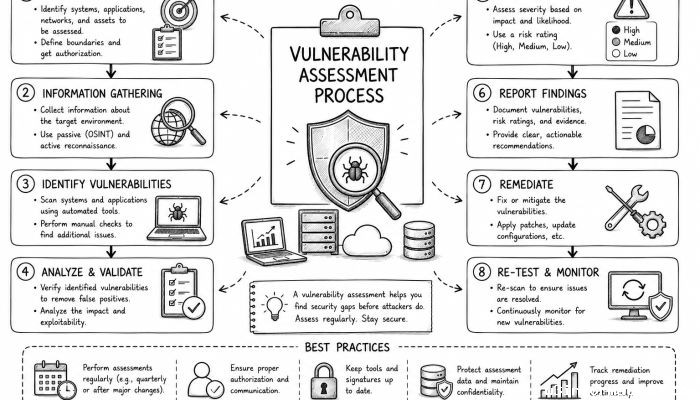
Defining the Scope of the Assessment
Determining the scope is the first practical step in any vulnerability assessment. It involves deciding which systems, networks, applications, or devices will be evaluated. A clearly defined scope helps focus the assessment, saving time and resources. Scope definition should consider business priorities, regulatory requirements, and known high-risk areas. For example, you might target external-facing web servers, internal databases, or cloud assets. The scope must also consider whether the assessment targets a specific segment of the network or the entire infrastructure, influencing the tools and methods used.
Assembling the Right Team
A successful vulnerability assessment requires a knowledgeable and cooperative team. Depending on the organization's size, the team can include internal IT staff, cybersecurity specialists, or external consultants with expertise in vulnerability scanning and analysis. Collaboration between IT, security, compliance, and management is essential to ensure smooth execution. The team must also clearly define roles, responsibilities, and communication channels to maintain efficiency throughout the assessment lifecycle.
Gathering Information and Asset Inventory
Without a comprehensive understanding of your digital assets, a vulnerability assessment cannot be effective. Asset inventory provides a detailed list of all hardware, software, network components, and services running within the defined scope. This includes servers, workstations, applications, databases, and IoT devices. Each asset’s operating system, software versions, patch levels, and configurations should be documented. Gathering this information allows for a targeted assessment, helps identify unauthorized or forgotten devices, and sets a baseline for vulnerability analysis.
Choosing the Right Vulnerability Scanning Tools
The next step involves selecting appropriate tools to perform the assessment. Several commercial and open-source vulnerability scanners are available, such as Nessus, OpenVAS, Qualys, and Rapid7 Nexpose, each with its strengths and unique features. The choice often depends on the organization's budget, infrastructure complexity, and the desired level of detail. Automated scanners can identify common vulnerabilities like missing patches, misconfigurations, and outdated software. However, understanding tool capabilities and limitations is essential for an accurate and comprehensive assessment.
Conducting the Vulnerability Scan
After defining the scope and selecting tools, the vulnerability scan can commence. The scan can be conducted remotely or internally, simulating an attacker’s perspective. It probes the assets within the scope, looking for known vulnerabilities using databases such as the Common Vulnerabilities and Exposures (CVE) list or Common Weakness Enumeration (CWE). The scanning process should be scheduled to minimize impact on normal operations and may require prior notification to affected users to mitigate false alarms. It's important to monitor the scan to address any technical issues promptly.
Analyzing Vulnerability Scan Results
Raw scan data often includes thousands of findings, many of which might be false positives or low-risk vulnerabilities. Therefore, careful analysis is necessary to validate and prioritize the findings. The assessment team should categorize vulnerabilities by severity using scoring systems such as the Common Vulnerability Scoring System (CVSS), business impact, and exploitability. This step helps filter out noise and focuses remediation efforts on the most critical issues that pose real threats to the organization.
Prioritizing Vulnerabilities for Remediation
Not all vulnerabilities demand immediate attention. Prioritization is critical to manage limited security resources effectively. Factors such as the criticality of the affected asset, the potential impact of an exploit, and the likelihood of an attack influence prioritization decisions. For instance, vulnerabilities in internet-facing servers or devices storing sensitive data typically rank higher. Addressing high-severity vulnerabilities quickly reduces potential attack surfaces and prevents exploitation.
Reporting Findings and Recommendations
An essential outcome of a vulnerability assessment is a comprehensive and clear report that communicates the findings to stakeholders, including technical teams and management. The report should include an executive summary, detailed description of vulnerabilities (with severity ratings), affected assets, and actionable recommendations for remediation. Providing context around risk levels and potential impacts helps management make informed decisions regarding resource allocation and risk acceptance.
Remediation and Mitigation Strategies
Once vulnerabilities are identified and prioritized, the next step is remediation. Depending on the nature of the vulnerabilities, remediation can involve patching software, reconfiguring systems, removing unnecessary services, or applying additional security controls such as firewalls and intrusion detection systems. Organizations should implement a structured process to track remediation activities, ensuring that identified weaknesses are addressed in a timely manner. For vulnerabilities that cannot be immediately fixed, mitigation strategies such as network segmentation, enhanced monitoring, or temporary compensating controls help reduce risk.
Verification and Re-Assessment
After remediation, verifying that vulnerabilities have been effectively resolved is crucial. This often requires a follow-up scan or detailed manual testing to confirm the fixes. Verification provides assurance that security gaps are closed and helps identify any residual issues. Regular vulnerability assessments should be scheduled as part of an ongoing security program since new vulnerabilities emerge frequently due to software updates, system changes, and evolving threats.
Building a Continuous Vulnerability Management Program
Vulnerability assessment is not a one-time task but an ongoing component of a robust cybersecurity strategy. Establishing a continuous vulnerability management program ensures that vulnerabilities are regularly identified, assessed, and addressed in a systematic manner. This program includes routine scans, updated asset inventories, patch management processes, and integration with other security operations like threat intelligence and incident response. Continuous assessment helps organizations stay ahead of attackers by maintaining visibility into their security posture and promptly adapting to emerging risks.
Conclusion
Performing an effective vulnerability assessment is a critical step in safeguarding any organization’s digital infrastructure against the ever-evolving landscape of cyber threats. By following a systematic approach—defining scope, gathering asset information, selecting proper tools, conducting scans, analyzing and prioritizing vulnerabilities, and implementing thorough remediation—organizations can significantly reduce their exposure to attacks. Moreover, embedding vulnerability assessments into a continuous security management cycle ensures ongoing vigilance and resilience. Ultimately, vulnerability assessments empower organizations to understand their security weaknesses and proactively strengthen their defenses, protecting valuable data, maintaining customer trust, and achieving regulatory compliance in today’s complex digital environment.
 How to Make the Most of Your Holiday Break
 The Best Winter Destinations for a Cozy Getaway
 How to Organize Your Holiday Travel Plans with Ease
 The Ultimate Guide to Cooking for a Crowd
 How to Make Healthy Comfort Food Without the Guilt
 5 Delicious Vegan Breakfast Ideas You Can Make in Minutes