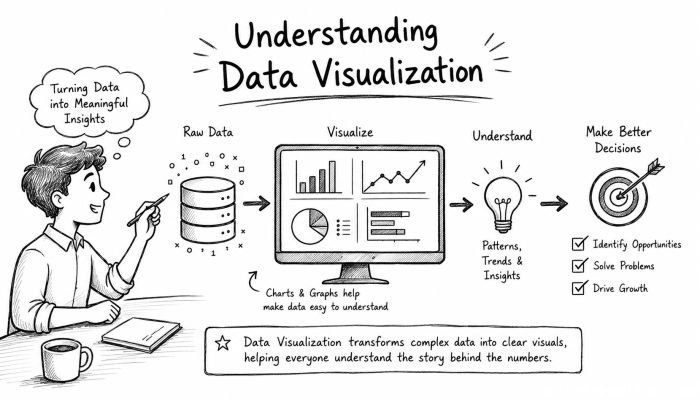
Understanding Data Visualization
In the rapidly evolving world of data-driven decision-making, the quality of data plays a pivotal role in the accuracy and effectiveness of analytics. Before data can reveal meaningful patterns or fuel powerful predictive models, it must go through a crucial process known as data cleaning—the act of identifying, correcting, or removing errors and inconsistencies from datasets. Data cleaning ensures that information is accurate, complete, and reliable, laying the groundwork for sound analysis. As datasets grow larger and more complex, fueled by sources ranging from social media feeds to IoT devices, the challenges of maintaining data integrity also increase. This article explores essential data cleaning techniques, delving into methods that transform raw data into a trusted resource for businesses, researchers, and analysts alike. By understanding and applying these techniques, organizations can unlock the true potential of their data assets.
- Understanding the Importance of Data Cleaning
- Identifying Common Data Quality Issues
- Handling Missing Data
- Detecting and Removing Duplicates
- Standardizing Data Formats
- Correcting Data Inaccuracies
- Managing Outliers
- Data Validation Rules
- Using Automated Tools for Data Cleaning
- The Role of Data Profiling in Cleaning
- Handling Text Data Cleaning
- Continuous Monitoring and Maintenance
- Conclusion
- More Related Topics
Understanding the Importance of Data Cleaning
Data cleaning is much more than a mundane preprocessing step; it is a fundamental requirement for generating trustworthy results. Dirty data—characterized by inaccuracies, duplicates, missing values, and inconsistencies—can lead to misleading conclusions and costly business mistakes. For instance, erroneous customer records might result in ineffective marketing campaigns, lost revenue, or regulatory compliance violations. Clean data improves the efficiency of data storage and processing, reduces noise, and facilitates better machine learning model training. In essence, data cleaning is vital for preserving data integrity and ensuring that subsequent analyses produce meaningful and actionable insights.
Identifying Common Data Quality Issues
Before cleaning data, it is essential to identify the types of quality issues that typically plague datasets. Common problems include:
- Missing Data: Gaps where values are absent.
- Duplicate Records: Multiple entries representing the same entity.
- Inconsistent Formatting: Varied formats for dates, phone numbers, or addresses.
- Inaccuracies: Typographical errors or invalid data points.
- Outliers: Data points that deviate significantly from the norm.
- Irrelevant Data: Unnecessary fields or records that do not contribute to analysis.
Recognizing these issues helps tailor the cleaning process to the specific challenges each dataset presents.
Handling Missing Data
Missing data is one of the most frequent and impactful problems encountered in datasets. There are multiple reasons data may be missing, such as human error, equipment failure, or intentional omission. Approaches to handle missing data depend on the dataset and analysis goals:
- Deletion: Removing records or fields with missing values, suitable when the missing data is minimal.
- Imputation: Filling gaps using various strategies such as mean, median, mode substitution, or more complex methods like k-nearest neighbors (KNN) or regression techniques.
- Flagging: Marking missing values for further treatment or analysis.
Choosing the right tactic involves balancing between losing valuable information and avoiding biases due to improper imputation.
Detecting and Removing Duplicates
Duplicate records can skew data analysis by disproportionately influencing aggregate metrics and models. Detecting duplicates often involves identifying identical or nearly identical entries based on one or multiple attributes such as ID numbers, names, or timestamps. Simple duplicates can be removed directly, but near-duplicates may require fuzzy matching techniques to account for slight variations or typographical errors. Tools like Levenshtein distance, cosine similarity, and clustering algorithms can aid in this process. After detection, duplicates are typically merged or purged to maintain a clean dataset.
Standardizing Data Formats
Datasets commonly contain data entered in inconsistent formats, especially when integrating from heterogeneous sources. Standardizing data formats—such as date and time formats, phone numbers, currencies, or categorical labels—facilitates easier analysis and prevents errors during merges or joins. For example, converting all date fields to the ISO 8601 standard (YYYY-MM-DD) or normalizing text case for textual attributes promotes consistency. Automated scripts and data transformation libraries can assist in enforcing uniformity at scale.
Correcting Data Inaccuracies
Typographical errors and invalid data points can distort analysis findings. Detecting inaccuracies may involve verifying entries against known valid ranges, using domain-specific rules, or integrating with external reference datasets. For example, postal codes must match recognized formats, ages should fall within realistic bounds, and sales figures should not be negative. Once identified, these errors can be corrected manually or through automated processes using pattern recognition or anomaly detection algorithms.
Managing Outliers
Outliers are unusual data points that lie far outside the expected range and can result from measurement errors, data entry mistakes, or genuine but rare events. It’s crucial to identify and assess outliers carefully rather than indiscriminately removing them. Techniques such as box plots, Z-score analysis, or interquartile range (IQR) help flag outliers. The decision to discard, adjust, or keep outliers depends on the context and the impact on analysis; for instance, in fraud detection, outliers may be of particular interest.
Data Validation Rules
Implementing validation rules at the data entry or ingestion phase helps to catch errors early. These rules define constraints such as mandatory fields, value ranges, or relational integrity between different variables. For example, a validation rule may ensure a birth date precedes a registration date or enforce that email addresses contain the “@” symbol. Automated validation reduces the downstream cleaning burden and improves overall data quality.
Using Automated Tools for Data Cleaning
The rise of large datasets has pushed the development of numerous software tools designed to automate data cleaning. Open-source libraries like Python’s Pandas, OpenRefine, and libraries in R provide powerful functions to detect duplicates, standardize formats, and impute missing values efficiently. Commercial solutions often combine data cleaning with data profiling and visualization capabilities, enabling users to spot problems visually. Automating repetitive cleaning tasks saves time and minimizes human error, enhancing scalability.
The Role of Data Profiling in Cleaning
Data profiling involves examining dataset characteristics—such as distributions, frequency counts, and correlations—to uncover issues before cleaning. Profiling provides insights into data patterns, outliers, and inconsistencies, guiding the choice of cleaning techniques. Many data quality management tools integrate profiling features, helping analysts understand the scope of quality issues systematically and prioritize cleaning efforts effectively.
Handling Text Data Cleaning
Textual data often contains noise such as misspellings, inconsistent capitalization, punctuation errors, and irrelevant characters. Text data cleaning techniques include tokenization, stop-word removal, stemming, and lemmatization for preparing data for natural language processing (NLP). Regular expressions (regex) can help remove unwanted symbols or correct typical errors. Cleaning textual data is crucial for improving text mining, sentiment analysis, and other NLP applications.
Continuous Monitoring and Maintenance
Data cleaning is not a one-time activity but a continuous process. As new data arrives, continuous monitoring tools and dashboards can detect anomalies or emerging data quality issues promptly. Setting up scheduled audits and automated alerts ensures that data remains reliable over time. Incorporating data cleaning into the overall data governance framework reinforces organizational commitment to data quality.
Conclusion
Data cleaning is an indispensable stage in the data lifecycle that transforms messy, unreliable data into a valuable asset for insightful analysis. From identifying missing and duplicate values to standardizing formats and managing outliers, diverse techniques work synergistically to enhance data accuracy and consistency. Advances in automation and data profiling tools have empowered analysts to conduct cleaning at scale, yet thoughtful human oversight remains essential. Ultimately, investing time and resources in thorough data cleaning not only safeguards the integrity of analyses but also drives better decision-making, fosters trust in data systems, and unlocks the transformative power of data across industries. Embracing robust data cleaning practices is foundational to harnessing the true potential of the data revolution.
 How to Make the Most of Your Holiday Break
 The Best Winter Destinations for a Cozy Getaway
 How to Organize Your Holiday Travel Plans with Ease
 The Ultimate Guide to Cooking for a Crowd
 How to Make Healthy Comfort Food Without the Guilt
 5 Delicious Vegan Breakfast Ideas You Can Make in Minutes