How to start test-driven development
In the fast-paced world of software development, delivering reliable and maintainable code efficiently is paramount. Test-Driven Development (TDD) has emerged as a powerful methodology that helps programmers write better code by emphasizing testing before implementation. Unlike traditional development approaches where tests follow code creation, TDD flips the process around: tests are written first, guiding the design and evolution of the code itself. This practice not only fosters cleaner, more modular code but also reduces bugs and accelerates feedback loops. For developers new to TDD, the thought of starting can seem daunting, but with the right approach and understanding, it can seamlessly integrate into daily workflows. This article serves as a comprehensive guide to help you embark on your TDD journey, exploring best practices, tools, and common challenges along the way.
- Understanding the Principles of Test-Driven Development
- Setting Up Your Development Environment
- Writing Your First Test: Start Small and Focused
- Embracing the Red-Green-Refactor Cycle
- Choosing Effective Test Cases and Writing Clear Assertions
- Organizing Tests for Readability and Maintenance
- Integrating TDD with Version Control and Continuous Integration
- Overcoming Common Challenges in TDD
- Applying TDD Beyond Unit Testing
- Encouraging a Mindset Shift for Long-Term Success
- Leveraging Community Resources and Learning Materials
- Measuring Success and Iteratively Improving Your TDD Approach
- Conclusion
- More Related Topics
Understanding the Principles of Test-Driven Development
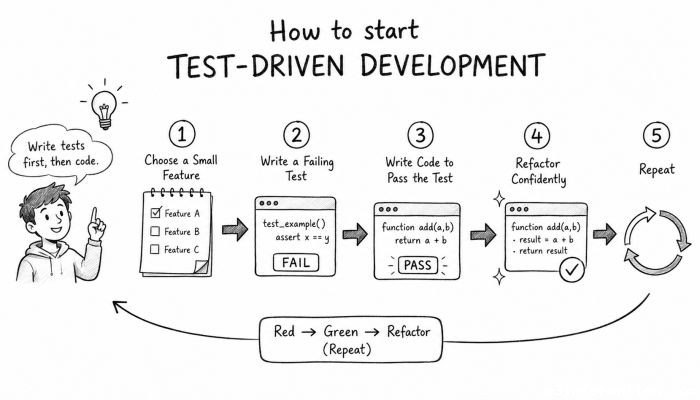
Before diving into writing tests and code, it is crucial to grasp the core principles of TDD. At its heart, TDD follows a simple but rigorous mantra: Red, Green, Refactor. This means you start by writing a failing test (Red), then write just enough code to make the test pass (Green), and finally improve or clean up the code without changing its behavior (Refactor). The cycle is fast and iterative, promoting small, incremental changes that are always validated by tests. This approach ensures that your software evolves in a highly controlled manner, with quality baked in from the start. Additionally, TDD encourages designing software with testability in mind, which often results in smaller, more modular components.
Setting Up Your Development Environment
To begin practicing TDD effectively, setting up the right tools and environment is essential. Depending on your programming language and framework, choose a testing library that integrates well with your codebase. For instance, JavaScript developers can use Jest or Mocha, Python developers might prefer pytest or unittest, and Java programmers could select JUnit or TestNG. Alongside the testing library, configure your IDE or code editor for test execution and debugging. Many modern IDEs offer plugins or built-in features that allow running tests with a single click and quickly navigating between tests and implementation code, streamlining the TDD workflow.
Writing Your First Test: Start Small and Focused
Starting with TDD involves writing your first test, which can often feel intimidating. The key is to start small and focus on simple functionality. For example, if you're building a calculator application, begin by writing a test that confirms the addition of two numbers returns the correct result. Your test should be clear, concise, and cover only one aspect of behavior. This narrow scope makes it easier to observe the Red-Green-Refactor cycle without getting overwhelmed. Remember that at this stage, the test must fail because the intended functionality has not been implemented yet.
Embracing the Red-Green-Refactor Cycle
The Red-Green-Refactor cycle is the backbone of TDD and mastering it is essential for success. Writing a failing test (Red) establishes a concrete goal for your code. Once the test is written, you write the minimal amount of code required to pass it (Green). Resist the urge to add extra features or over-engineer in this phase; your aim is to satisfy the test and nothing more. After your test passes, you can safely refactor the code to improve readability, maintainability, and structure. Since your tests guard against regressions, refactoring can be undertaken with confidence. Over multiple cycles, your software’s complexity grows organically but remains well-tested.
Choosing Effective Test Cases and Writing Clear Assertions
Not all tests are equally valuable. To maximize TDD’s benefits, your tests should be meaningful and precise. Select test cases that cover core functionality, boundary conditions, and potential edge cases. For example, when testing input validation, include cases for valid input, invalid input, and edge thresholds. Clear assertions are crucial; they describe the expected behavior and provide unambiguous feedback when tests fail. Using descriptive assertion messages helps quickly pinpoint issues during test runs. The goal is to create a comprehensive suite of tests that act as a behavioral specification for your code.
Organizing Tests for Readability and Maintenance
A well-organized test suite is easier to understand, maintain, and extend. As your project grows, categorize tests logically: group related tests into modules or classes, label them with descriptive names, and follow consistent naming conventions. For example, naming tests like `testAddition_withPositiveNumbers` or `testInputValidation_emptyString` enhances clarity. Additionally, separate unit tests from integration or functional tests to keep your test suite manageable. Many testing frameworks support tagging or filtering tests by category, which can facilitate running specific subsets during development or continuous integration.
Integrating TDD with Version Control and Continuous Integration
Test-Driven Development fits naturally into modern development pipelines. By coupling TDD with version control systems like Git, you ensure that each feature or bug fix is built on a solid base of tests. Commit frequently with small, test-verified increments to enhance traceability and rollback capabilities. Continuous Integration (CI) systems can automatically run your tests on each commit or pull request, providing immediate feedback on code quality and preventing regressions. Setting up CI tools such as Jenkins, Travis CI, or GitHub Actions ensures that your TDD efforts scale beyond local development and maintain quality across teams.
Overcoming Common Challenges in TDD
Despite its clear advantages, adopting TDD can come with obstacles. Beginners often find defining good tests difficult, spending too much time writing tests, or struggling with legacy code that lacks testability. It’s important to be patient and iterative—improving your skills over time and learning the nuances of writing effective tests. When dealing with legacy systems, start by writing characterization tests around existing functionality to create a safety net before refactoring. Encourage collaboration and knowledge sharing among your team to build a culture that values testing and quality.
Applying TDD Beyond Unit Testing
While TDD is traditionally associated with unit tests, its principles can extend to broader testing types. Behavior-Driven Development (BDD), an evolution of TDD, emphasizes specifying behavior through natural language descriptions, often facilitating collaboration between developers, testers, and business stakeholders. Additionally, TDD concepts can be applied in integration and acceptance testing, ensuring the whole system’s behavior remains consistent. Using TDD to guide higher-level test creation helps maintain alignment between code and its intended use, strengthening overall software quality.
Encouraging a Mindset Shift for Long-Term Success
Starting with TDD isn’t just about adopting new practices; it demands a mindset shift. Developers must prioritize testing as an integral part of the development process rather than an afterthought. This mindset fosters better design decisions, humility in acknowledging potential bugs, and a proactive approach to quality. It also requires discipline to follow the Red-Green-Refactor cycle meticulously and resist shortcuts. Cultivating a culture that rewards good testing habits, promotes continuous learning, and aligns incentives towards quality can dramatically boost TDD adoption and effectiveness within organizations.
Leveraging Community Resources and Learning Materials
Fortunately, the TDD community offers abundant resources to ease your transition. Books like Kent Beck’s *Test-Driven Development: By Example* provide foundational knowledge, while online courses, tutorials, and coding katas offer hands-on practice. Communities such as Stack Overflow, Reddit’s r/programming, or specialized forums present opportunities to ask questions, share challenges, and receive guidance. Pair programming or mentorship within your team can accelerate learning, creating a supportive environment where TDD thrives.
Measuring Success and Iteratively Improving Your TDD Approach
Lastly, continuous evaluation of your TDD process helps identify areas for improvement and maintain motivation. Metrics such as test coverage, defect density, and code churn provide quantitative insights into your code’s health. However, balance metrics with qualitative feedback from teams to avoid gaming numbers at the expense of real quality. Reflect regularly on what’s working well and adjust practices accordingly—be it changing test granularity, improving tooling, or refining the red-green-refactor rhythm. By treating TDD as an evolving practice, you can sustain its benefits long-term and adapt to project needs.
Conclusion
Embarking on Test-Driven Development transforms how software is crafted, fostering robust, clean, and adaptable code through a discipline of writing tests before implementation. By internalizing the Red-Green-Refactor cycle, selecting meaningful test cases, organizing your test suite, and embracing supporting tools and culture shifts, TDD becomes a sustainable and rewarding workflow. Despite initial challenges, the improved confidence in code quality and faster feedback loops pay significant dividends. Whether you are a solo developer or part of a complex team, starting TDD methodically lays a foundation for scalable, maintainable software. The journey requires practice, patience, and persistence—but as you progress, TDD will elevate not only your code but also your craftsmanship as a software developer.
 How to Make the Most of Your Holiday Break
 The Best Winter Destinations for a Cozy Getaway
 How to Organize Your Holiday Travel Plans with Ease
 The Ultimate Guide to Cooking for a Crowd
 How to Make Healthy Comfort Food Without the Guilt
 5 Delicious Vegan Breakfast Ideas You Can Make in Minutes