How to start SEO for developers
In the digital age, search engine optimization (SEO) has become a crucial skill not only for marketers but also for developers. As a developer, understanding SEO means you can create websites and applications that are not only functional and visually appealing but also search-engine friendly. Integrating SEO early in the development process gives your projects higher visibility, driving more organic traffic and enhancing user engagement. However, SEO can often seem like a complex, marketing-centric maze to developers focused primarily on coding. This article aims to bridge that gap by guiding developers through the essentials of SEO, explaining its importance, and outlining practical steps to start optimizing websites and applications effectively.
Whether you’re a front-end developer wondering how to optimize HTML structure or a back-end developer eager to understand how site architecture influences SEO, this guide offers actionable insights tailored to your technical background. We’ll dissect key SEO concepts, tools, and implementation strategies from a developer’s perspective, empowering you to contribute to or lead SEO initiatives confidently. Let’s begin this journey by understanding why SEO should matter to developers, and how to get started on the right foot.
- Understanding the Importance of SEO for Developers
- Familiarizing Yourself with SEO Basics and Terminology
- Ensuring Crawlability and Indexability
- Writing Clean, Semantic HTML
- Optimizing Website Performance and Loading Speed
- Mobile Optimization: Responsive and Adaptive Design
- Implementing Structured Data and Schema Markup
- Managing URL Structure and Navigation
- Handling JavaScript and SEO
- Utilizing SEO Tools Relevant to Developers
- Collaborating Effectively with SEO and Marketing Teams
- Keeping Up with SEO Trends and Algorithm Updates
- Conclusion
- More Related Topics
Understanding the Importance of SEO for Developers
SEO is often associated with content writers and marketing professionals, but it’s fundamentally a technical discipline that requires developer involvement. Developers control how websites are built, and this has a direct impact on search engine rankings. Clean code, fast loading times, mobile responsiveness, and structured data are all technical elements affecting SEO. When developers understand SEO’s value, they can collaborate more effectively with SEO specialists and create websites that meet both user needs and search engine requirements. This integration improves site visibility, user experience, and ultimately, business outcomes. Recognizing SEO as part of your development role is the first critical mindset shift.
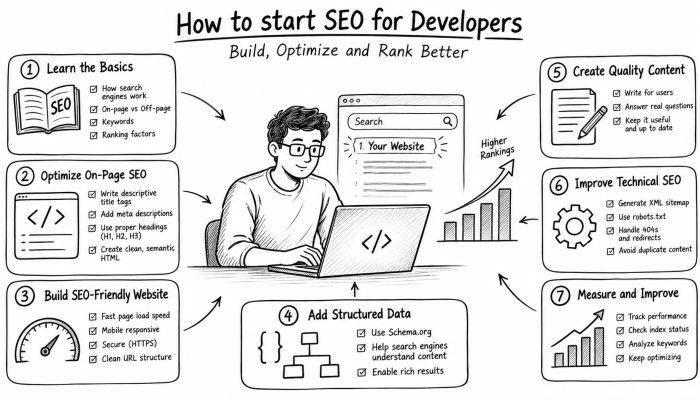
Familiarizing Yourself with SEO Basics and Terminology
Before diving into implementation, developers should learn basic SEO concepts and terminology. Understanding keywords, meta tags, backlinks, crawlability, indexing, and ranking helps contextualize your role in SEO. For instance, keywords are search terms users input, and targeting them effectively can help your page appear in relevant search results. Meta tags like title and description tags influence what appears in search snippets. Additionally, grasping the difference between on-page SEO (content and code optimization) and off-page SEO (external factors like backlinks) enables developers to focus on areas within their control.
Ensuring Crawlability and Indexability
Search engines rely on bots (crawlers) to scan and index website content. If your site structure or code prevents crawling, pages won’t appear in search results. Developers play a critical role in ensuring crawlability by managing sitemap.xml files, robots.txt files, and ensuring clean URLs. Using semantic HTML and avoiding excessive JavaScript-dependent content helps search engines parse the site effectively. Developers should regularly test crawling with tools like Google Search Console and avoid common issues such as broken links or infinite loops that block crawlers.
Writing Clean, Semantic HTML
The foundation of an SEO-friendly website is its HTML structure. Using semantic HTML tags like `
Optimizing Website Performance and Loading Speed
Website speed is a significant ranking factor for search engines and impacts user experience directly. Developers can optimize performance by minimizing HTTP requests, compressing images, using efficient CSS and JavaScript, and leveraging browser caching. Modern practices such as lazy loading, code splitting, and using content delivery networks (CDNs) contribute to faster load times. Tools like Google PageSpeed Insights and Lighthouse provide specific recommendations to improve site speed. Prioritizing performance optimization benefits SEO rankings and reduces bounce rates.
Mobile Optimization: Responsive and Adaptive Design
With over half of all web traffic coming from mobile devices, mobile-friendliness is essential for SEO. Google’s mobile-first indexing means that the mobile version of your site is prioritized in rankings. Developers must ensure responsive design, fluid layouts, and touch-friendly interfaces across device types. Additionally, minimizing mobile load times and optimizing images and fonts for smaller screens improves usability. Using viewport meta tags correctly and testing on real devices or emulators helps verify mobile optimization effectiveness.
Implementing Structured Data and Schema Markup
Structured data enables search engines to better understand your content by labeling information in a standardized format. Schema.org markup can highlight elements such as reviews, events, products, and FAQs, which enhances rich snippets in search results. Developers can add JSON-LD scripts or microdata annotations to pages, making content more machine-readable. This increases the likelihood of improved click-through rates by providing users with detailed info directly on the search results page. Learning to deploy structured data correctly is an advanced but rewarding SEO technique.
Managing URL Structure and Navigation
User-friendly URLs and site navigation improve both SEO and user experience. Clean, descriptive URLs incorporating relevant keywords are easier for both search engines and users to understand. Avoid using complex parameters, excessive numbers, or session IDs in URLs. Developers should ensure logical, hierarchical site architecture with flat navigation levels to allow search engines to index content efficiently. Breadcrumb navigation also aids in user orientation and supports internal linking, thereby distributing page authority strategically across the site.
Handling JavaScript and SEO
Modern web applications often rely heavily on JavaScript frameworks which can sometimes hinder SEO if not handled properly. Search engines have improved at crawling JavaScript, but it requires careful consideration. Developers should ensure that critical content and navigation are available without JavaScript when possible or use server-side rendering (SSR) or static site generation (SSG) to deliver crawlable HTML. Testing with tools like Google’s Search Console URL Inspection and Mobile-Friendly Test helps verify how Google sees your pages. Balancing dynamic features with SEO accessibility is key.
Utilizing SEO Tools Relevant to Developers
Several SEO tools are designed to assist developers in auditing and optimizing websites. For example, Google Search Console provides insights into indexing status, search queries, and performance. Other tools like Screaming Frog SEO Spider scan websites for broken links, duplicate content, and meta tag issues. Lighthouse and WebPageTest focus on performance and best practices, which affect SEO. Integrating these tools into your workflow helps track SEO issues and monitor improvements over time, facilitating iterative optimization without guesswork.
Collaborating Effectively with SEO and Marketing Teams
Developers rarely work on SEO in isolation. Effective communication and collaboration with SEO specialists, content creators, and marketing teams improve outcomes by aligning technical capabilities with strategic goals. Developers should familiarize themselves with SEO team priorities such as keyword strategy, backlink acquisition, and content optimization while seeking feedback on implementation. Using version control and documentation helps maintain clarity on SEO-related changes. Being proactive in explaining technical constraints and proposing solutions fosters mutual respect and stronger partnerships.
Keeping Up with SEO Trends and Algorithm Updates
SEO is a constantly evolving field shaped by search engine algorithm updates and emerging technologies. Developers should stay informed about changes like Google’s Core Web Vitals, indexing policies, and new standards in structured data. Following credible SEO blogs, attending webinars, and experimenting with new tools allows developers to anticipate impact on projects and adapt quickly. Continuous learning ensures your SEO skills remain relevant and helps maintain websites that meet best practices amid shifting search landscapes.
Conclusion
Starting SEO as a developer involves more than just adding keywords to your pages—it requires a blend of technical proficiency, strategic thinking, and ongoing learning. By understanding the fundamentals of search engine behavior, mastering clean and semantic code, optimizing performance and mobile experience, and effectively collaborating with SEO teams, developers can significantly enhance a website’s search visibility. Embracing SEO not only adds value to your skill set but also bridges the gap between development and marketing, resulting in digital products that perform well both technically and commercially. As search standards continue to evolve, the developer’s role in SEO will only grow more central, making it essential to start integrating these practices from day one. With the guidance provided here, you’re well on your way to becoming a developer who codes with SEO in mind, creating websites that both users and search engines love.
 How to Make the Most of Your Holiday Break
 The Best Winter Destinations for a Cozy Getaway
 How to Organize Your Holiday Travel Plans with Ease
 The Ultimate Guide to Cooking for a Crowd
 How to Make Healthy Comfort Food Without the Guilt
 5 Delicious Vegan Breakfast Ideas You Can Make in Minutes