How the Internet Changed the Way We Experience Art
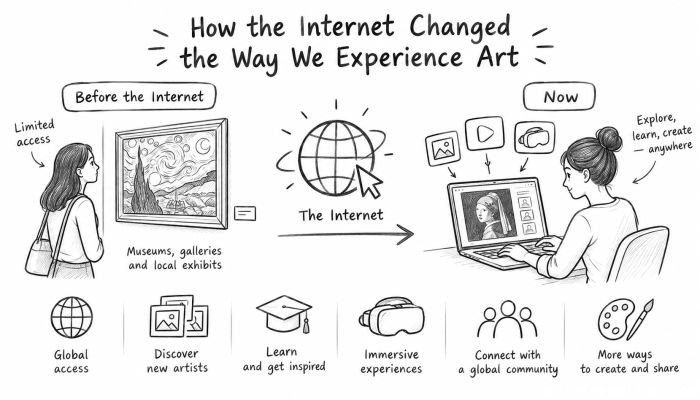
There was a time when experiencing art required presence — standing in a quiet gallery, flipping through heavy books, or attending live performances. Art felt distant, curated, and often exclusive. Then came the internet, and everything changed. Today, art lives in our pockets, flows through our screens, and speaks to us in real time. From digital paintings and NFTs to viral photography and AI-generated creations, the internet has transformed not just how we see art, but how we define it. This shift has blurred the lines between artist and audience, democratized access, and created an entirely new cultural landscape. In this blog, we explore how the internet has reshaped our relationship with art — making it more accessible, interactive, and deeply personal than ever before.
- The Democratization of Art Access
- The Rise of Digital Art Forms
- Social Media as the New Gallery
- The Blurring Line Between Artist and Audience
- The Emergence of NFTs and Digital Ownership
- Global Exposure for Emerging Artists
- The Shift Toward Instant Gratification
- The Role of Algorithms in Art Discovery
- Virtual and Augmented Reality Experiences
- The Evolution of Art Communities
- The Challenge of Authenticity in the Digital Age
- The Changing Definition of Art Itself
- Conclusion
- More Related Topics
The Democratization of Art Access
The internet has made art accessible to anyone with a connection. Museums that once required travel, tickets, and time are now available online. Virtual galleries, high-resolution archives, and open-access collections have removed barriers that once limited art appreciation.
This democratization means that a student in a small town can explore Renaissance masterpieces or contemporary installations without leaving home. Art is no longer confined to elite spaces; it belongs to everyone. This shift has also expanded the audience for artists, allowing their work to reach global viewers instantly.
The Rise of Digital Art Forms
The internet didn’t just distribute art — it created new forms of it. Digital painting, 3D modeling, motion graphics, and AI-generated visuals are now legitimate and respected art forms.
Artists are no longer limited by physical materials. Instead, they use software, tablets, and algorithms to create works that would be impossible in traditional mediums. This has opened endless creative possibilities and challenged conventional definitions of what art truly is.
Social Media as the New Gallery
Platforms like Instagram, Pinterest, and Behance have become the modern-day galleries. Artists no longer rely solely on curators or institutions to showcase their work.
Social media allows creators to share instantly, receive feedback, and build communities. A single post can reach millions, making visibility faster and more dynamic than ever before. This shift has empowered independent artists but also introduced new challenges, such as algorithm dependency and content saturation.
The Blurring Line Between Artist and Audience
The internet has transformed passive viewers into active participants. Comment sections, remix culture, and collaborative platforms allow audiences to interact with art directly.
People can now reinterpret, share, and even co-create artworks. This has blurred the traditional boundaries between artist and observer. Art is no longer a one-way experience; it is a conversation — evolving and shaped by collective input.
The Emergence of NFTs and Digital Ownership
One of the most revolutionary changes brought by the internet is the concept of digital ownership through NFTs (Non-Fungible Tokens).
NFTs have given digital art a sense of scarcity and value, allowing artists to monetize their work in new ways. While controversial, this innovation has sparked global conversations about authenticity, ownership, and the future of art in a digital economy.
Global Exposure for Emerging Artists
Before the internet, gaining recognition as an artist required connections, gallery representation, or institutional backing. Today, talent can be discovered online.
Artists from diverse backgrounds and regions can showcase their work globally without gatekeepers. This has led to a richer, more inclusive art world where voices that were once unheard are now celebrated.
The Shift Toward Instant Gratification
The internet has accelerated how we consume art. Instead of spending minutes or hours with a single piece, users scroll through hundreds of images in seconds.
While this increases exposure, it also reduces attention span. Art is often consumed quickly, sometimes without deep engagement. This shift raises questions about whether we are truly experiencing art or simply browsing it.
The Role of Algorithms in Art Discovery
Algorithms now play a major role in determining which art we see. Platforms curate content based on user preferences, engagement, and trends.
While this personalization helps users discover relevant art, it can also create echo chambers. People may miss out on diverse styles and perspectives, limiting their exposure to new ideas.
Virtual and Augmented Reality Experiences
The internet has enabled immersive art experiences through virtual reality (VR) and augmented reality (AR).
Users can now walk through digital exhibitions, interact with installations, and experience art in entirely new dimensions. This technology transforms art from something we observe into something we experience physically and emotionally.
The Evolution of Art Communities
Online communities have become powerful spaces for artists and art lovers. Forums, Discord groups, and creative platforms allow people to share ideas, critique work, and collaborate.
These communities foster growth, learning, and connection. They break geographical barriers and create a sense of belonging among artists worldwide.
The Challenge of Authenticity in the Digital Age
With the ease of sharing and copying, authenticity has become a major concern. Digital artworks can be replicated endlessly, making it difficult to establish originality.
This challenge has pushed artists and platforms to explore new ways of verifying ownership and protecting creative rights. It also raises deeper questions about what authenticity means in a digital world.
The Changing Definition of Art Itself
Perhaps the most profound impact of the internet is how it has changed our definition of art.
Memes, digital illustrations, AI creations, and even viral videos are now considered forms of artistic expression. The internet has expanded the boundaries of creativity, making art more inclusive and diverse than ever before.
Conclusion
The internet has not just changed how we experience art — it has redefined art itself. It has broken down barriers, empowered creators, and transformed audiences into participants. While it brings challenges like oversaturation and authenticity concerns, it also opens doors to innovation, inclusivity, and global connection.
Art is no longer confined to walls, stages, or institutions. It lives in our daily lives, shaped by technology and shared across borders. As the digital world continues to evolve, so too will our relationship with art — becoming more interactive, accessible, and deeply intertwined with human experience.
In the end, the internet hasn’t diminished art; it has amplified it. The question now is not whether art will survive in the digital age — but how far it can go.
 How to Make the Most of Your Holiday Break
 The Best Winter Destinations for a Cozy Getaway
 How to Organize Your Holiday Travel Plans with Ease
 The Ultimate Guide to Cooking for a Crowd
 How to Make Healthy Comfort Food Without the Guilt
 5 Delicious Vegan Breakfast Ideas You Can Make in Minutes