Understanding Cybersecurity in the Digital Age
The digital landscape is expanding rapidly with the growth of the internet. Every aspect of our lives from smartphones and smart homes to enterprise networks and government infrastructure is getting connected. This connectivity has created great benefits of convenience, innovation, and productivity. However, it has also exposed a large attack surface for cyber criminals. Cyberattacks, data breaches, and identity thefts are becoming more frequent and sophisticated.
Cybersecurity is now of the utmost importance to everyone including individuals, businesses, and governments. It is no longer a technical issue but a strategic and competitive one. Cybersecurity is the collection of technologies, processes and practices that are used to protect networks, devices, programs and data from attack or unauthorized access.
In this article, we will cover key concepts, challenges, strategies and future trends in cybersecurity.
- What Is Cybersecurity?
- Cybersecurity is important in the modern digital world for a number of reasons
- Types of Cyber Threats
- Cybersecurity Principles
- Network Security
- Endpoint Security
- Cloud Security
- IoT and Cybersecurity
- Social Engineering
- Regulations
- Emerging Tech in Cybersecurity
- Future of Cybersecurity
- Conclusion
- More Related Topics
What Is Cybersecurity?
Cybersecurity is the practice of defending computers, networks, programs and data from unauthorized access or attacks. It is a multidisciplinary field that covers aspects of network security, information security, application security and operational security.
The primary goal of cybersecurity is to ensure confidentiality, integrity and availability of information and systems. Confidentiality is the protection of sensitive data from unauthorized disclosure. Integrity is the prevention of unauthorized alteration or destruction of data. Availability is the reliable access to information and systems when needed.
Cybersecurity has become a central focus in organizations as well as personal safety.
Cybersecurity is important in the modern digital world for a number of reasons
Protection of Sensitive Information – Personal data, financial information and corporate secrets need to be kept safe from theft.
Building Trust – Businesses need to keep their systems and data secure in order to build trust with customers and maintain their reputation.
Avoiding Financial Loss – Cyberattacks can be very costly in terms of fraud, ransom payments, downtime and loss of business.
National Security – Government networks, critical infrastructure and defense systems can be targeted in cyber espionage and attacks.
Cybercrime is on the rise in terms of sophistication and volume.

Types of Cyber Threats
There are many types of cyber threats that can take advantage of vulnerabilities in different ways. Some common types of threats are:
Malware – Includes viruses, worms and ransomware that are designed to damage systems or gain access to them.
Phishing – Attempts to get users to reveal sensitive information using fake emails or messages.
Denial of Service (DoS) Attacks – Floods networks or servers with traffic in order to bring down services.
Advanced Persistent Threats (APT) – Long term targeted attacks that are often used in espionage or corporate espionage.
Zero-day Exploits – Attacks that target vulnerabilities that are not yet known by the vendor or security community.
It is important to be aware of different types of threats in order to defend against them.
Cybersecurity Principles
Cybersecurity is built on a number of key principles. Some of the main ones are:
Confidentiality – Ensuring that only authorized individuals can access information.
Integrity – Ensuring the accuracy and consistency of data throughout its lifecycle.
Availability – Ensuring that users and systems have reliable access to information when needed.
Authentication and Authorization – Ensuring that users are who they claim to be and controlling access to resources.
It is important to apply these principles consistently.
Network Security
Network security focuses on protecting the confidentiality, integrity and availability of data in transit across networks. This is done through technologies such as firewalls, IDS, VPN and secure Wi-Fi protocols.
Network security is important to prevent unauthorized access, data interception and other types of cyberattacks. It is particularly important for organizations with sensitive data and distributed workforces.
Endpoint Security
Endpoint security refers to securing the individual devices that connect to a network. This includes laptops, desktops, smartphones, tablets and IoT devices. Endpoint security measures include antivirus, device encryption and MDM solutions.
Endpoints are often the targets for attackers as they can be used to gain entry into larger networks.
Cloud Security
Cloud security is the protection of data, applications and services that are hosted in the cloud. It includes technologies and best practices such as data encryption, identity and access management and network segmentation.
Cloud providers use strong security measures but it is also important for organizations to properly configure systems and continuously monitor for threats.
IoT and Cybersecurity
IoT refers to the Internet of Things, which is the network of physical devices that are connected to the internet. This can include everything from smart thermostats to industrial machines.
IoT devices are often vulnerable to attacks due to poor security. Securing IoT networks involves strong authentication, regular updates and monitoring for suspicious activity.
Social Engineering
Social engineering is a form of cyber attack that uses manipulation and deception to get users to reveal sensitive information or perform actions that compromise security. Phishing emails, fake websites and impersonation are some examples of social engineering.
Humans are often the weakest link in cybersecurity and it is important to train them against these types of attacks.
Regulations
Governments have implemented various laws and regulations around the world to govern cybersecurity and data privacy. Some common ones include:
GDPR (EU) – General Data Protection Regulation that protects the privacy of EU citizens.
HIPAA (US) – Health Insurance Portability and Accountability Act that protects the privacy of healthcare data in the US.
CCPA (US) – California Consumer Privacy Act that regulates how personal data can be used in California.
Compliance with regulations helps to ensure legal protection and best practices in cybersecurity.
Emerging Tech in Cybersecurity
There are several advanced technologies that are emerging in the field of cybersecurity.
Artificial Intelligence (AI) and Machine Learning (ML) – Used to detect anomalies and predict threats in real time.
Blockchain – Distributed ledger technology that can improve data integrity and security of transactions.
Zero Trust – An approach to security that requires strict identity verification for all users and devices.
Behavioral Analytics – The use of analytics to track and monitor user behavior in order to detect suspicious activity.
These technologies can greatly enhance threat detection and response capabilities.
Future of Cybersecurity
The future of cybersecurity is going to be shaped by several key trends. These include the development of AI driven security, post quantum cryptography, and global cooperation to combat cybercrime.
Organizations will need to focus on continuous monitoring, employee education and investment in advanced technologies in order to stay secure. Cybersecurity is going to continue to be a critical field.
Conclusion
Cybersecurity in the digital age is now a strategic necessity and not just a technical requirement. It is important to protect sensitive data, maintain the reliability of systems and prevent cyber risks. This is critical not only for organizations but also for individuals and governments.
In order to be effective in cybersecurity, it is necessary to understand common threats, implement the key principles of cybersecurity, secure networks and devices, train humans and leverage emerging technologies. As technology continues to advance, cybersecurity is going to play an increasingly important role.
In summary, cybersecurity is not only about protection but also about empowering people and organizations to unlock the full potential of the digital world safely and securely.
 Big O Notation Explained for Beginners
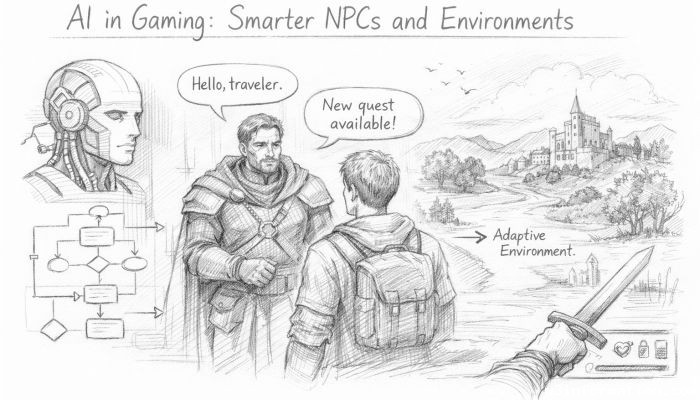 AI in Gaming: Smarter NPCs and Environments
 Understanding Bias in AI Algorithms
 Introduction to Chatbots and Conversational AI
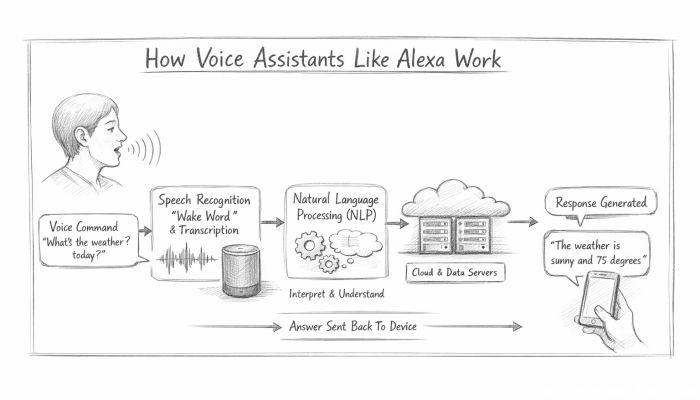 How Voice Assistants Like Alexa Work
 Federated Learning: AI Without Sharing Data