A Beginner’s Guide to Web Development
In today’s digital age, web development has become a highly sought-after skill. Whether it’s a personal blog, a small business website, or a complex e-commerce platform, every website relies on web development to function. However, for beginners, the vast landscape of coding languages, frameworks, and tools can be overwhelming.
Web development is the process of building and creating websites and web applications that are visually appealing, responsive, and functional. Learning web development not only opens up career opportunities but also allows individuals to bring their ideas and projects to life online. In this beginner-friendly guide, we will explore the world of web development step by step, covering essential concepts, tools, and best practices.
- Understanding the Basics of Web Development
- Learning HTML: The Structure of Web Pages
- Styling with CSS
- Adding Interactivity with JavaScript
- Introduction to Web Hosting and Domain Names
- Understanding Responsive Design
- Basics of Version Control with Git
- Introduction to Back-End Development
- Understanding Databases
- Learning Web Development Frameworks
- Testing and Debugging
- Continuous Learning and Community Engagement
- Conclusion
- More Related Topics
Understanding the Basics of Web Development
Web development can be broadly divided into two main categories: front-end development and back-end development. Front-end development is concerned with the user-facing aspects of a website, while back-end development handles the server-side logic, databases, and application functionality.
Front-end developers use languages like HTML, CSS, and JavaScript to create the visual elements and user interface of a website. Back-end developers, on the other hand, work with languages like Python, PHP, Ruby, or Node.js to build the server-side logic and application functionality. There are also full-stack developers who work across both front-end and back-end development to create complete web applications.
Understanding the differences between front-end, back-end, and full-stack development is crucial for beginners to identify which area aligns with their interests and goals.
Learning HTML: The Structure of Web Pages
HTML, or HyperText Markup Language, is the backbone of any web page. It provides the structure and semantics to content such as headings, paragraphs, lists, images, links, forms, and more.
Beginners should start by learning the basic HTML tags and attributes. Understanding the proper use of semantic HTML elements will improve accessibility and search engine optimization (SEO) as well. Once the fundamental HTML structure is understood, learners can proceed to styling with CSS and adding interactivity with JavaScript.

Styling with CSS
CSS, or Cascading Style Sheets, is the language used to control the appearance and layout of web pages. It allows developers to define styles such as colors, fonts, spacing, positioning, and responsive design.
Beginners should focus on learning how to link CSS stylesheets to HTML documents, use selectors to target elements, and apply properties and values. Exploring modern CSS techniques such as Flexbox and Grid will enable the creation of responsive and flexible layouts. Mastering CSS will allow developers to create visually appealing and professional-looking websites that adapt to different screen sizes and devices.
Adding Interactivity with JavaScript
JavaScript is the programming language of the web, and it brings websites to life by enabling dynamic and interactive elements. With JavaScript, developers can create functionalities such as dropdown menus, sliders, form validation, and real-time updates.
Beginners should focus on understanding variables, functions, loops, events, and manipulating the Document Object Model (DOM). Exploring JavaScript frameworks and libraries such as React, Vue, or Angular can take interactivity to the next level, allowing for the creation of more complex web applications and reusable components.
Introduction to Web Hosting and Domain Names
Once a website is developed, it needs to be hosted on a server and assigned a domain name to be accessible on the internet. Web hosting providers offer server space to store website files, and the domain name serves as the address users type into their browsers to access the site.
Beginners should familiarize themselves with the different types of web hosting options, such as shared hosting, VPS (Virtual Private Server) hosting, or cloud hosting. They should also understand how to register a domain name through popular domain registrars and hosting providers. Concepts like DNS (Domain Name System), SSL certificates, and server configurations are also important to understand for launching fully functional websites.
Understanding Responsive Design
Responsive design is a critical aspect of modern web development, ensuring that websites look and function well on all devices, including desktops, tablets, and smartphones. As mobile traffic continues to rise, responsiveness is becoming increasingly important.
CSS media queries, flexible grids, and adaptive images allow developers to create websites that automatically adjust and adapt to different screen sizes and resolutions. Beginners should practice testing websites on multiple devices and screen resolutions to ensure optimal performance, usability, and accessibility.
Basics of Version Control with Git
Version control systems, such as Git, are essential tools for web developers. They help track changes, collaborate on projects, and maintain a history of modifications made to code.
Git allows multiple developers to work on the same project simultaneously without overwriting each other’s work. Beginners should learn how to initialize repositories, commit changes, create branches, and merge code. Familiarity with platforms like GitHub or GitLab, which offer remote repositories for collaboration and version control, is also crucial.
Introduction to Back-End Development
While front-end development focuses on the user-facing aspects of a website, back-end development powers the server-side and manages data, authentication, and business logic.
Beginners can start exploring back-end development by learning a programming language such as Python (with frameworks like Django or Flask), PHP, or Node.js (JavaScript runtime). Understanding databases (e.g., MySQL, PostgreSQL, or MongoDB) is vital for storing and retrieving data. Key concepts include RESTful APIs, server-side routing, and authentication mechanisms. Combining front-end and back-end skills will enable beginners to create fully functional web applications.
Understanding Databases
Databases play a crucial role in web development by storing, managing, and retrieving data for web applications. Beginners should learn the difference between relational databases (SQL) and non-relational databases (NoSQL) and explore popular database management systems (DBMS) such as MySQL, PostgreSQL, or MongoDB.
Basic CRUD (Create, Read, Update, Delete) operations and querying languages like SQL will help beginners interact with databases. Understanding database design principles, indexing, and normalization is important for efficient and reliable database performance.
Learning Web Development Frameworks
Web development frameworks provide developers with pre-built structures and tools to speed up the development process and promote code reusability. Front-end frameworks like React or Angular help create dynamic and interactive user interfaces, while back-end frameworks like Django, Flask, or Express simplify server-side logic.
Beginners should start by learning a single framework to gain a deep understanding of its architecture, components, and best practices. Frameworks streamline development, improve code organization, and ensure scalability as projects grow in complexity.
Testing and Debugging
Testing is a critical step in web development to ensure that web applications function as expected across different browsers, devices, and screen sizes. Beginners should learn both manual and automated testing techniques, including unit testing, integration testing, and end-to-end testing.
Debugging tools, browser developer consoles, and logging mechanisms are invaluable for identifying and fixing errors. Adopting a disciplined approach to testing and debugging helps maintain code reliability, improves user experience, and minimizes technical debt in the long run.
Continuous Learning and Community Engagement
Web development is a constantly evolving field, with new technologies, frameworks, and best practices emerging regularly. To stay current, beginners should engage in continuous learning through tutorials, reading documentation, and following relevant online communities and resources.
Participating in online developer communities like Stack Overflow, Reddit, and GitHub not only provides access to a wealth of knowledge and experience but also allows beginners to learn from others, seek feedback, and collaborate on projects. Continuous learning and community engagement are essential to keep skills relevant, foster personal growth, and explore career opportunities in web development.
Conclusion
Web development is an exciting journey that combines creativity, logic, and problem-solving skills. By focusing on fundamental concepts like HTML, CSS, JavaScript, responsive design, and basic back-end development, beginners can build a strong foundation in web development.
Adhering to best practices such as writing clean and organized code, using version control systems, testing applications, and engaging with the development community will set beginners up for long-term success in their web development endeavors. With dedication, curiosity, and a commitment to continuous learning, anyone can become a skilled web developer and contribute to shaping the digital landscape.
With the right resources and a growth mindset, beginners can explore their creativity and innovation potential, turning their ideas into interactive and engaging web experiences, and opening doors to a rewarding career in web development.
 Big O Notation Explained for Beginners
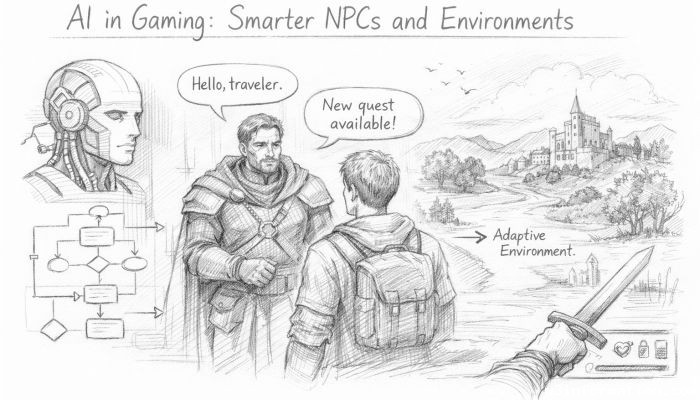 AI in Gaming: Smarter NPCs and Environments
 Understanding Bias in AI Algorithms
 Introduction to Chatbots and Conversational AI
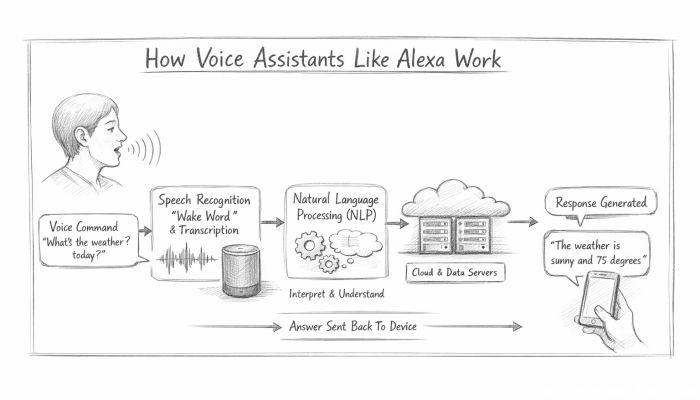 How Voice Assistants Like Alexa Work
 Federated Learning: AI Without Sharing Data