How IoT Is Shaping Smart Cities
Imagine walking through a bustling cityscape where everything around you is seamlessly interconnected—from the traffic lights to your smartphone, from the electric vehicles whizzing by to the smart grid managing the city’s energy needs. Welcome to the world of smart cities, a reality increasingly made possible by the Internet of Things (IoT). As urban populations around the globe surge, the pressure to manage this growth sustainably, efficiently, and humanely has never been greater. IoT technologies have risen to the challenge, becoming the lifeblood of modern urban planning and management. In this article, we’ll journey through the invisible web of connectivity that binds a city, explore how IoT is shaping smart cities in 2025 and beyond, and delve into the human stories and technological triumphs behind the city that never sleeps.
- Understanding the Foundation of IoT in Smart Cities
- Smart Transportation: Easing Urban Mobility
- Energy Management and the Smart Grid Revolution
- Waste Management Through Smart Monitoring
- Water Conservation and Management
- Enhancing Public Safety and Emergency Response
- Air Quality and Environmental Monitoring
- Smart Buildings and Connected Infrastructure
- The Role of IoT in Urban Planning
- Citizen Engagement and Smart Governance
- Challenges and Ethical Considerations
- The Future: Autonomous, Adaptive, and Human-Centered Cities
- Conclusion
- More Related Topics
Understanding the Foundation of IoT in Smart Cities
At its most basic, the Internet of Things is about connectivity—physical devices that collect, exchange, and act upon data via digital networks. In smart cities, the IoT ecosystem is massive, extending to millions of sensors that blanket roads, buildings, streetlights, and public utilities. These sensors record and monitor conditions like traffic congestion, air quality, energy consumption, and waste generation in real time. By creating a constant feedback loop of data, IoT allows city administrators to make evidence-based decisions, streamline services, and predict future trends. For instance, a smart grid could automatically balance power distribution based on real-time demand or a smart water system might detect a leak instantly. The smart city’s foundation is this interconnected infrastructure, transformed from inert metal and concrete into a responsive, data-driven network that adapts to the city’s ever-changing rhythms.

Smart Transportation: Easing Urban Mobility
One of the most tangible applications of IoT in smart cities is transportation. Sensors embedded in traffic signals, vehicles, and public transit systems can now monitor movement and optimize routes in real time. Smart traffic lights adapt to current traffic conditions, easing congestion and emissions, while vehicles with IoT connectivity communicate with each other to avert accidents. Ride-sharing services leverage IoT data to reduce idle time and maximize efficiency. Predictive analytics, using past movement patterns, allows city planners to identify emerging congestion problems and solve them before they lead to full-blown gridlock. From Singapore to Amsterdam, IoT-based traffic management systems have already led to measurable decreases in travel times and carbon emissions. As electric and self-driving vehicles become mainstream, the IoT-transportation nexus will further revolutionize urban mobility, making it faster, safer, and greener.
Energy Management and the Smart Grid Revolution
Energy efficiency is another key pillar of smart city design, and IoT is at the forefront of this revolution. Smart grids monitor and adjust power distribution in real time to match demand and avert outages. Sensors on homes, businesses, and industries provide data to these grids, enabling dynamic energy allocation. Smart meters allow consumers to track their power use and make informed decisions about consumption, while renewable sources such as solar and wind power are seamlessly integrated into the grid. This not only reduces waste but also promotes sustainability by harmonizing energy supply and demand. Cities like Copenhagen and San Diego are already implementing IoT-based energy systems that have significantly reduced carbon emissions and operational costs, proving that technology and sustainability can go hand in hand to build more resilient cities.
Waste Management Through Smart Monitoring
Waste disposal has long been a challenge in densely populated cities, but IoT offers a solution. Smart bins with sensors now monitor their fill-levels and send alerts when they are full, optimizing collection routes and saving on fuel. Waste sorting facilities equipped with IoT-enabled cameras and machine learning can automatically identify recyclables, boosting recycling rates. Data analytics helps municipalities identify waste patterns and inform policies on reduction and reuse. The often hidden impact of this technology, however, is not just environmental—smart waste management systems also improve public hygiene and aesthetics by preventing overflowing bins in public areas. Cities like Seoul and San Francisco are leading the way in smart waste solutions, redefining urban cleanliness while also contributing to circular economy targets.
Water Conservation and Management
In water-stressed cities, IoT-based smart water systems can help monitor usage, track leaks, and ensure optimal distribution. Smart meters can track household and industrial consumption in real time, allowing utility companies to flag anomalies and drive conservation efforts. Sensors on pipelines can detect pressure changes, alerting to possible leaks or blockages before they become serious. IoT platforms can also use rainfall and groundwater data to anticipate shortages and manage reservoirs more effectively. Cities like Dubai and Barcelona have already successfully implemented IoT-based smart water systems that have saved millions of liters of water per year. Data-driven water governance, as IoT allows, will empower cities to conserve this precious resource while ensuring everyone has equitable access.
Enhancing Public Safety and Emergency Response
Public safety is a critical function of any city, and IoT is set to transform it. Smart surveillance systems, for example, can use AI to identify unusual activities and alert authorities in real time. IoT-enabled public safety systems connect the police, fire departments, and medical emergency services for better coordination. Wearable devices for first responders can track health and location data, providing real-time situational awareness during emergencies. In areas prone to natural disasters, IoT sensors can monitor environmental variables like temperature, seismic activity, and weather patterns to issue early warnings. The IoT-based public safety transformation is not just about faster responses; it’s also about a shift to a more proactive model of risk prevention. Smart cities are becoming safer because they can “sense” and respond to risks before they escalate.
Air Quality and Environmental Monitoring
Air pollution has been a silent epidemic in many cities for decades, but IoT is helping cities turn the tide. Smart air quality sensors measure pollutants like CO₂, NO₂, and particulate matter. This real-time data can be published to public dashboards and government agencies, who can then use it to identify pollution hotspots, control industrial emissions, and design greener transport routes. Citizens can access this data on their phones and use it to make informed decisions on travel and outdoor activities. In cities like Beijing and Los Angeles, IoT-enabled environmental monitoring has led to adaptive policies that dramatically reduced pollution levels. The hidden power of this technology is in empowerment through awareness—when both the public and the government can “see” environmental data in real time, it becomes possible to mobilize a citywide response.
Smart Buildings and Connected Infrastructure
Buildings themselves are key hubs of IoT innovation, and smart buildings are fast becoming standard in cities around the world. These are buildings that use connected devices to self-regulate energy use, lighting, and security systems. Temperature sensors, for example, can adjust heating or cooling based on the number of occupants in a room. Security cameras with facial recognition or abnormal motion detection can signal intrusions. Predictive maintenance is another major IoT application—sensors in elevators or air conditioning systems can automatically notify facility managers when service or part replacements are due. The technology extends even further—whole city blocks can now interface with municipal systems for energy and waste efficiency. Smart buildings improve comfort, safety, and productivity and can also contribute to huge cost and energy savings over time.
The Role of IoT in Urban Planning
Urban planners are using IoT data to design cities that are more livable, inclusive, and sustainable. Data on population density, traffic flows, and environmental impacts can inform smart zoning regulations, infrastructure planning, and allocation of green spaces. Predictive modeling tools that work on IoT data can even help planners understand how a new road or residential development might impact local ecosystems, commute times, or social dynamics. The IoT also opens up opportunities for more participatory urban planning by enabling governments to solicit citizen feedback on proposed developments through apps. In effect, the IoT is making city design more dynamic and democratic—a shift from fixed blueprints to an evolving dialogue between planners, citizens, and the built environment.
Citizen Engagement and Smart Governance
A smart city is smartest when its citizens are also engaged. IoT platforms help governments reach out to their citizens more directly, with mobile apps that let residents report problems, access services, and participate in public consultations or opinion polls. Smart governance applications can use IoT data to automate government services, cut red tape, and improve transparency. Citizens could use their phones to report problems like potholes or broken lights, for instance, and municipal systems could send automatic repair requests to the right department. Real-time data dashboards also allow officials to track service delivery and resource allocation. In this model, the real story is empowerment—IoT can make citizens not just passive recipients of government services but active participants in city life. When technology bridges the distance between government and people, trust and efficiency are possible.
Challenges and Ethical Considerations
Despite the progress made in IoT-enabled smart city development, there are also real challenges that cities face. Data privacy is one major concern: interconnected systems and devices collect vast quantities of personal data, which must be managed carefully. Cybersecurity is another issue—connected systems are vulnerable to hacking and technical failures, and if utilities or emergency services are disrupted, people’s lives can be put at risk. There are also worries about digital divide and equality—access to IoT-powered amenities might not be evenly distributed, leading to new forms of social inequality. Finally, there are ethical questions around surveillance and consent, data ownership, and more. The balance between technology, privacy, inclusivity, and governance is delicate, but it is crucial for building sustainable smart cities. Policymakers need clear regulations to protect citizens without stifling innovation, and for IoT to reach not just those who can afford it but everyone.
The Future: Autonomous, Adaptive, and Human-Centered Cities
The future of IoT-enabled smart city development is also an exciting one. We can expect to see more autonomy and adaptability as the IoT converges with technologies such as artificial intelligence, 5G, and edge computing. Fully integrated IoT systems will allow cities to self-optimize and learn from their data. Autonomous mobility networks, drone-based delivery systems, and intelligent waste-to-energy plants will become more common. Yet, the ultimate purpose of a smart city is not just technology for technology’s sake, but human flourishing. The cities of the future will be designed not just to operate more efficiently, but to create environments that are more humane. Data, technology, and infrastructure can support cities where people are more connected to each other, happier, healthier, and more fulfilled. By blending data and empathy, technology and ethics, innovation and inclusion, IoT will help shape a better world not just of smart cities, but of smart humanity.
Conclusion
The Internet of Things is transforming the way we live in cities, and smart cities are fast becoming the new reality. From traffic and energy management to public safety and citizen engagement, IoT is the invisible, indispensable heartbeat that powers a connected city. Yet, beneath all the data streams and smart technologies, there’s a larger story—the story of humanity’s drive to create better cities and, by extension, a better world. As urban areas grow more populated, more sustainable, more equitable, and more livable, they will depend not just on better connectivity, but on better community. The smart city of the future will be measured not by the number of sensors or bandwidth it has, but by how it empowers the people who live there. In that way, IoT is not just making smart cities; it’s helping to build a smarter world for us all.
 Big O Notation Explained for Beginners
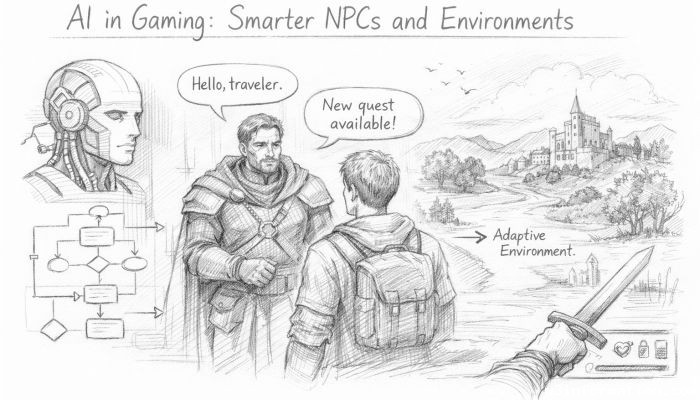 AI in Gaming: Smarter NPCs and Environments
 Understanding Bias in AI Algorithms
 Introduction to Chatbots and Conversational AI
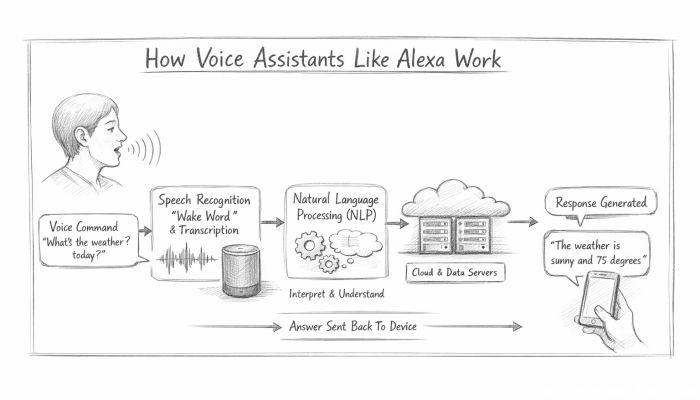 How Voice Assistants Like Alexa Work
 Federated Learning: AI Without Sharing Data