Edge Computing vs Cloud Computing: Key Differences
With the rapid advancements in the information technology industry and evolution in technology, two new computing styles have been introduced and are being used commonly to manage and process data. The cloud computing concept was launched and used first, and it has recently been replaced by the edge computing style. However, both these styles and techniques are different in several ways and serve different purposes. Edge and cloud computing are the two major computing technologies whose importance is increasing rapidly, and businesses are using both of them for different purposes. The following sections talk about some of the basic differences between cloud computing and edge computing in great detail.
- Defining Cloud Computing
- Understanding Edge Computing
- Architecture and Infrastructure Differences
- Latency and Real-Time Processing
- Bandwidth and Network Dependency
- Data Privacy and Security Considerations
- Cost Implications and Resource Management
- Scalability and Flexibility
- Use Cases Suited for Cloud Computing
- Use Cases Best Handled by Edge Computing
- Integration and Hybrid Models
- Future Trends and Innovations
- Conclusion
- More Related Topics
Defining Cloud Computing
Cloud computing is the provision of the information technology required by a system in a form of service. Cloud computing provides servers, storage, databases, networking, software, and many other resources via the internet (“cloud”). It has allowed one to achieve the computing requirements based on need without prior investments in the infrastructure and resources. There are mainly three different types of cloud models such as public clouds, private clouds, and hybrid clouds. Cloud service providers (CSPs) are used to make the business systems highly flexible by allowing them to choose between their capacity of the cloud based on the requirement. The cloud computing system has both the advantages and disadvantages associated with it.

Understanding Edge Computing
Edge computing is a processing system in which the data is transmitted to a device, which is located close to the end-user instead of making use of a data center. The edge is made use of to execute various applications, and the information is produced, collected, and stored in a place that is remote from the centralized cloud and its computing infrastructure. Edge computing generally uses multiple layers. There are several technologies that make the network of edge computing. In edge computing, data is processed in a near real-time fashion, whereas, in the traditional network, data is sent to the cloud for its storage. Edge computing is generally placed at the edge of a network. There are many advantages of using edge computing in systems, including reduced latency, low bandwidth, and security.
Architecture and Infrastructure Differences
The two main types of computing are Cloud computing and edge computing. The cloud computing architecture basically is made up of a combination of clients and service providers. The architecture includes a cloud middleware and components, cloud storage, etc. In cloud computing, all the data of the client is stored in the form of virtualization where a high capacity of network is used. The cloud computing infrastructure includes general-purpose servers, which are shared with multiple users. In edge computing, there are various technologies that make the network for edge computing. The technology mostly used are cloudlets, sensors, and networks with fog computing systems, and most of them are placed at the edge of the network.
Latency and Real-Time Processing
Latency refers to the reduced speed with which a computer or a network operates. Cloud computing deals with reduced network latency where the transmission of data is processed from one node to another. However, reduced latency can be an issue for real-time systems and should be handled accordingly. On the other hand, edge computing mainly involves lesser network latency as the transmission of data from one node to another is lesser than in cloud computing, as the data in edge computing is computed and processed locally, rather than in a centralized way.
Bandwidth and Network Dependency
Cloud computing and edge computing both make use of wide bandwidth, although the two concepts of computing are different from each other and have a different impact on bandwidth and network dependency. The data generated from a cloud node is sent through the internet or via a cloud in cloud computing. This is one of the main reasons for the high bandwidth consumption in cloud computing, which is normally expensive. However, in the case of edge computing, bandwidth consumption is less as the process is local.
Data Privacy and Security Considerations
Cloud computing and edge computing have an impact on the data privacy and security, which are, of course, different from each other. In cloud computing, a centralized approach is used in which all the data is stored in a central unit or a system. The main reason that a centralized system does not provide security in cloud computing is because the information is transferred to different locations, increasing the chances of data hacks. However, in edge computing, a decentralized approach is used. It means that the data is processed, and stored locally, in the local units only, which provides security against external data hacking.
Cost Implications and Resource Management
Cloud computing and edge computing both have an impact on the cost implication and resource management, which are different from one another. Cloud computing is done remotely, which is generally less expensive in cost. However, cloud computing involves high investment and effort, when compared to edge computing. In the case of edge computing, the data is stored locally, and thus, it has a high rate of investment but less cost.
Scalability and Flexibility
Cloud computing and edge computing both have an impact on the scalability and flexibility, which are also different from each other. The cloud computing system is more scalable and can be used for many purposes and on various different scales. In the case of cloud computing, scalability and flexibility have a lot of issues due to which virtualization software is used. However, in edge computing, there are not many such problems, but the data is stored on the edge of the network and provides data security.
Use Cases Suited for Cloud Computing
Cloud computing is used in many different industries and is applied for various different purposes in different use cases. One of the major use cases of cloud computing is IT infrastructure. Cloud computing also provides good solutions for disaster recovery and file and folder sharing, in which virtualization software are used, making the cloud flexible. Cloud computing has various other uses, such as giving it on demand service and serving any scale of storage. The data privacy and security of cloud computing makes it one of the most used in many different use cases.
Use Cases Best Handled by Edge Computing
Edge computing is also used in many different industries and is applied for many different purposes in various use cases. One of the major use cases of edge computing is in Internet of Things (IoT), where there are many such sensors placed in different areas, and at every edge of the network. The data in edge computing is transmitted and processed locally, which enhances the security, so, there are not many concerns regarding data privacy and security of edge computing in any of its use cases.
Integration and Hybrid Models
There have been cases and services in which both cloud and edge computing has been used, to integrate both the services and make the process efficient. However, many new businesses are implementing edge computing, to avoid any issue that cloud computing might face, due to which the information has to be transferred, in the cloud computing, to different places, increasing the chances of data hacking. The usage of only local computing in edge computing avoids the concerns of data privacy and security.
Future Trends and Innovations
The new trends and innovation have increased the difference between cloud computing and edge computing, and are still going to increase, as many different businesses start using these new technologies and apply them for various uses. The major trend in both these two different services is the 5G technology. Both these systems are different from each other, and with the upcoming trends and new technologies that are introduced in the market, it is only going to increase the distance.
Conclusion
Cloud computing and edge computing are two different concepts in IT infrastructure and are used for various different purposes, but they are very different in many ways. Edge computing and cloud computing have an impact on one another. The difference between cloud computing and edge computing has various similarities, such as data privacy and security and many others. The technologies are increasing the gap between these two, as more and more differences are being introduced in them.
 Big O Notation Explained for Beginners
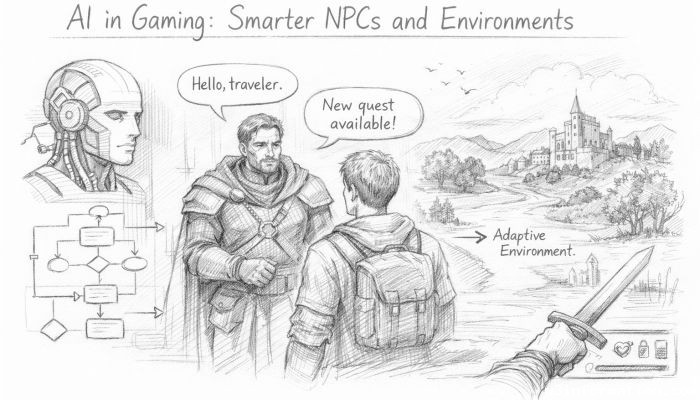 AI in Gaming: Smarter NPCs and Environments
 Understanding Bias in AI Algorithms
 Introduction to Chatbots and Conversational AI
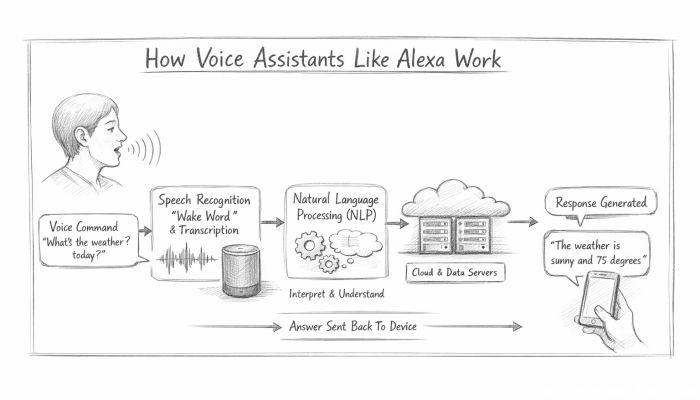 How Voice Assistants Like Alexa Work
 Federated Learning: AI Without Sharing Data