How to Secure Real-World Projects Using Algorithms in 2025
Algorithmic computation is no longer an academic exercise or experimental luxury in 2025. It is the beating heart of practical, cutting-edge systems in real-world projects spanning all industries and areas of application. Algorithms power everything from transaction systems, smart cities, and health systems to mobile networks, robotics, and clean energy grids. Algorithmic intelligence and algorithmic problem solving also power the dark web, cyberattackers, cybercriminals, cybersecurity companies, and anyone else looking to compromise, hack, sell or use sensitive or protected information, computer systems, networks or services for purposes of data theft, corporate or national security. The more we rely on data and algorithms in the modern world, the greater the need to develop ways to keep systems safe from cyberattacks, data breaches, and other forms of algorithmic disruption or interference. Securing real-world projects in 2025 using algorithms means more than just encrypting files or user credentials. It means building layers of mathematical logic to predict potential problems and seek out, find and remove attacks or data risks on an algorithmic or automated level. In this article, we explore how algorithms are applied in modern security to build and protect complex systems in 2025. We look at industry best practices, common tools and resources, upcoming security trends, and the potential of artificial intelligence (AI) to protect the security systems of tomorrow.
- The Expanding Role of Algorithms in Real-World Projects
- Algorithmic Security Fundamentals
- AI-Powered Threat Detection
- The Quantum-Resistant Algorithms
- Integrating Machine Learning for Predictive Security
- Blockchain and Distributed Algorithms for Data Integrity
- Algorithmic Governance and Ethical Security
- Securing Internet of Things (IoT) Networks with Algorithms
- Automation in Cyber Defense Systems
- The Role of Algorithms in Cloud Security
- Leveraging Genetic and Evolutionary Algorithms for Optimization
- Combining Human Intelligence and Algorithmic Decision-Making
- Challenges in Algorithmic Security Implementation
- Future Trends: The Algorithmic Security Horizon Beyond 2025
- Conclusion
- More Related Topics
The Expanding Role of Algorithms in Real-World Projects
Algorithms drive the most important aspects of digital innovation. In the real-world projects of 2025, the importance of algorithmic processing has expanded to include preventing security gaps and failures. Algorithms are required for all aspects of digital intelligence, from product and process recommendation engines to digital ledgers and blockchain networks. They run real-time on real-world projects, such as energy management systems, logistics distribution centers, smart home devices, or global e-commerce marketplaces. All modern algorithms learn to make context-based decisions as they process data about the real world. As a result, they are designed to balance analytical load, anticipate potential system failures, and automatically create additional protective firewalls if a potential problem is detected. In addition, algorithms are flexible enough to update and modify themselves if they are attacked and need to make a logical or reactive adjustment, which is where some algorithms can identify suspicious traffic or user actions faster than manual or real-time human monitoring. Predictive cybersecurity and future AI is based on this technology.
Algorithmic Security Fundamentals
Algorithmic security starts with designing a mathematical approach that can help protect systems, data, applications, or other logic from attacks, unapproved access, hacking or external tampering. In 2025, these rules are made up of cryptographic and hash algorithms, machine learning models, and optimization algorithms. Cryptographic algorithms are encryption and decryption systems that use strong mathematical formulas. The most popular algorithms are quantum-resistant AES encryption and RSA encryption. Machine learning (ML) algorithms are based on statistical models and patterns that help create logic with self-improving or adaptive neural network capabilities. Optimization algorithms are mathematical routines for streamlining or increasing the processing capacity or efficiency of a task, code or even network without sacrificing other aspects such as security. The three types of algorithms work together to form new, multilayered security structures that can update and adapt in real time. Algorithm design is both an art and a science in 2025 because developers need to be aware of not only the technical and security needs of the algorithm, but also how real hackers or attackers can get around the limitations of the algorithm and break it in an intelligent way.

AI-Powered Threat Detection
Artificial intelligence systems have long since become mainstream in every aspect of security. By 2025, many “rule-based” human decisions or security structures have been replaced by self-contained AIs that can learn and become more intelligent with every attempted data breach or threat. Algorithms can now actively scan large amounts of raw data, which are then used as “logs” or other information, to identify unusual or suspicious patterns that may indicate a security threat, cyber attack or data breach. For example, a deep learning algorithm may be able to use a false flag indicator to mark a suspicious financial transaction pattern before any actual fraud occurs. Reinforcement learning AI is even more advanced and capable of learning for itself how to identify security problems and make decisions based on previous data. Companies like Palo Alto Networks and IBM already have AI threat detection engines that can monitor and detect threats at near-zero latency 24 hours a day, seven days a week.
The Quantum-Resistant Algorithms
Quantum computing is still making major advances and becoming mainstream by 2025. Quantum computers are especially effective at solving complex or large number encrypted cryptographic keys that are used for traditional protection processes and other encryptions that are used to protect data at rest or in use. To address this problem, algorithms that are not affected by the ability to break strong cryptography keys using a quantum computer are needed. To meet this need, several new quantum-resistant algorithms have emerged, some of which include the following:
* Lattice cryptography (based on higher dimension geometry and linear algebra)
* Multivariate polynomial cryptography
* Hash-based cryptography
* Code-based cryptography
All of these algorithms have in common that they have a new, sophisticated mathematical base that makes them “difficult” for quantum computers to break in the same way or speed as with traditional keys. This is done in such a way that the new keys are even longer and more computationally intensive than those that have been compromised, in order to make them more secure and impossible for quantum computer models to unlock in a short period of time. In addition to encryption, quantum-safe algorithms have found their use in blockchain systems, government security agencies, and even cloud infrastructure.
Integrating Machine Learning for Predictive Security
Predictive security goes one step further in the security process because it is based on preventing problems before they happen. In the real-world projects of 2025, machine learning is used to identify and predict potential system problems and even future risks before they actually happen or cause problems. For example, a smart grid management system using algorithms may be able to predict a possible cyber attack or network intrusion before any problems are visible to real-time or manual monitoring. Algorithms using a range of learning and pattern analysis techniques, such as Bayesian machine learning, support vector machines or even graph neural networks, can perform their own security-based “statistical analysis” on historical data based on incoming raw data to predict whether an event is going to be or is most likely not to be an attack. These predictive models continuously learn from their own performance and feedback to become even more precise and self-aware over time. This approach to security intelligence is quickly changing how real-world projects detect and predict security problems before they become actual problems.
Blockchain and Distributed Algorithms for Data Integrity
Blockchain consensus is based on a set of algorithms that use a “distributed network” to solve all logic in parallel and then update or authenticate any data blocks or processes in a “shared or synchronized” way. This remains one of the most secure ways of securing transactions and data streams in 2025 because all data integrity, quality and accuracy is defined by the number of layers and also the need for verification in consensus processes. The use of distributed proof of consensus algorithms, such as PoS or Byzantine Fault Tolerance (BFT) consensus, ensures that every transaction, data update or digital signature update is verified by multiple independent parties, thus making all data virtually tamper-proof or secure. In addition, many other applications beyond cryptocurrency or digital currencies are now being built on the blockchain. For example, supply chain systems, patient health records and even voting systems are now also being built on the blockchain, and all of these algorithms rely on the blockchain consensus protocols to ensure 100% data and transaction integrity and accuracy.
Algorithmic Governance and Ethical Security
Ethical governance will be one of the most important aspects of any algorithm in 2025. At present, all governments and larger organizations are also beginning to provide “guidelines for algorithms” for greater algorithmic governance and transparency. Algorithms without restrictions or external factors can lead to unknown bias or other false positives in attack detection, system protection, or data protection, which can lead to privacy violations. To help with this situation, many developers and AI companies are now including additional “explainable AI components” (XAI) in algorithms to help provide information on how the algorithm made its final decision. Guidelines for responsible AI and algorithmic security are being developed by many governments, as well as standardization bodies like the European Algorithmic Security Board (EASB) to provide baseline protection, as well as AI standardization and training for ethical use cases.
Securing Internet of Things (IoT) Networks with Algorithms
IoT security is also an increasingly important consideration in the real-world projects of 2025 because the use of “smart” devices now extends to almost all aspects of IoT devices and sensors. In 2025, securing IoT systems often requires the use of special “lightweight” algorithms that are specifically designed to perform complex tasks without requiring high amounts of RAM or other types of heavy memory. Algorithms such as elliptic curve cryptography (ECC) and homomorphic encryption are great examples of how IoT algorithms can work within small or edge devices but still communicate with other connected systems and perform all their intelligence-based security operations, but still use almost no processing power. They even include federated learning algorithms that allow devices to collaboratively train their own machine learning algorithms without having to share raw data. This is extremely useful for privacy purposes, but also allows IoT systems as a whole to have more processing power and “shared learning” intelligence, even with very large IoT systems, which must all be perfectly and algorithmically synchronized for real-time integrity, identity authentication, and safety.
Automation in Cyber Defense Systems
Automation is the new cyber security game in 2025 and many companies, especially in the US and Europe are now starting to implement self-healing algorithms. Self-healing algorithms are special security-based codes that use their own logic to identify vulnerabilities in their own code, before an external attack is attempted, and then automatically patch or quarantine the affected module. This type of self-analysis and self-healing is based on several pattern recognition and AI-based generative learning models that allow the algorithm to learn to “reprogram” itself in an automated and algorithmic way. By using a constant stream of raw data, even cyber attacks or other potential security threats are also identified and resolved without manual intervention. Many cybersecurity companies, such as Microsoft and AWS, have even introduced services like Microsoft Azure Security Fabric or Amazon GuardDuty in 2025 that offer automated detection and mitigation at machine speed with very low or even zero latency. This automated approach not only means that many real-world projects can achieve near-impenetrable levels of security, but that even in a 100% automated fashion, such attacks can be mitigated in a matter of seconds or minutes without human supervision.
The Role of Algorithms in Cloud Security
Cloud security is the foundation of almost every single real-world project in 2025, but this also means that using algorithms for cloud security is also extremely complex and requires advanced levels of processing protection. Algorithms help to protect the cloud in three major areas: access control and verification, data encryption and file protection, and basic “intrusion prevention systems” (IPS) for attack or threat prevention. Machine learning algorithms help identify suspicious cloud usage patterns, from unauthorized data mining to privilege escalation. Algorithms are also used for all identity and access controls. For example, “zero trust” algorithms force all applications and cloud-based assets to be verified or authenticated, even if they come from within the same network. Encryption algorithms such as SHA-512 and ChaCha20 are used to protect data in transit, in use and even at rest. Companies like AWS and Microsoft are even using artificial intelligence-based “policy engines” that can automatically update firewall and encryption rules in real-time to automatically respond to any changes.
Leveraging Genetic and Evolutionary Algorithms for Optimization
Genetic algorithms (also known as evolutionary algorithms) are a specific set of self-learning, machine learning algorithms that are based on the patterns, structures and intelligence of natural selection and biological genetic reproduction. They are one of the most useful algorithms for optimizing security solutions in 2025. These algorithms work in a basic sense by generating several “candidate solutions” to a specific security problem, and then testing, identifying, selecting and keeping the best candidates. This process of selection, which may also include crossover and gene mutation, is then repeated several times to “optimize” the end solution. A good example of this is how network security systems may now use genetic or evolution-based algorithms to optimize or fine-tune their own detection accuracy parameters and increase the overall precision of an IDS. These types of algorithms are especially useful because of their adaptive properties. The algorithms will continue to improve over time even as the methods of cyberattack evolve.
Combining Human Intelligence and Algorithmic Decision-Making
Algorithms may be the future, but humans are still the smartest people in any business or process. In 2025, the best security strategies are human-based teams working in collaboration with equally advanced, automated and intelligent algorithms. Algorithms take care of real-time monitoring, data processing, initial filtering and some of the initial threat containment. In turn, human professionals are there to interpret more complex situations and to place intelligence-based analysis in a more tangible, “business-facing” perspective. Security analytics tools that leverage AI for visualization are becoming increasingly intuitive to human professionals as they improve transparency. This kind of collaborative human-algorithm security is important because it helps to reduce the risk of false positives and human-based “statistical analysis” issues. Cyber training is increasingly focusing on the need for algorithmic literacy and an understanding of how the machine actually thinks, learns and updates itself.
Challenges in Algorithmic Security Implementation
Despite all the advances in algorithmic security, there are still some common challenges in algorithmic-based security systems and their implementation in real-world projects. In 2025, a new form of algorithm hacking or risk called adversarial attack is emerging. Attackers use input data, feature replay or other techniques to mislead or otherwise confuse or circumvent machine learning-based security systems or even algorithms that are based on learning principles. Algorithm transparency is also a challenge in many systems because most algorithms work in a “black box” that is difficult to review. Another key problem is legacy integration, which often creates compatibility and scalability problems. Legacy systems are older software, technology or operating systems that are no longer “updated” with modern development, security standards or infrastructure and which are often used as a “bridge” to the modern infrastructure. To solve these and other challenges, most developers are focusing on more integrated security testing, ethical penetration testing, continuous security monitoring, and ethical AI frameworks for greater interpretability.
Future Trends: The Algorithmic Security Horizon Beyond 2025
The future of protecting real-world projects in 2025 is rapidly approaching autonomous and AI ecosystems that can fully collaborate with each other to solve problems and improve both data and asset security. By 2030, not only will they identify and stop or quarantine threats automatically, but they will also predict geopolitical or natural events and resource risks that could have an impact on the physical and digital world around them. Bio-inspired and algorithmic security solutions that mimic human immune systems and neural plasticity will defend and adapt in real time. Edge AI-based algorithms will provide more security closer to the data itself, with less latency. Hybrid algorithms are even being created that use data from physical or real-time signals. The future is rapidly approaching where AI algorithms can interact and coordinate with each other in a hyper-secure manner. At this point, algorithms can be designed not only for maximum processing and service, but also for security, ethical governance and complete autonomy. This is the beginning of the next algorithmic horizon.
Conclusion
Securing real-world projects in 2025 using algorithms requires a special fusion of advanced computing, AI, and human intelligence. Algorithms are no longer just “machines” or tools to make complex systems work. They are the real guardians of tomorrow, protecting all digital and connected systems from cyberattacks and intruders faster than anyone or anything imagined before. They use quantum-resistant encryption, cloud-safe solutions and even AI- and self-correcting algorithms. But despite this, people are not obsolete. Intelligent design also needs to come with ethics, contextual analysis and complete trust. The future is not just algorithm-based and intelligence, but also ethical and autonomous. We must start by taking care and protecting the digital world that we live in, while building and empowering even better algorithms that make the modern world a better place.
 Big O Notation Explained for Beginners
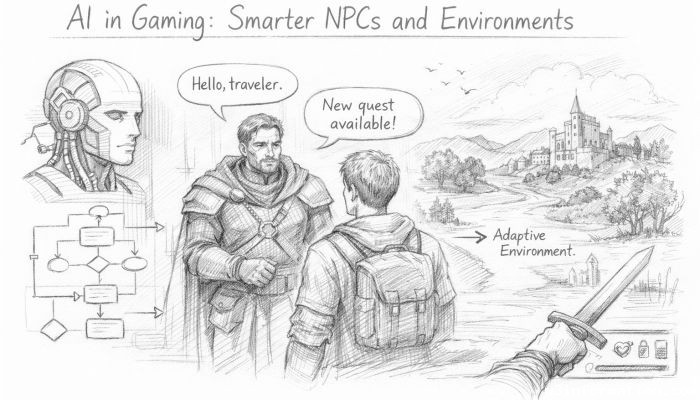 AI in Gaming: Smarter NPCs and Environments
 Understanding Bias in AI Algorithms
 Introduction to Chatbots and Conversational AI
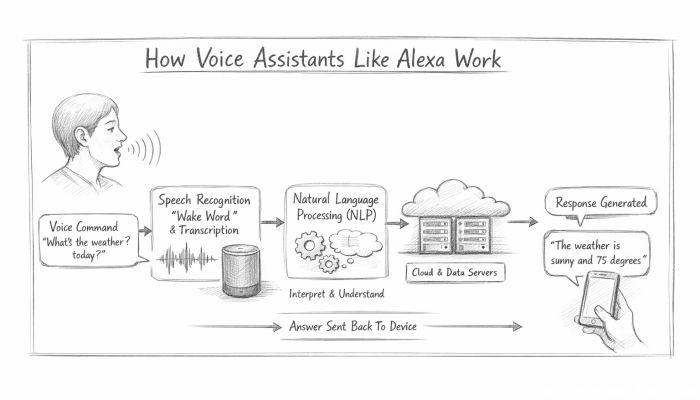 How Voice Assistants Like Alexa Work
 Federated Learning: AI Without Sharing Data