How to Make Custom T-Shirts with Heat Transfer Vinyl
In the world of personalized fashion and creative self-expression, custom t-shirts hold a special place. Whether for a family reunion, a business promotion, or simply to showcase unique artwork, custom tees offer a canvas for creativity that anyone can explore. Among the many methods to customize t-shirts, using Heat Transfer Vinyl (HTV) has gained tremendous popularity due to its affordability, versatility, and professional-looking results. HTV allows you to transfer intricate designs onto fabric, giving you the power to turn plain t-shirts into wearable art. This article will serve as a comprehensive guide on how to make custom t-shirts using heat transfer vinyl, walking you through every step of the process—from choosing the right materials to applying your designs flawlessly. Whether you’re a novice or an aspiring entrepreneur, mastering HTV t-shirt making is a valuable skill with endless possibilities.
- Understanding Heat Transfer Vinyl (HTV)
- Essential Tools and Materials for HTV T-Shirts
- Choosing the Right T-Shirt Fabric
- Designing Your Artwork
- Preparing the Cutting Machine
- Cutting and Weeding the Vinyl
- Setting Up Your Heat Press or Iron
- Positioning the Vinyl on the T-Shirt
- Applying the Heat Transfer Vinyl
- Post-Application Care and Finishing Touches
- Troubleshooting Common Issues
- Expanding Your HTV T-Shirt Making Skills
- Conclusion
- More Related Topics
Understanding Heat Transfer Vinyl (HTV)
Heat Transfer Vinyl is a special type of vinyl designed to be cut into shapes or designs, then heat-applied onto fabric surfaces such as t-shirts. Unlike regular vinyl, HTV has a heat-activated adhesive backing that binds to fabric fibers when pressed with heat, usually via a heat press or household iron. HTV comes in a variety of finishes including matte, glossy, metallic, holographic, and even glitter. Its unique properties allow for durable, flexible, and vibrant designs that can withstand multiple washes without fading—making it an excellent choice for apparel customization.
Essential Tools and Materials for HTV T-Shirts
Before diving into production, it’s essential to gather the right tools and materials. The key items include: HTV sheets in your chosen colors and finishes; a cutting machine such as a Cricut or Silhouette to precisely cut out your designs; a weeding tool for removing excess vinyl; a heat press or an iron capable of providing consistent heat and pressure; t-shirts made of cotton or cotton blends for optimal vinyl adhesion; and design software to create or edit your graphics. Having these essentials on hand will streamline the process and help ensure stunning results.
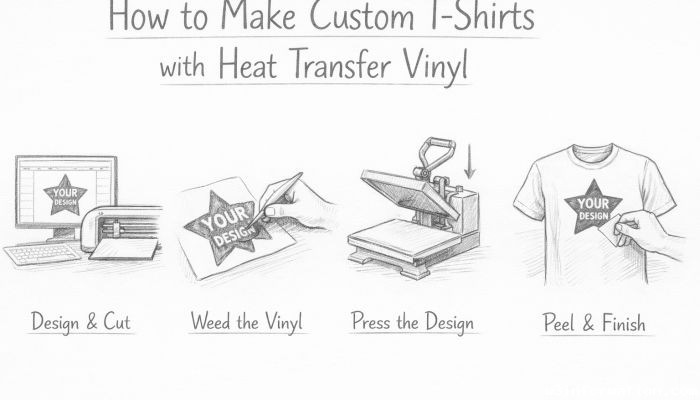
Choosing the Right T-Shirt Fabric
The fabric choice significantly impacts the durability and visual appeal of your HTV design. Cotton and cotton-polyester blends are ideal because HTV adheres well to natural fibers and blends but can struggle with synthetic materials like nylon or 100% polyester without special vinyl types. For soft, breathable, and comfortable finished products, 100% cotton shirts are the gold standard. However, some HTV brands offer specialty vinyl designed for polyester garments, expanding your customization options.
Designing Your Artwork
Creating a compelling design is both a creative and technical step. Use vector graphic software such as Adobe Illustrator, CorelDRAW, or free options like Inkscape. Vector designs allow for precise cutting paths and scalable resizing without losing detail. When planning your design, consider the color scheme, size, and arrangement on your t-shirt. Remember to create your artwork as a mirror image (flipped horizontally), as HTV requires the design to be reversed during the cutting and application process to appear correctly on the fabric.
Preparing the Cutting Machine
Your cutting machine is the heart of the HTV design process. After uploading your design to the machine’s software, set the blade depth and cutting pressure based on the HTV thickness and material specifications. Most machines have preset settings for HTV, but manual adjustments might be necessary for varying vinyl types or intricate designs. Always perform a test cut to ensure the settings are fine-tuned—this helps avoid wasting vinyl and ensures clean edges that make weeding easier.
Cutting and Weeding the Vinyl
Once the machine is ready, place the HTV sheet on the cutting mat with the shiny carrier sheet facing down. The blade will cut through the colored vinyl but not the clear carrier sheet underneath, allowing you to peel off excess vinyl later. After cutting, use a weeding tool (a small hook or pick) to remove all unwanted pieces from your design, especially inside letters and fine details. Patience is crucial in this step; clean weeding guarantees professional-looking transfers without leftover vinyl fragments.
Setting Up Your Heat Press or Iron
A heat press offers precise control over temperature, pressure, and time, making it the preferred choice for applying HTV, especially when producing multiple shirts. Ideal temperatures hover around 305°F (150°C) with a medium to firm pressure. If using a household iron, select the cotton setting with steam disabled. Ensure your heat source is preheated and ready before application. Also, place your t-shirt on a flat, heat-resistant surface, smoothing wrinkles to prevent uneven adhesion.
Positioning the Vinyl on the T-Shirt
Correct placement is essential to create balanced, attractive custom t-shirts. Lay your shirt flat and mark guidelines with tailor’s chalk or masking tape if necessary. Position the HTV design with the carrier sheet facing up, ensuring that it’s centered and aligned as intended. Double-check the positioning before applying heat; once pressed, the design cannot be repositioned without damage.
Applying the Heat Transfer Vinyl
Press the heat press firmly down on your design for 10 to 15 seconds, applying even pressure to bond the vinyl to the fabric. For irons, press each section for approximately 15-20 seconds, applying consistent pressure without sliding the iron around to avoid smudging. After the prescribed heat time, allow the vinyl to cool slightly or completely before gently peeling away the carrier sheet. Some HTV brands require warm peeling, so always follow the manufacturer’s instructions for ideal results.
Post-Application Care and Finishing Touches
After the vinyl is applied, it’s advisable to press the shirt again with a protective sheet such as parchment paper or Teflon sheet for a few seconds to secure the vinyl edges firmly. After completing your custom t-shirt, care instructions are vital for longevity. Advise washing the shirt inside out, using cold water, and avoiding bleach or harsh detergents. Tumble dry on low or hang dry to prevent vinyl lifting or cracking. Proper care extends the life of your custom design and keeps it looking vibrant.
Troubleshooting Common Issues
Even with careful adherence, some issues might arise during the HTV process. Common problems include vinyl peeling or lifting, uneven adhesion, discoloration, or incomplete cuts. Most peeling issues result from insufficient heat or pressure or inappropriate fabric types. Uneven adhesion can occur if the shirt isn’t flat, or if moisture interferes. Ensure your cutting blade is sharp to avoid jagged edges, and always test on scrap material before final production. Troubleshooting experience helps refine technique and produces consistently high-quality shirts.
Expanding Your HTV T-Shirt Making Skills
Once you master basic HTV t-shirt creation, you can explore advanced techniques like layering multiple vinyl colors, incorporating glitter or specialty finishes, adding custom names or numbering for sportswear, or even experimenting with other fabrics like canvas or tote bags. Combining HTV with other crafts such as embroidery or screen printing can elevate your designs further. The possibilities are expansive, limited only by your creativity and technical willingness to experiment.
Conclusion
Making custom t-shirts with heat transfer vinyl provides an accessible and rewarding way to bring your artistic ideas to life. By understanding HTV materials, preparing your designs carefully, and mastering the application techniques, you can create durable, vibrant, and personalized apparel suited for any occasion. The process combines art and craft, technology and hands-on skill, unlocking a world of creative expression and entrepreneurial potential. Whether you aim to produce gifts, merchandise, or personal wardrobe staples, HTV customization empowers you to design with confidence and flair. With practice and enthusiasm, custom t-shirt making can evolve from a hobby into a thriving business or a deeply satisfying creative outlet.
 How to Make the Most of Your Holiday Break
 The Best Winter Destinations for a Cozy Getaway
 How to Organize Your Holiday Travel Plans with Ease
 The Ultimate Guide to Cooking for a Crowd
 How to Make Healthy Comfort Food Without the Guilt
 5 Delicious Vegan Breakfast Ideas You Can Make in Minutes