How to Create Your Own Hand-Painted Canvas Art
Creating hand-painted canvas art is a rewarding and expressive way to bring your imagination and emotions to life. Whether you are a complete beginner or someone with a bit of experience, painting on canvas allows you to explore colors, textures, and techniques that make each piece uniquely yours. This art form not only beautifies spaces but also provides a therapeutic outlet and a sense of accomplishment. In this article, we will delve into the essentials of creating your own hand-painted canvas art—from preparing your materials to mastering various painting methods and finally showcasing your finished masterpiece. Embark on this creative journey and learn how to develop your artistic skills, express your personal style, and transform a blank canvas into a vivid story.
- Understanding the Basics of Canvas Art
- Choosing Your Canvas and Size
- Selecting the Right Paints: Acrylics, Oils, or Watercolors?
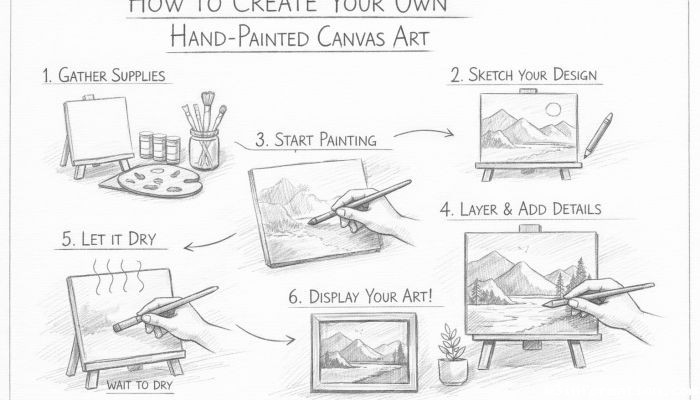
- Essential Tools and Supplies You’ll Need
- Preparing Your Canvas for Painting
- Planning Your Composition and Sketching
- Mixing and Understanding Colors
- Painting Techniques to Try on Canvas
- Managing Light, Shadow, and Depth
- Taking Care of Your Brushes and Workspace
- Final Touches and Detailing
- Sealing and Protecting Your Finished Artwork
- Conclusion
- More Related Topics
Understanding the Basics of Canvas Art
Before diving into painting, it’s crucial to understand what canvas art entails. Canvas is a woven fabric, often cotton or linen, stretched over a wooden frame to provide a sturdy surface for painting. Artists use different types of canvases ranging from pre-stretched and primed canvases, which are ready to paint on, to raw canvases that require priming. Knowing the nature of your canvas helps in selecting the right paints and tools, ensuring your artwork maintains its vibrancy and durability over time. By grasping these basics, you set a solid foundation for your painting project.
Choosing Your Canvas and Size
Choosing the right canvas involves considering both size and texture. Beginners might start with smaller canvases (8x10 inches or 12x16 inches) to manage space and reduce material costs. Larger canvases offer more room for detail but demand more paint and skill. The texture, or the “tooth” of the canvas, can be either smooth or rough; smooth canvases suit detailed work, while rough ones lend a tactile quality to expressive brushwork. Selecting an appropriate canvas that aligns with your artistic vision and skill level is essential to a satisfying painting experience.
Selecting the Right Paints: Acrylics, Oils, or Watercolors?
Canvas art typically calls for acrylic or oil paints, each with distinct characteristics. Acrylic paints dry quickly, are water-soluble, and are beginner-friendly with less odor, making them ideal for those new to painting. Oil paints dry slowly, allowing for extended blending and richer textures, but require solvents and ventilation, posing a steeper learning curve. Watercolors are less common on canvas but can be used if the canvas is specially treated. Understanding the pros and cons of these mediums will guide your choice according to your patience, working style, and desired effect.
Essential Tools and Supplies You’ll Need
Besides canvas and paint, several tools are crucial for successful painting. Quality brushes in various shapes and sizes—round, flat, filbert—allow you to achieve different strokes and textures. A palette for mixing colors, palette knives for scraping or layering paint, and cups for water or solvents are also indispensable. Consider protective gear like aprons and old clothes, and use an easel to hold the canvas. Investing in good quality materials enhances your control and the final outcome of your work, making the process more enjoyable.
Preparing Your Canvas for Painting
If your canvas isn’t pre-primed, prepare it by applying a layer of gesso, a white primer that seals the fabric and creates a smooth surface for paint adhesion. Use a wide brush or roller to coat evenly and let it dry completely before painting. This step prevents paint from soaking into the fibers and ensures longevity. Some artists prefer applying multiple gesso layers, sanding lightly between coats for an ultra-smooth finish, especially for detailed or delicate projects.
Planning Your Composition and Sketching
Before applying paint, it helps to plan the composition—the arrangement of visual elements in your artwork. You can create thumbnails, small rough sketches to experiment with layout and shapes. Once decided, lightly sketch your design on the primed canvas using graphite pencils or charcoal sticks. Keep lines faint so they don’t show through the paint. Having this roadmap clarifies your vision and prevents uncertainty during painting, allowing for a focused and balanced piece.
Mixing and Understanding Colors
Color mixing is both a science and an art. Understand the color wheel basics: primary colors (red, yellow, blue), secondary colors (green, orange, purple), and tertiary colors. Learning about warm vs. cool colors, complementary colors, and color harmony helps create mood and balance. Use a palette to experiment with blending paints to achieve custom shades, tones, and gradients. Proper color mixing avoids muddy colors and enhances vibrancy, allowing your canvas to communicate emotion and depth effectively.
Painting Techniques to Try on Canvas
Various painting techniques add texture and interest to canvas art. Some popular methods include:
- Layering: Applying paint in successive layers after previous layers dry, building richness and depth.
- Wet-on-wet: Painting on a still-wet layer for smooth blending.
- Dry brushing: Using a dry brush with minimal paint to create scratchy, textured strokes.
- Impasto: Applying thick paint with palette knives for pronounced texture.
- Glazing: Applying transparent layers over dry paint to adjust color or add luminosity.
Experimenting with these techniques expands your creative options and helps develop your unique style.
Managing Light, Shadow, and Depth
Creating believable light and shadow on your canvas establishes three-dimensionality and guides the viewer’s eye. Study light sources and how they interact with objects—highlight areas catch the most light while shadows recede. Using gradients of color and value contrast increases depth and realism. Techniques like chiaroscuro, the dramatic interplay of light and dark, bring intensity and mood. Incorporating these elements gives your painting a convincing spatial dimension and emotional resonance.
Taking Care of Your Brushes and Workspace
Proper brush care extends their lifespan and maintains quality. Clean brushes immediately after use with appropriate solvents (water for acrylics, turpentine for oils), reshape bristles, and store them horizontally or bristles-up to avoid damage. Your workspace should be organized, well-lit, and ventilated, especially when using oil paints or solvents. Keeping your area tidy and your tools in good condition streamlines the creative process and minimizes interruptions.
Final Touches and Detailing
As your artwork nears completion, step back regularly to assess it from a distance. This perspective helps identify areas that need refining or balancing. Use fine brushes for detailing, sharpen edges, or add highlights and small accents that enhance the painting’s vibrancy and cohesion. Resist the urge to overwork the canvas; sometimes less is more. The final touches often make the difference between a good painting and a captivating masterpiece.
Sealing and Protecting Your Finished Artwork
Once your painting is fully dry—acrylics typically take 24-48 hours; oils may take weeks—apply a protective varnish to seal the surface. Varnish enhances color saturation and protects against dust, UV damage, and scratches. Choose between glossy, matte, or satin finishes depending on the desired effect. Apply evenly with a clean brush or spray, following manufacturer instructions. Proper sealing preserves your efforts and ensures your art remains vibrant for years to come.
Conclusion
Creating your own hand-painted canvas art is an enriching journey that blends creativity, technique, and personal expression. Understanding the fundamental materials and methods, planning carefully, experimenting with colors and techniques, and maintaining your tools all contribute to producing meaningful and beautiful artwork. Whether you paint for relaxation, decoration, or self-expression, each canvas becomes a unique reflection of your vision and perseverance. As you develop your skills and confidence, remember that every stroke shapes not only your canvas but your artistic identity. Embrace the process, celebrate your progress, and let your creativity flourish with every brushstroke.
 Big O Notation Explained for Beginners
 AI in Gaming: Smarter NPCs and Environments
 Understanding Bias in AI Algorithms
 Introduction to Chatbots and Conversational AI
 How Voice Assistants Like Alexa Work
 Federated Learning: AI Without Sharing Data