How to Make Your Own Fabric Face Masks at Home
In recent years, fabric face masks have become more than just a temporary necessity—they’ve evolved into a practical, reusable, and even creative solution for personal protection and everyday use. Whether you want to reduce waste, save money, or customize your style, making your own fabric face masks at home is a simple and rewarding process. The best part? You don’t need advanced sewing skills or expensive materials to get started. With a few basic tools and a little patience, you can create comfortable, effective, and reusable masks tailored to your needs. In this guide, we’ll walk you through everything you need to know—from choosing the right fabric to assembling and maintaining your masks—so you can confidently make your own at home.
- Understanding the Purpose of Fabric Face Masks
- Choosing the Right Fabric
- Gathering Essential Materials
- Understanding Basic Mask Designs
- Measuring and Cutting the Fabric
- Sewing the Mask Step by Step
- Adding Elastic or Ties for Comfort
- Ensuring Proper Fit and Coverage
- Adding Extra Features for Better Protection
- Maintaining and Cleaning Your Masks
- Making Masks for Family and Community
- Embracing Creativity and Personal Style
- Conclusion
- More Related Topics
Understanding the Purpose of Fabric Face Masks
Before you begin making masks, it’s important to understand their purpose. Fabric face masks are designed to reduce the spread of airborne particles and provide a basic layer of protection.
They are especially useful in crowded places or during illness outbreaks. While they may not replace medical-grade masks in all situations, they are effective for everyday use and offer a sustainable alternative to disposable options.
Understanding their role helps you make better design and material choices.
Choosing the Right Fabric
The fabric you choose plays a crucial role in the effectiveness and comfort of your mask.
Look for:
- Tightly woven cotton (like quilting cotton)
- Breathable materials
- Multiple layers for better filtration
Avoid fabrics that are too thin or stretchy. A good mask balances filtration and breathability, ensuring both safety and comfort.
Gathering Essential Materials
Before starting, make sure you have all the necessary materials ready.
Basic supplies include:
- Fabric pieces
- Elastic bands or fabric ties
- Needle and thread (or sewing machine)
- Scissors and measuring tape
Having everything prepared saves time and makes the process smoother and more enjoyable.
Understanding Basic Mask Designs
There are several simple designs you can choose from, depending on your skill level and preference.
Popular styles include:
- Pleated masks
- Fitted masks
- No-sew masks
Pleated masks are beginner-friendly, while fitted masks offer a more contoured shape. Choose a design that suits your comfort and skill level.
Measuring and Cutting the Fabric
Accurate measurements are key to creating a well-fitting mask.
Typically, you’ll need:
- Two or more fabric layers
- Standard dimensions (around 8x6 inches for adults)
Careful cutting ensures that the mask fits properly and provides adequate coverage for the nose and mouth.
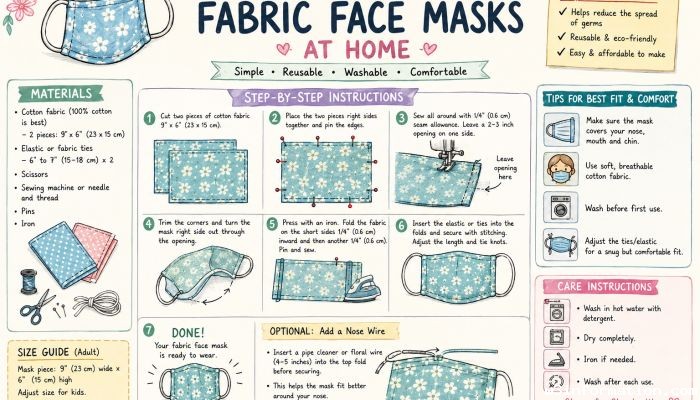
Sewing the Mask Step by Step
Once your fabric is ready, it’s time to assemble the mask.
Basic steps include:
- Layering the fabric
- Stitching the edges
- Adding pleats or shaping
Take your time with each step. Even simple stitching can create a durable and effective mask.
Adding Elastic or Ties for Comfort
The straps are what keep the mask securely in place. You can choose between elastic ear loops or fabric ties.
Elastic loops are:
- Easy to wear
- Quick to put on and remove
Fabric ties are:
- Adjustable
- More comfortable for long use
Choose the option that best fits your needs and comfort.
Ensuring Proper Fit and Coverage
A mask is only effective if it fits properly. It should cover your nose, mouth, and chin without gaps.
Check for:
- Snug fit around the face
- Comfortable breathing
- Secure placement
Adjust the size or straps if needed. A well-fitted mask offers better protection and comfort.
Adding Extra Features for Better Protection
You can enhance your mask with additional features for improved functionality.
Options include:
- A pocket for filters
- Nose wires for better fit
- Multiple fabric layers
These additions increase the effectiveness of your mask while maintaining comfort.
Maintaining and Cleaning Your Masks
Reusable masks need proper care to remain effective.
Wash your masks:
- After each use
- With soap and hot water
- Allow them to dry completely
Regular cleaning ensures hygiene and extends the life of your masks.
Making Masks for Family and Community
Once you’ve mastered the process, you can create masks for others.
This can include:
- Family members
- Friends
- Community donations
Making masks for others is a meaningful way to contribute and support those around you.
Embracing Creativity and Personal Style
One of the best parts of making your own masks is the ability to customize them.
You can:
- Use different colors and patterns
- Match masks with outfits
- Add decorative elements
This turns a practical item into a form of self-expression, making it more enjoyable to wear.
 How to Make the Most of Your Holiday Break
 The Best Winter Destinations for a Cozy Getaway
 How to Organize Your Holiday Travel Plans with Ease
 The Ultimate Guide to Cooking for a Crowd
 How to Make Healthy Comfort Food Without the Guilt
 5 Delicious Vegan Breakfast Ideas You Can Make in Minutes