The Role of AI in Distance Learning in 2025
Distance education has advanced from a novel to a conventional practice that captivates more than a few people each year. Knowledge transmission, acquisition, and evaluation outside the four walls of the brick-and-mortar university remain critical in 2025 as more students, tutors, and stakeholders acclimate to and eventually expect an evermore digitalized, virtualized world. Artificial intelligence (AI) in education is swiftly changing the dynamics of this process, already standing as both a tool and driver for an unprecedented change in approach to online learning. AI as a new disruptive variable expands and enriches personalized online learning while bridging a wide array of gaps from the physical to the intangible, lessening the effects of distance in the process. This paper sets out to examine the breadth and depth of the impact AI has on distance education, providing a granular, comprehensive analysis of how innovative technologies and AI tools, systems, and applications are currently shaping remote education. The subjects of AI-facilitated intelligent tutoring systems and AI-powered teaching practices, resources, and content design will be discussed in depth, underpinning the transformative effect AI has on making education more accessible while simultaneously redefining pedagogical and andragogical approaches, techniques, and methodologies worldwide.
- The Emergence of Distance Learning: The Road to AI
- A More Personalized Education with AI
- AI-Facilitated Intelligent Tutoring Systems (ITS)
- AI-Powered Gamification to Engage Students
- Administrative and Grading Automation
- AI-Facilitated Collaboration Tools
- AI and Accessibility/Inclusion
- AI Content Creation/Curation
- AI-Enhanced Progress Tracking and Analytics
- Privacy Concerns and AI Bias
- The Role of AI in the Evolution of Teaching
- The Future of AI in Distance Education
- Conclusion
- More Related Topics
The Emergence of Distance Learning: The Road to AI
Distance education has experienced significant growth from unconventional correspondence courses and televised lessons to its current online manifestation. The internet boom and advancement in educational software were preconditions, but many deficiencies and limitations related to the personalization and engagement of curricula remained. The promise and scope of AI and AI-enhanced applications in 2025 must be addressed in the context of this continued demand for more elastic, dynamic systems that factor in individual learner profiles and encourage self-paced advancement through AI-augmented feedback, scaling, and content delivery solutions.

A More Personalized Education with AI
AI’s greatest contribution to distance learning comes from its unprecedented ability to personalize the experience and the information for the students. Relying on user analysis of strengths, weaknesses, and overall patterns, including learning pace and preference, AI algorithms can create adaptive and predictive learning routes and content tailored to an individual learner. AI-facilitated intelligent tutoring systems (ITS) are highly optimized at this point and can dynamically rearrange the data and the material it is associated with based on new insights acquired in real time. In 2025, personalization also involves emotional recognition and engagement indicators that trigger ITS interventions to assist with distraction prevention, focus, and self-studying speed and efficiency.
AI-Facilitated Intelligent Tutoring Systems (ITS)
ITSs are a type of AI-assisted educational approach that functions as a one-on-one, personalized remote mentoring substitute. This approach usually takes the form of a virtual intelligent assistant that can access content from various repositories and external sources and then parse and explain it via natural language processing in real-time or as-needed responses to questions, tasks, and inquiries. By 2025, ITSs are extremely advanced and can account for student’s errors and misconceptions, prioritizing that skillset for future assistance, building in a highly contextualized and personalized remediation method to help with the transfer of knowledge and deeper understanding. This also helps counter the issue of lower social contact due to the nature of the remote environment and increase the quality of the learning outcomes.
AI-Powered Gamification to Engage Students
Gamification is a well-established approach to improving engagement and concentration but has traditionally required significant additional resources to account for students’ differing skill and age profiles and to prevent it from becoming a distraction rather than an engaging aspect. AI-augmented gamification embeds adaptive game mechanics that are both personalized to and predictive of each unique student, including unique reward schedules, narrative elements, competitive structures, all while improving learning outcomes and offering deeper immersion. In 2025, AI-guided gamification becomes a prominent facet of personalized learning and presents a very convenient, inexpensive, and efficient way of enriching online learning environments through these more motivating and fun incentives.
Administrative and Grading Automation
AI reduces the load of a growing burden of online administration and maintenance of a manageable pace of grading from the shoulders of the teachers. Assignment and activity validation is already a highly scalable process for short-answer tests and computer-marked exams, open-ended writing, and even creative outputs such as coding. This directly translates to more timely feedback for students and grading assistants, as well as indirect benefits in how instructors manage the learning process. In 2025, grading automation is highly prevalent, making the scaling of quality distance education more viable while preserving faculty and staff from overwork.
AI-Facilitated Collaboration Tools
Distance learning is often perceived as a solitary and isolating practice when in reality, it also presents its own collaborative opportunities online through remote groups, messages, and peer-to-peer interactions. AI can effectively moderate these online groups for even coverage of student profiles, skills, and personalities, acting as a facilitator and balancing social interaction and group work contributions. AI can also assist by serving as a virtual chatroom assistant that can keep track of ideas and flag disagreements as they occur, reducing interpersonal conflict and maintaining a healthy learning environment. In 2025, this fosters unique AI-optimized discussion networks among students that can often outpace in-class dynamics in quality of participation and involvement.
AI and Accessibility/Inclusion
AI allows for personalized learning while also offering very convenient, inexpensive options for speech-to-text, text-to-speech, live captioning and translation, and customized content delivery that can help overcome some of the unique barriers distance learning faces in ensuring accessibility and inclusion for individuals with disabilities or those from underprivileged backgrounds. In 2025, AI-assisted software allows for highly accurate customization of content presentation that accounts for everything from screen-reading functionality to language preference and disability-specific engagement mechanics for those with limited physical or mental faculties.
AI Content Creation/Curation
Curating and creating quality education content is a resource- and capital-intensive process. AI offers its assistance to scale up content generation and curation by drafting learning aids such as quizzes, videos, summaries, and even reference simulations or visualizations from a set of topic-specific information. In 2025, this liberates up time and money while significantly aiding in ensuring content currency for remote education systems.
AI-Enhanced Progress Tracking and Analytics
AI tools for education collect and track data on learners to provide dashboards and predictive visualizations for monitoring progress. This not only aids with developing an individualized learning path by presenting actionable feedback for both teachers and the learners themselves but also allows for a systematic form of data extraction and analysis that helps provide data-driven, customized insights for learning processes that improve content delivery and facilitate a constant feedback loop. In 2025, predictive AI-augmented education analytics are helping close in on proactive intervention for struggling learners before they become demotivated or choose to drop out.
Privacy Concerns and AI Bias
Privacy, data security, and the potential for bias and systemic discrimination when it comes to new and existing AI-assisted technologies are major considerations when it comes to wide-scale AI adoption for use by children and youth. Distance learning and online schools specifically are increasingly expected to have explicit, well-understood data use policies and applications that account for more than just common data types, regional and government regulation requirements, and standardized educational baselines and frameworks. In 2025, AI literacy is a growing need for teachers and administrators to monitor bias and guide student interactions with emerging online technologies.
The Role of AI in the Evolution of Teaching
AI is often posited as an existential threat to teaching professionals’ skillsets but, in fact, it can provide them with the tools to become more skilled and better at their jobs. By outsourcing data-mining, administrative, and support-related tasks to AI, teaching staff and educational support assistants are freed up to focus on critical thinking, problem-solving, meta-cognition, and other areas of skill that are uniquely human and as such less likely to be replaced. In 2025, this is very much already the case, and more teacher professional development plans are accounting for these necessary areas of AI integration and support.
The Future of AI in Distance Education
AI in education is a rapidly progressing field with very little foreseeable limit. This will continue to be the case, and while new research is already anticipated in the fields of AI social emotional intelligence, a wide breadth of AI-augmented tools and systems will continue to dominate the education and distance learning world. However, they will need more, continuous support and development by learners, instructors, and researchers alike. In 2025, AI is a part of education to stay, though its changing nature and ever-increasing capabilities will demand new considerations and policies from stakeholders, teachers, students, and their parents.
Conclusion
Distance learning has advanced greatly over the last decades and, in 2025, continues to be a force to be reckoned with. Driving change through flexibility in terms of approach and convenience in terms of additional material coverage and student capacity, distance learning in the internet age also opens the door to adaptive education and a more AI-driven solution that stands at the epicenter of major change. Fostering its promise through advances in software and AI-enhanced applications in everything from content delivery and personalization to grading and facilitation, the face of distance learning itself is changing. By accounting for AI assistance in a wide gamut of areas and presenting unique scaling and efficiency advantages, AI changes how we both learn and teach. The result is a constantly improving product that continues to integrate AI assistance and application. In 2025, remote education still presents access challenges, including the digital divide, accessibility, and availability, but the age of AI is making it more feasible for all. By and large, AI in distance education in 2025 stands as a tool for good to offer scale, affordability, and personalization at a massive level and more dynamic, effective methods of remote education and learning.
 Big O Notation Explained for Beginners
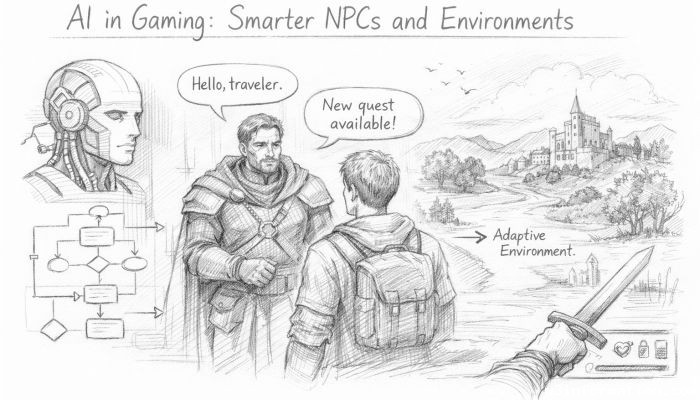 AI in Gaming: Smarter NPCs and Environments
 Understanding Bias in AI Algorithms
 Introduction to Chatbots and Conversational AI
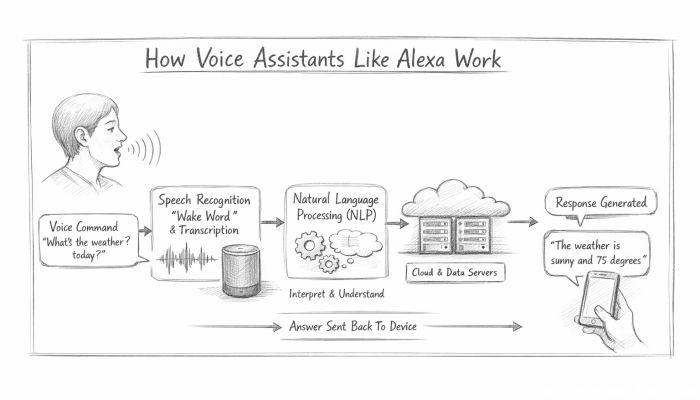 How Voice Assistants Like Alexa Work
 Federated Learning: AI Without Sharing Data