The Benefits of Hands-On Learning: STEM Education
Education is no longer just about rote memorization or passive absorption of information. The future demands skills such as critical thinking, problem-solving, creativity, and adaptability. As a result, the value of hands-on learning—especially within STEM (Science, Technology, Engineering, and Mathematics) education—is increasingly recognized. Hands-on learning, or experiential education, engages students actively and directly in the learning process. By making abstract concepts tangible and real, it ignites curiosity and motivation, deepens understanding, and makes learning not only more enjoyable but also much more impactful. This guide will explore how hands-on learning benefits STEM education and how it can support cognitive, social, emotional, and practical skills. It will cover topics such as enhanced retention, real-world applications, and essential 21st-century skills that hands-on learning nurtures. Ultimately, we’ll learn why hands-on learning is not just an option, but a necessity for creating capable, innovative, and confident STEM learners for the future.
- Engaging Students Through Active Participation
- Enhancing Understanding Through Experiential Learning
- Developing Critical Thinking and Problem-Solving Skills
- Fostering Collaboration and Communication
- Encouraging Creativity and Innovation
- Improving Retention and Academic Performance
- Bridging the Gap Between Theory and Practice
- Supporting Diverse Learning Styles
- Building Technological Fluency
- Promoting Emotional and Social Development
- Preparing Students for the Future Workforce
- Integrating Hands-On Learning Into Curriculum Design
- Conclusion
- More Related Topics
Engaging Students Through Active Participation
Hands-on learning requires students to participate directly in their education, shifting from passive observers to active doers. In STEM, this means conducting experiments, building models, using technology, and applying concepts to solve problems. Active participation boosts curiosity and motivation, transforming the classroom into an interactive space buzzing with questions, exploration, and trial-and-error. Students experience the excitement of discovery and the satisfaction of solving a problem or building something with their own hands. This engagement not only makes learning fun, but also fosters deeper connections to STEM subjects, as learners understand the relevance and application of what they are learning. By doing rather than just listening or watching, students experience the joy of mastery and become more enthusiastic about STEM.
Enhancing Understanding Through Experiential Learning
Hands-on activities in STEM ground theoretical concepts in real-world contexts, making them more understandable and meaningful. By physically manipulating materials, tools, or technology, students see abstract ideas come to life and comprehend them at a deeper level. For example, building circuits in an electronics class helps students see electricity in action, while mixing chemicals in a test tube makes theoretical chemistry concrete and visual. This direct experience helps students internalize complex STEM ideas that might otherwise remain difficult or abstract. Experiential learning builds strong mental models, where knowledge is connected to real experiences, making it easier to remember and apply later. Through hands-on activities, teachers turn theory into practice, and students learn by doing.

Developing Critical Thinking and Problem-Solving Skills
STEM fields are full of challenging, open-ended problems that require analysis, reasoning, and creativity to solve. Hands-on learning through experiments, projects, and real-world applications naturally develops students’ critical thinking and problem-solving skills. As they work through challenges, students test hypotheses, make predictions, and draw conclusions based on evidence and data. Trial-and-error processes also build resilience, as students learn that failure is a natural and valuable part of learning. By engaging in authentic STEM problem-solving, learners develop important skills such as logic, analysis, reasoning, decision-making, and even perseverance and grit. These transferable skills empower students to tackle complex issues, both in future studies and in their personal and professional lives.
Fostering Collaboration and Communication
Hands-on STEM projects often involve teamwork and communication, building social and interpersonal skills needed in STEM careers. Collaborating with peers, students share ideas, divide tasks, and offer feedback, developing leadership, active listening, empathy, and compromise. By working together to solve STEM challenges, students learn to articulate their thinking, question constructively, and respect different perspectives. In this way, STEM project-based learning simulates real-world scientific and technical work, where teamwork is often essential. Through hands-on collaboration, students not only learn STEM content, but also how to communicate, collaborate, and solve problems effectively as a team.
Encouraging Creativity and Innovation
Creativity drives STEM innovation, and hands-on learning naturally encourages students to think creatively and design original solutions. Hands-on STEM challenges give students the freedom to explore multiple approaches and discover multiple solutions, rather than just following predetermined steps. In robotics challenges, engineering design tasks, or maker projects, students learn to invent, iterate, and even fail forward as they test their ideas. Hands-on STEM projects also help students think divergently, seeing problems from multiple perspectives and approaching them with flexibility and imagination. Encouraging innovation through hands-on learning fosters curiosity and intrinsic motivation for STEM, laying the groundwork for future discovery and technological advancement.
Improving Retention and Academic Performance
Hands-on learning in STEM has been shown to improve student retention and academic performance. By engaging multiple senses and requiring active cognitive processing, students form strong memory connections and recall information more easily later on. Through physical manipulation of materials, doing experiments, or building models, STEM concepts become more memorable. Hands-on learning also builds student confidence, which in turn reduces test anxiety and further improves performance. In STEM education, hands-on activities can result in better understanding and mastery of skills, as well as higher motivation and engagement with the subject matter.
Bridging the Gap Between Theory and Practice
One major challenge of STEM education is helping students see how theoretical content connects to real-world applications. Hands-on learning bridges this gap by allowing students to apply concepts directly to authentic tasks and projects. Students can see the practical uses of physics in building structures, chemistry in materials science, or coding in making software applications. Connecting classroom knowledge to real life gives it meaning and relevance, and also helps students develop a sense of identity as STEM learners or potential STEM professionals. Hands-on STEM activities thus not only prepare students for future studies or careers in STEM fields, but also give them a context and appreciation for what they are learning.
Supporting Diverse Learning Styles
Students learn in different ways; some are visual, others auditory, and many are kinesthetic or tactile learners. Hands-on learning especially benefits kinesthetic learners, who understand and remember best when they can physically manipulate materials and do activities with their own hands. However, integrating hands-on activities into STEM education also supports visual learners through seeing concepts in action, and auditory learners through discussion and feedback. A multimodal, hands-on approach to STEM learning is thus more inclusive, catering to different learning styles and preferences and making STEM education more accessible. By supporting different ways of learning, hands-on STEM activities ensure no student is left behind in the classroom.
Building Technological Fluency
Technology skills are essential in the modern world, and hands-on STEM learning provides students with opportunities to develop their technological fluency. By using 3D printers, coding platforms, robotics kits, sensors, or any number of other tools and software, students gain familiarity and competence with technology. Hands-on use of STEM technologies also helps students develop critical digital literacy skills, such as evaluating online sources or using apps to gather and analyze data. Moreover, by demystifying complex tools and systems, hands-on technology use in STEM education increases student confidence, motivation, and willingness to explore STEM careers in the future. Hands-on STEM is the most effective way to build students’ essential technological fluency.
Promoting Emotional and Social Development
Hands-on STEM activities can also support the emotional and social development of students. Working in teams to solve STEM problems helps students practice patience, empathy, collaboration, and resilience. Celebrating successes and learning from mistakes or failures helps students build a growth mindset where learning is valued. Moreover, because hands-on STEM activities are often more interactive and enjoyable, they can help reduce stress and anxiety for STEM students. Finally, by providing a sense of competence, autonomy, and identity as STEM learners, hands-on STEM activities can boost student well-being and resilience. Emotional and social benefits of hands-on learning thus complement cognitive and practical skills.
Preparing Students for the Future Workforce
Hands-on STEM education builds many of the skills and competencies that will be essential for the future workforce, especially in the 21st century. By engaging in active, applied, real-world, and problem-solving learning, students become more adept at STEM skills, but also at 21st-century skills like collaboration, innovation, adaptability, and digital literacy. Hands-on STEM education develops not only technical and scientific skills but also soft skills essential for success in many professions. As the future economy will need more STEM workers to solve global challenges and drive innovation, the schools that embrace hands-on STEM will best prepare students for the jobs of tomorrow.
Integrating Hands-On Learning Into Curriculum Design
To effectively integrate hands-on learning into STEM education, curriculum design, resources, teacher training, and integration of technology all matter. Hands-on learning activities should be aligned with learning objectives, should be accessible to all students, and include time for reflection and assessment. Technology can be leveraged to enhance hands-on STEM, and interdisciplinary projects can be designed to help students connect STEM to other subjects and think in a more integrated way. Finally, teacher training and support are essential to prepare educators to design and implement effective hands-on STEM lessons. With thoughtful, intentional, and well-resourced hands-on STEM integration, schools can transform STEM learning from rote to relevant.
Conclusion
Hands-on learning is a powerful and essential approach for STEM education. It transforms learning from passive and abstract to active and concrete, making STEM education more engaging, effective, and fun. Hands-on STEM ignites student curiosity and motivation, supports diverse learning styles, and deepens understanding. It builds critical skills such as creativity, critical thinking, problem-solving, communication, collaboration, and even digital literacy and technological fluency. Moreover, hands-on STEM prepares students for future study and meaningful work in the real world, and also supports their emotional and social development. The future demands innovative, capable STEM learners who are ready to solve our most pressing challenges. Hands-on STEM learning is the best way to prepare them.
 Big O Notation Explained for Beginners
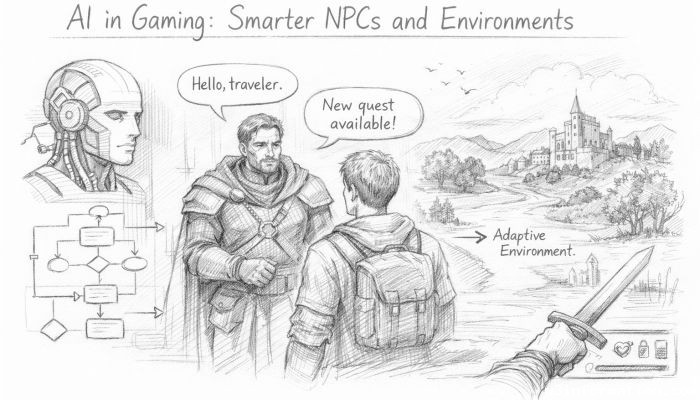 AI in Gaming: Smarter NPCs and Environments
 Understanding Bias in AI Algorithms
 Introduction to Chatbots and Conversational AI
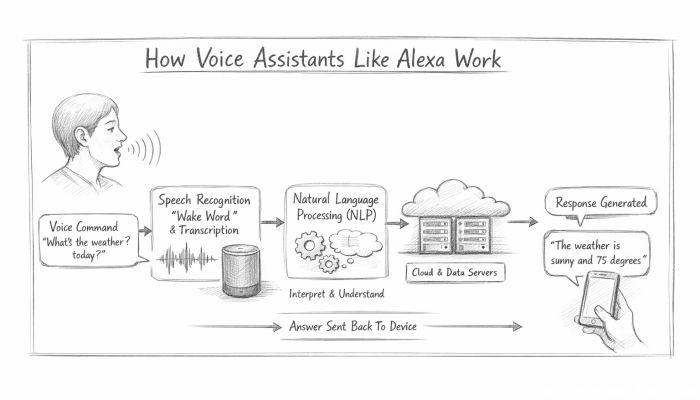 How Voice Assistants Like Alexa Work
 Federated Learning: AI Without Sharing Data