How to Incorporate Gamification in the Classroom
Gamification is an innovative educational strategy that leverages elements from games to motivate, engage and improve student learning. The following guide to using gamification in the classroom will help teachers introduce gamified elements into their teaching. From setting clear educational goals to designing rewards and utilizing technology, these tips for game-inspired teaching aim to make lessons more interactive, inclusive, and effective across all ages and subjects.
- Understanding Gamification in Education
- The Benefits of Gamification for Student Engagement
- Setting Clear Educational Goals and Outcomes
- Selecting Appropriate Game Mechanics
- Designing Meaningful Rewards and Incentives
- Integrating Storytelling and Narrative Elements
- Utilizing Technology to Facilitate Gamification
- Encouraging Collaboration Through Team-Based Challenges
- Managing Competition and Inclusivity
- Tracking Progress and Providing Feedback
- Overcoming Challenges in Gamification Implementation
- Examples of Successful Gamification Strategies in Classrooms
- Conclusion
- More Related Topics
Understanding Gamification in Education
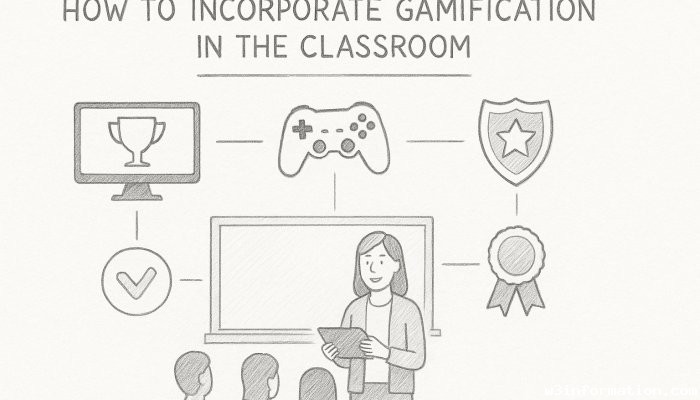
Gamification is the application of game-like mechanics to contexts outside traditional gaming. This technique, widely used in education, involves introducing elements such as points, leaderboards, badges, levels, and rewards to enhance learning. Gamification differs from the direct use of games in classrooms, instead applying game design techniques to non-game environments. It is crucial for teachers to grasp this distinction to use gamification effectively, integrating elements like competition, achievement badges, and storytelling to engage students without turning the entire lesson into a game.
The Benefits of Gamification for Student Engagement
Gamification can significantly increase student engagement. By tapping into natural motivators like competition, achievement, and social interaction, gamified activities can transform routine tasks into exciting challenges. Intrinsically motivated students who care about and enjoy the learning process experience more significant emotional engagement, extended attention spans, and enhanced retention and critical thinking. Gamification thus holds great promise for encouraging students to become actively involved in their own education.
Setting Clear Educational Goals and Outcomes
Before applying gamification, educators should clearly define what they want students to learn. Gamification should align with curriculum goals and not distract from the content. Identifying specific knowledge or skills that the game elements will reinforce helps keep the focus on learning, ensuring students see the educational value in gamified activities.
Selecting Appropriate Game Mechanics
Not all game elements are suitable for every classroom or subject. Educators should consider their students’ age, interests, and educational needs when choosing elements like point scoring, leaderboards, badges, levels, or challenges. The mechanics should support the educational goals without overwhelming or confusing students.
Designing Meaningful Rewards and Incentives
Rewards and incentives are essential for gamification but should be meaningful and motivating without overshadowing the intrinsic value of learning. The incentives might be tangible, like stickers or certificates, or intangible, like recognition or privileges. Striking the right balance between extrinsic and intrinsic rewards helps encourage students to engage deeply with educational content rather than simply pursuing points.
Integrating Storytelling and Narrative Elements
Storytelling is a powerful tool in education, and gamification provides an opportunity to use it in new ways. Adding an emotional and narrative dimension can make lessons more immersive. Teachers can craft stories around lessons to help students emotionally connect with the material. Whether students become explorers unlocking new knowledge or detectives solving mysteries, narratives can pique students’ curiosity and perseverance.
Utilizing Technology to Facilitate Gamification
Technology can open up a world of possibilities for gamification, from apps and platforms to custom quizzes. Tools like Kahoot and Quizizz make it easy to integrate gamification into lessons. Digital technology also enables teachers to customize content, provide instant feedback, and interact with material in new ways, expanding the potential of gamified learning. Teachers should ensure that all students have equitable access to tech resources.
Encouraging Collaboration Through Team-Based Challenges
Gamification is a great way to help students develop their social skills. Team-based challenges or multiplayer games promote social interaction, cooperation, and peer support. Collaborative gamification can help students understand the importance of teamwork, communication, and the roles of different personalities, just as in real-world scenarios, making lessons more practical and relevant.
Managing Competition and Inclusivity
Teachers can motivate students by introducing an element of competition into their lessons. However, a focus on winning can alienate some students. Gamification should balance competition with inclusive, cooperative elements so that all students feel they can succeed. Individual students can improve at their own pace, and multiple roles within games can give students different opportunities to shine.
Tracking Progress and Providing Feedback
Gamification provides teachers with an opportunity to offer students immediate feedback on their performance. Progress bars, points systems, or level-ups track continuous assessment and are a great way to help students understand how they are doing and what they need to improve. Tracking and feedback keep students aware of their achievements, breaking down the educational process into attainable milestones.
Overcoming Challenges in Gamification Implementation
Gamification is not without challenges, which can include constraints on time, resources, and teachers’ game design skills. It can be difficult for teachers with little prior experience to start gamifying their lessons. Some gamified approaches may risk distraction, extrinsic motivation, or superficial engagement with the educational material. Teachers can avoid or overcome these challenges by taking small steps, starting with one or two gamified elements, and adapting. Gamification will be more successful if teachers experiment and seek support from their peers or ongoing professional development.
Examples of Successful Gamification Strategies in Classrooms
Gamification can work in a wide variety of settings and educational contexts. Successful examples of gamification in classrooms include the use of “classroom quests”, “escape rooms”, or “point-based participation”. A math teacher may create a leaderboard to motivate quick problem-solving while a literature class might earn badges for insightful discussion. These case studies of teachers who have successfully integrated gamification can inspire others and provide some useful blueprints.
Conclusion
Gamification can change how education is delivered and received by using the motivational power of games to engage, enthuse and improve student learning. By thoughtfully incorporating game mechanics, aligning them with clear educational goals, and emphasizing meaningful rewards, collaboration, and inclusive competition, teachers can create a classroom where students are actively participating and learning. Challenges to gamification exist, but the resulting benefits, including increased student motivation, deeper engagement, and improved educational outcomes, make this technique a must for the modern teacher. Gamification is more than just fun, offering a chance to promote student resilience, creativity and a lifelong love of learning. Gamification has the potential to change how education is delivered and received by utilizing the power of play to engage and inspire young minds.
 Big O Notation Explained for Beginners
 AI in Gaming: Smarter NPCs and Environments
 Understanding Bias in AI Algorithms
 Introduction to Chatbots and Conversational AI
 How Voice Assistants Like Alexa Work
 Federated Learning: AI Without Sharing Data