The Role of Creativity in Modern Education
The system of modern education is at a turning point. One road leads to the old way: rote learning, standardized testing, and fixed curricula. The other road leads to a world of disruption, reinvention, and new careers. Only one thing is certain: creativity is no longer optional in the classroom. Creativity is a “must-have” competency for every student.
But what does that look like in practice? Creativity in education means more than painting or music. It means solving problems, thinking critically, working in teams, and having the courage to try. As automation, artificial intelligence, and global communications change how we work and live, education must change too. It is no longer enough for students to pass exams. They must be able to thrive in an uncertain future.
The future is here. As a teacher, parent, student, or simply an observer of education systems, you might be wondering: why does creativity matter, and how can I help? This article is for you. We will explore why creativity is critical in modern education, and how teachers, schools, and education systems can make it happen.
- Defining Creativity in Education
- Why Creativity Matters More Than Ever
- Creativity in Modern Education: Catalyst for Critical Thinking and Problem-Solving
- Creativity as a Vehicle for Emotional and Psychological Development
- Creativity: Breaking Free from Rote Learning and Standardized Testing
- Teachers and Curricula that Cultivate Creativity
- Creativity Across the Curriculum
- Technology and Creativity in Modern Education
- Creativity, Collaboration, and Social Learning
- The Challenge of Integrating Creativity into Education Systems
- Creativity and Lifelong Learning
- Creativity: The Future of Modern Education
- Conclusion
- More Related Topics
Defining Creativity in Education
Creativity in education is often misunderstood as a talent reserved for artists and geniuses. While there is certainly an element of inspiration and brilliance in creativity, it is also a skill and a mindset that every student can learn and develop.
Creativity in education is the process of generating new ideas, making unique connections, and seeing things in a new light. In the classroom, it looks like curious questions, experiments, and varied ways of expressing knowledge.

Creativity is not just a product or an activity (i.e., a painting or a musical performance). It is also a process and a way of thinking. When students write a new ending for a story, design a science project, or find more than one way to solve a math problem, they are being creative.
Creativity is for everyone. Modern education places creativity in the cognitive domain (what is happening in a student’s brain) instead of the artistic domain. This makes creativity more inclusive, more accessible, and an essential part of learning itself.
Why Creativity Matters More Than Ever
For the past several decades, modern education has focused on teaching knowledge and skills that are useful for jobs and careers. But what happens when those jobs and careers no longer exist?
What happens when technology, globalization, and other factors disrupt societies, economies, and cultures? Factual knowledge can become obsolete overnight.
Students need more than facts. They need to be able to adapt, innovate, and think for themselves. Creativity is the common thread in all these abilities, as well as essential interpersonal and emotional skills like communication, collaboration, and self-management.
Creativity in education matters more than ever, because the world students will inherit is unpredictable. The jobs of today did not exist ten years ago, and most of the jobs of tomorrow have not been created yet. Creativity is the one skill that can help students make sense of this uncertain future.
Creativity in Modern Education: Catalyst for Critical Thinking and Problem-Solving
Creativity and critical thinking go hand in hand. Creative students learn to look at problems from different angles, question assumptions, and explore multiple solutions. In turn, this makes them better critical thinkers and problem-solvers.
In modern education, creativity helps students look beyond the surface of “right or wrong” answers. Instead, they become interested in how and why they come to a conclusion. Project-based learning, for example, challenges students to solve real-world problems, which often requires research, teamwork, and creative thinking.
Creativity helps students prepare for a complex, rapidly changing world. In the “real world,” few problems have one correct answer, and solutions often require new ideas and innovative thinking.
Creativity as a Vehicle for Emotional and Psychological Development
Creativity is good for the mind, but it is also good for the heart. Creative classrooms can give students a sense of ownership and agency over their learning, which builds confidence and motivation.
In creative learning environments, students also develop the emotional intelligence to navigate challenges and setbacks. When students feel free to express their thoughts without fear of failure or judgment, they learn resilience and self-esteem.
Emotional and social learning (SEL) is an important focus of modern education. Creativity plays an important role in SEL because it helps students process emotions, build empathy, and connect with others.
Creative classrooms can also be therapeutic for students struggling with stress, anxiety, and other mental health issues. In an age of increasing digital communication, creativity can also be an antidote to social isolation and depression.
Creativity: Breaking Free from Rote Learning and Standardized Testing
Traditional education methods often rely on memorization, rote learning, and standardized testing. While there is certainly a place for structure and basic knowledge in education, these methods can leave little room for creative exploration or individual expression.
Creativity in modern education challenges this approach. It asks students not only to memorize facts, but also to apply knowledge in new and meaningful ways. Project-based assessments, oral presentations, research, debates, and other creative tasks can provide alternatives to rote learning and exams.
Teachers and Curricula that Cultivate Creativity
Teachers are the ultimate facilitators of creative learning. Their attitudes and methods have a huge impact on how safe students feel being creative in the classroom.
In modern education, teachers are no longer just lecturers. They are also guides, coaches, and collaborators who help students explore new ideas and find their own voices. This does not mean that teachers have to be artists or geniuses themselves. It does mean that teachers need to be open to trying new methods and making mistakes.
Teacher professional development is a key factor in promoting creativity in classrooms. Training and support for creative teaching practices (e.g., inquiry-based learning, design thinking, interdisciplinary projects) are crucial for sustaining creativity in schools.
Creativity Across the Curriculum
Creativity can happen in any subject, not just the arts. In modern education, science becomes creative through experimentation and problem-solving. Math becomes creative through pattern recognition and multiple problem-solving strategies. Language arts become creative through storytelling and interpretation.
Cross-curricular and interdisciplinary learning is a particularly effective way to promote creativity. When students see connections between subjects, they develop flexible thinking and a deeper understanding of content.
Creative activities can be found in all subjects. For example, a history class can include a creative writing component or a science class can be combined with a design challenge. The key is to help students see knowledge as interconnected, not fragmented.
Technology and Creativity in Modern Education
Technology has revolutionized the creative potential of education. Digital tools allow students to create videos, podcasts, animations, simulations, and interactive projects that were not possible in traditional classrooms. When used intentionally, technology can enhance creativity, not replace it.
In modern education, technology is used to facilitate collaboration, experimentation, and personalized learning. Tools that enable students to design, code, or publish their work allow them to be creators rather than just consumers of knowledge.
Creativity and Technology are not mutually exclusive. In fact, when used with purpose and pedagogy in mind, technology can be a powerful catalyst for creativity in classrooms.
Creativity, Collaboration, and Social Learning
Creativity is often a social process. Creative students learn to exchange ideas, challenge each other’s thinking, and build on each other’s strengths. Modern education recognizes learning as a social experience, and collaborative creativity is a large part of that.
Group projects, design challenges, peer feedback, and other forms of social learning help students develop communication and collaboration skills. These are essential in modern workplaces, which often rely on teamwork and collective problem-solving.
Collaborative creativity also mirrors real-world environments, where innovation is rarely the result of individual effort. By nurturing collaborative creativity in schools, students are better prepared for professional and personal success.
The Challenge of Integrating Creativity into Education Systems
Despite the clear benefits, creativity still faces obstacles in many education systems. High-stakes testing, rigid curricula, lack of resources, and fear of failure can all stifle creativity in schools. Overcoming these barriers will take both systemic change and shifts in mindset.
System leaders and policymakers have an important role to play. This means valuing creativity in educational standards, assessments, and teacher training. Parents also have a role in nurturing or inhibiting creativity at home.
Creativity is no longer an “extra” or “nice-to-have” aspect of education. It is a key driver of 21st-century skills and success. Education systems that recognize and protect it will be more successful in preparing students for the future.
Creativity and Lifelong Learning
Creativity is not just a school subject, it is a way of life. Curious, creative, imaginative students are more likely to be lifelong learners. They are more likely to seek new knowledge and opportunities, to adapt to change, and to be engaged in learning throughout their lives.
Creativity in modern education is not just about jobs or careers. It is about preparing students to be lifelong learners and citizens. The jobs of the future are unknown, but the demand for creative thinkers who can adapt and innovate will only grow.
Creativity: The Future of Modern Education
The future of creativity in education is bright. As AI and automation take over routine tasks, human skills like creativity, empathy, and ethical judgment will be more important than ever.
In the future, education will likely focus even more on nurturing these skills. This means more learning environments that value creativity as much as knowledge, structure as much as flexibility, rigor as much as exploration.
Creativity will no longer be an “add-on” to education. It will become the lens through which learning is designed and experienced.
Conclusion
Creativity is no longer optional in modern education. It is a critical competency for every student. Creativity enhances critical thinking and problem-solving, emotional and social learning, collaboration, and lifelong learning.
Creativity in modern education is not just an “extra” or “nice-to-have” add-on. It is an essential part of preparing students for an uncertain and rapidly changing future. Teachers, schools, technology, curricula, and entire education systems all have important roles to play in promoting creativity in classrooms.
The future of education depends on our ability to balance knowledge with imagination, structure with flexibility, and rigor with exploration. Creativity will no longer be an afterthought or an exception. It will be the defining feature of modern education.
 Big O Notation Explained for Beginners
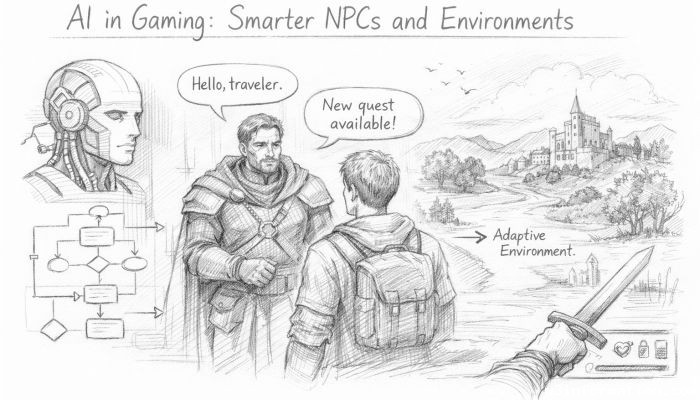 AI in Gaming: Smarter NPCs and Environments
 Understanding Bias in AI Algorithms
 Introduction to Chatbots and Conversational AI
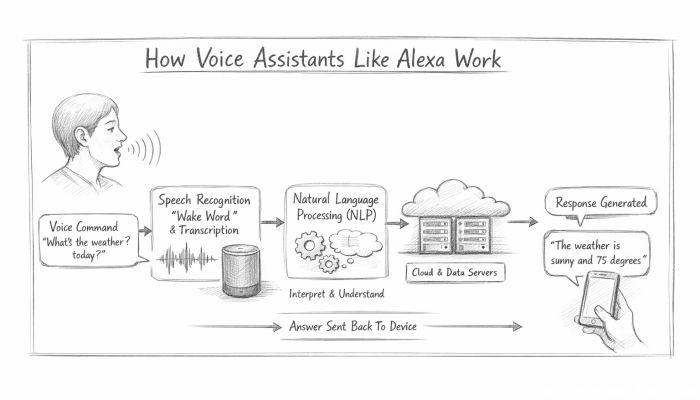 How Voice Assistants Like Alexa Work
 Federated Learning: AI Without Sharing Data