The Importance of Teaching Financial Literacy in Schools
In our fast-paced, evolving global setting, the capacity to manage personal funds effectively is more vital than ever before. Given the intricacy of monetary instruments, electronic banking, and the widespread issue of consumer borrowing, people lacking basic fiscal comprehension can become overwhelmed, leading to unwise economic choices that shape their lifelong welfare. Fiscal awareness—understanding how currency functions, planning expenditures, setting aside funds, investing, and managing credit—is a necessary life proficiency. Nevertheless, numerous young adults enter maturity without sufficient readiness to tackle these obstacles with assurance. Consequently, weaving money management instruction into school syllabi has become a vital strategy for enabling succeeding generations. This piece examines the multiple reasons for providing financial education in educational settings, looking at its advantages, the hurdles encountered, and viable methods for successful introduction.
- Grasping Financial Acumen: A Core Competence
- The Present Status of Monetary Knowledge Among Young People
- The Effect of Early Fiscal Teaching on Future Choices
- Cultivating Prudent Spending and Saving Patterns
- Readying Students for Tangible Fiscal Hurdles
- Mitigating Societal Gaps Through Fiscal Instruction
- Weaving Financial Concepts into the Coursework
- The Function of Instructors and Learning Materials
- Obstacles in Instituting Financial Education
- Technology's Part in Advancing Monetary Literacy
- The Involvement of Families and Local Communities
- Assessing the Effectiveness of Financial Programs
- Preparing for an Economically Informed Tomorrow
- Final Thoughts
- More Related Topics
Grasping Financial Acumen: A Core Competence
Monetary literacy covers a wide spectrum of proficiencies, such as expense planning, saving, comprehending credit, wealth building, and spotting fiscal hazards. It furnishes individuals with the instruments to make educated judgments regarding their capital and map out both immediate and distant objectives. Without a firm grounding in these concepts, younger adults might face undue difficulty with debt, excessive spending, and insufficient savings, negatively impacting their general standard of living. Teaching fiscal literacy in schools ensures that pupils cultivate these crucial abilities early, transforming understanding into enduring practices that bolster monetary stability and welfare.

The Present Status of Monetary Knowledge Among Young People
Research reliably indicates that many youths possess limited fiscal understanding upon graduation. Assessments frequently point to blind spots in grasping fundamental subjects like interest computations, charge cards, and borrowing conditions. This knowledge gap is partly due to financial instruction either being absent or inconsistently woven into most academic plans. Without structured learning periods in handling money, students often seek guidance from family, acquaintances, or media, sources that may not consistently offer accurate or complete counsel.
The Effect of Early Fiscal Teaching on Future Choices
Evidence highlights that initial exposure to financial concepts positively shapes later-life decision-making. Students introduced to budgeting, saving, and prudent borrowing are more prone to shun costly debt, establish contingency funds, and plan for retirement. Early schooling promotes self-assurance, enabling young adults to assess monetary products critically and resist exploitative lending tactics. By imparting money skills in schools, educators can help avert expensive errors that might impede students' futures and perpetuate societal stratification.
Cultivating Prudent Spending and Saving Patterns
A cornerstone of financial education curricula is fostering responsible habits concerning outlays and savings. Pupils learn to monitor incoming and outgoing funds, prioritize needs above desires, and set attainable saving targets. These patterns can counter impulsive purchasing tendencies prevalent in the digital marketplace, where targeted advertisements spur continuous expenditure. By instilling fiscal restraint regarding saving and spending, money management programs encourage a sense of individual accountability and foresight.
Readying Students for Tangible Fiscal Hurdles
Life post-education presents monetary obligations many young individuals are unprepared for, such as managing lease payments, utility charges, student borrowings, and credit obligations. Fiscal instruction can mimic real-world situations, allowing students to practice budgeting with constrained resources or reconciling a monthly account statement within a supervised, supportive space. These hands-on encounters not only reinforce theoretical knowledge but also build robustness and adaptability, preparing pupils to encounter future economic pressures more smoothly.
Mitigating Societal Gaps Through Fiscal Instruction
Financial literacy education holds the power to narrow societal economic divides by arming all students, irrespective of their background, with equivalent opportunities to attain fiscal stability. People from less affluent backgrounds frequently have restricted access to informal monetary advice. Schools thus assume a vital function in balancing the field by guaranteeing universal availability of fiscal understanding. Improved money management skills can boost economic opportunity, as empowered individuals are better positioned to make sound fiscal choices that improve their standing and that of their communities.
Weaving Financial Concepts into the Coursework
Successfully imparting money skills in educational settings necessitates thoughtful incorporation into existing study plans instead of treating it as a standalone topic. Methods that span disciplines, drawing from mathematics, humanities, and economics, allow monetary concepts to be naturally embedded across various subjects. Furthermore, tasks centered on projects and simulated real-life scenarios boost involvement and comprehension. Governing bodies and educational administrations are increasingly acknowledging this necessity, with many nations adopting national financial education blueprints that mandate or promote tuition in this area.
The Function of Instructors and Learning Materials
Teachers are central to delivering impactful instruction in personal finance. Yet, numerous educators feel ill-prepared or lack conviction in teaching monetary subjects owing to insufficient schooling or inadequate tools. Professional growth seminars focusing on financial education can equip teachers with the requisite grasp and teaching methodologies. Supplementing lessons with current materials like digital aids, interactive games, and authentic financial case studies can render the learning process more captivating and pertinent for learners.
Obstacles in Instituting Financial Education
Despite rising acknowledgement of its significance, several hurdles hinder the broad application of financial literacy instruction. These incorporate syllabus overload, absence of standardized content, limited teacher preparation, and variances in funding and provisions, particularly in schools lacking resources. Moreover, cultural perspectives surrounding money and schooling can also influence the acceptance of financial education initiatives. Addressing these complications demands joint efforts among lawmakers, educators, guardians, and local stakeholders.
Technology's Part in Advancing Monetary Literacy
Integrating modern technology into financial education presents promising avenues for engagement and practical discovery. Applications, online mock-up platforms, and interactive interfaces can customize learning paths, offering immediate feedback and adjusting to varied learning preferences. Technology also facilitates access to current monetary data and instruments, readying students for handling finances in an increasingly digitized economy. Nevertheless, guaranteeing fair access to these technological assets remains a necessary focus to avoid digital exclusion.
The Involvement of Families and Local Communities
While institutions bear the primary onus for formal fiscal training, parental and community participation significantly boosts its efficacy. Parents act as role models in money handling and can reinforce lessons absorbed at school. Community entities, financial firms, and non-profit groups can offer workshops, support schemes, and supplementary materials, bridging gaps and connecting money concepts to students' daily experiences. Collaborative endeavors cultivate a more comprehensive learning atmosphere supporting lasting fiscal well-being.
Assessing the Effectiveness of Financial Programs
To verify that financial education meets its goals, evaluating its impact is crucial. Indicators such as enhancements in students' grasp, fiscal conduct, and self-assurance levels can be gauged via questionnaires, tests, and ongoing studies. Some courses also track behavioral results, such as saving percentages or credit profiles as students mature. Data-informed findings guide syllabus refinement, resource allocation, and policy determinations, ensuring steady progression toward more effective fiscal instruction.
Preparing for an Economically Informed Tomorrow
Embedding money management skills in schools involves more than merely teaching students to balance ledgers; it means empowering a generation to navigate an ever more intricate fiscal world with assurance. With the proliferation of digital currency, online banking, and shifting economic conditions, critical thought and adaptability concerning finances are indispensable talents. Schools that prioritize fiscal knowledge cultivate not just informed consumers but also responsible community members capable of making valuable contributions to economic vitality and collective welfare.
Final Thoughts
The necessity of teaching personal finance in schools cannot be overstated in our present-day context. Equipping pupils with crucial fiscal knowledge and abilities readies them to confront real-world difficulties and make sound choices that affect their monetary health and general quality of life. From nurturing responsible routines and lessening societal gaps to improving economic participation and security, the dividends of fiscal training are extensive. While obstacles persist in rolling out complete educational frameworks, the growing availability of novel resources and robust neighborhood ties pave the way ahead. As academic professionals, governing bodies, and interested parties...
 Big O Notation Explained for Beginners
 AI in Gaming: Smarter NPCs and Environments
 Understanding Bias in AI Algorithms
 Introduction to Chatbots and Conversational AI
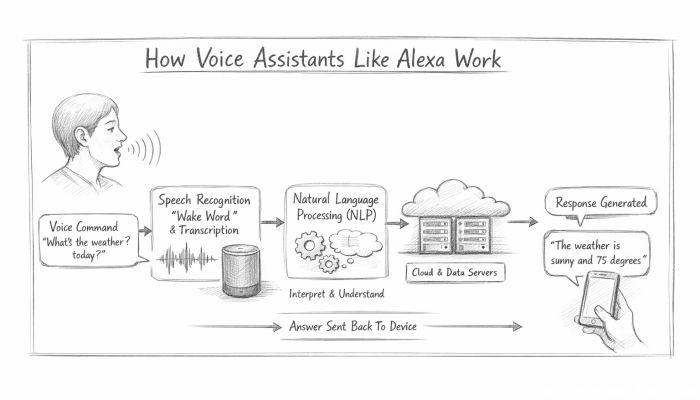 How Voice Assistants Like Alexa Work
 Federated Learning: AI Without Sharing Data