How to Encourage Your Child to Be Independent and Responsible
Every parent dreams of raising a child who is confident, capable, and able to navigate life with independence and responsibility. But in a world where it’s easy to step in, solve problems, and protect children from every challenge, fostering these qualities can feel difficult. Independence doesn’t develop overnight—it grows through small experiences, guided choices, and the freedom to learn from mistakes. Responsibility, on the other hand, is built through trust, consistency, and accountability. When nurtured together, these traits shape children into resilient individuals who can think for themselves and handle real-life situations with confidence. In this guide, we’ll explore practical, thoughtful, and effective ways to encourage your child to become independent and responsible—without pressure, but with purpose.
- Start with Age-Appropriate Responsibilities
- Allow Them to Make Choices
- Encourage Problem-Solving Skills
- Teach the Value of Accountability
- Create Consistent Routines
- Give Them Space to Try and Fail
- Model Responsible Behavior
- Encourage Time Management Skills
- Build Confidence Through Positive Reinforcement
- Teach Life Skills Early
- Encourage Emotional Independence
- Conclusion
- More Related Topics
Start with Age-Appropriate Responsibilities
Independence begins with small, manageable tasks. Children need opportunities to contribute in ways that match their age and ability.
For younger children, this might include:
- Putting away toys
- Helping set the table
- Organizing their school bag
As they grow, responsibilities can expand. Giving children tasks they can handle builds confidence and teaches them that they are capable. The key is to start small and gradually increase expectations.
Allow Them to Make Choices
One of the simplest ways to build independence is by letting children make decisions.
Instead of deciding everything for them, offer choices like:
- “Do you want to wear the blue shirt or the red one?”
- “Would you like to finish homework now or after a short break?”
This empowers children and helps them understand the consequences of their choices. Over time, they develop decision-making skills and confidence in their own judgment.
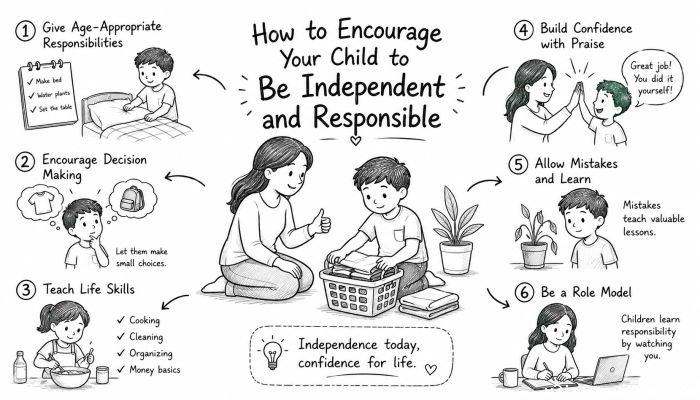
Encourage Problem-Solving Skills
It’s natural for parents to want to fix their child’s problems quickly. However, constantly stepping in can prevent children from learning how to solve issues on their own.
Instead:
- Ask guiding questions
- Encourage them to think of solutions
- Support rather than solve
For example, if your child forgets homework, instead of immediately fixing it, discuss what they can do next time. This builds critical thinking and resilience.
Teach the Value of Accountability
Responsibility means understanding that actions have consequences. Teaching accountability helps children take ownership of their behavior.
If a child makes a mistake:
- Avoid harsh punishment
- Discuss what went wrong
- Encourage them to fix it
This approach helps children learn without fear. They begin to understand that responsibility is not about being perfect—it’s about learning and improving.
Create Consistent Routines
Routines provide structure and help children develop discipline. When tasks are part of a daily routine, they become habits rather than obligations.
Examples include:
- Morning routines (getting ready for school)
- Homework time
- Bedtime routines
Consistency reduces resistance and makes children more independent in managing their day. Over time, they begin to take initiative without constant reminders.
Give Them Space to Try and Fail
Failure is an important part of learning. When children are allowed to fail in a safe environment, they develop resilience and confidence.
Resist the urge to intervene immediately. Let them try, make mistakes, and try again.
For instance, if they struggle with a task, encourage effort rather than stepping in. This teaches perseverance and helps them believe in their abilities.
Model Responsible Behavior
Children learn by observing their parents. If you demonstrate responsibility and independence, your child is more likely to adopt those behaviors.
Show them how you:
- Manage time
- Handle responsibilities
- Solve problems calmly
Your actions speak louder than words. Being a role model is one of the most effective ways to teach these values.
Encourage Time Management Skills
Time management is a key part of independence. Teaching children how to manage their time helps them balance responsibilities and leisure.
You can:
- Use schedules or planners
- Set clear expectations
- Break tasks into smaller steps
As they grow, allow them to manage their own time with guidance. This prepares them for real-world responsibilities.
Build Confidence Through Positive Reinforcement
Confidence plays a major role in independence. Children who believe in themselves are more likely to take initiative.
Praise efforts, not just results:
- “You worked really hard on that”
- “I’m proud of how you handled that situation”
Positive reinforcement motivates children and encourages them to keep trying.
Teach Life Skills Early
Practical life skills are essential for independence. These skills prepare children to handle everyday situations.
Teach them:
- Basic cooking
- Cleaning and organizing
- Managing money
These skills not only build independence but also instill a sense of responsibility and self-sufficiency.
Encourage Emotional Independence
Independence is not just about tasks—it’s also about emotions. Teaching children to understand and manage their feelings is equally important.
Help them:
- Express emotions openly
- Handle disappointment
- Develop coping strategies
Emotional independence allows children to navigate challenges with confidence and maturity.
Conclusion
Encouraging your child to be independent and responsible is a journey that requires patience, consistency, and trust. It’s not about giving them complete freedom overnight, but about guiding them step by step—allowing them to learn, grow, and discover their capabilities.
From assigning small responsibilities and encouraging decision-making to teaching life skills and emotional awareness, every effort contributes to shaping a confident and capable individual. The goal is not perfection, but progress.
In the end, raising an independent and responsible child is one of the greatest gifts you can give—not just to them, but to the world. Because a child who learns to stand on their own becomes an adult who can face life with courage, resilience, and confidence.
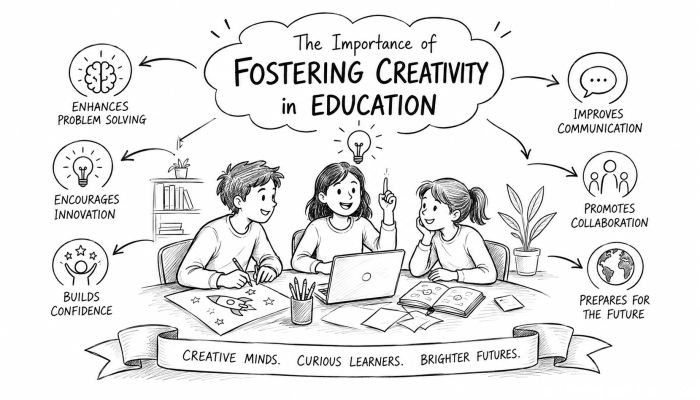 The Importance of Fostering Creativity in Education
 How to Plan a Family Movie Night Everyone Will Enjoy
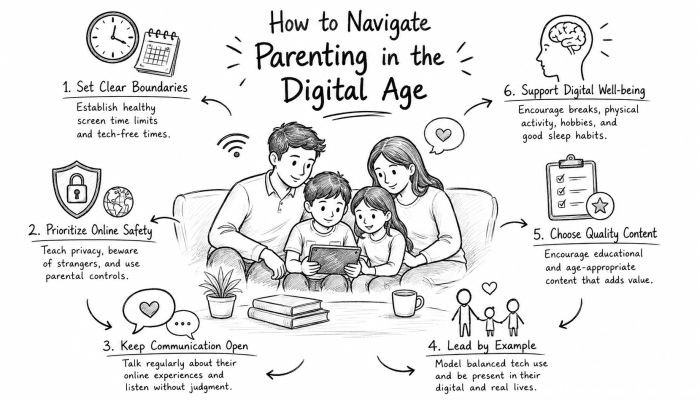 How to Navigate Parenting in the Digital Age
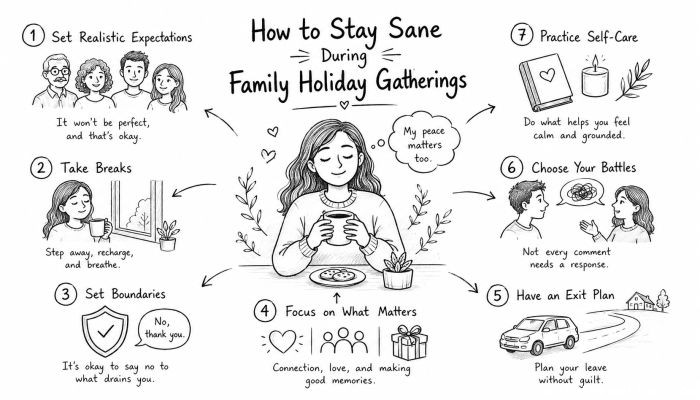 How to Stay Sane During Family Holiday Gatherings
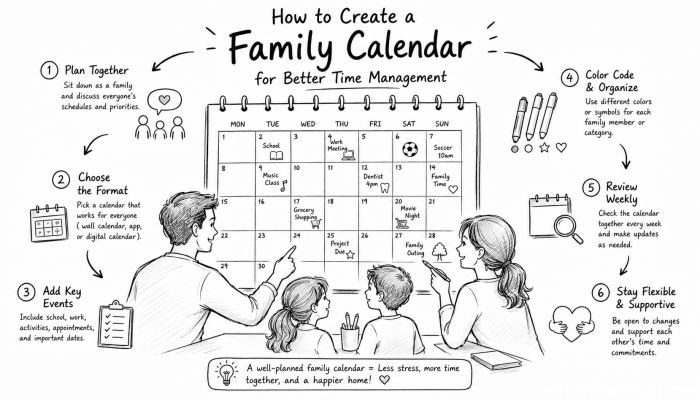 How to Create a Family Calendar for Better Time Management