How to Develop a Reading Habit in Your Child
In a world filled with screens, notifications, and constant distractions, developing a reading habit in your child might feel like a challenge—but it’s one of the most powerful gifts you can give them. Reading is not just about learning words; it shapes imagination, builds empathy, improves concentration, and strengthens communication skills. A child who loves reading doesn’t just perform better academically—they grow into a curious, thoughtful, and confident individual. But here’s the truth: children don’t naturally fall in love with books unless they are guided, encouraged, and inspired. The journey begins at home, with small, consistent efforts that turn reading into a joyful experience rather than a forced activity. In this guide, we’ll explore practical, human-centered ways to help your child develop a lifelong love for reading.
- Start Early and Make It Natural
- Create a Reading-Friendly Environment
- Be a Reading Role Model
- Choose the Right Books for Their Age and Interests
- Make Reading a Daily Routine
- Read Together and Make It Interactive
- Use Storytelling to Spark Interest
- Limit Screen Time Mindfully
- Celebrate Small Reading Achievements
- Visit Libraries and Bookstores
- Be Patient and Avoid Pressure
- Connect Reading to Real Life
- Conclusion
- More Related Topics
Start Early and Make It Natural
The earlier you introduce books, the easier it becomes to build a reading habit. Even toddlers who can’t read yet benefit from being exposed to books.
Reading aloud, showing colorful picture books, and making storytelling a part of daily life helps children associate books with comfort and joy. At this stage, it’s not about understanding every word—it’s about building familiarity and emotional connection.
When reading becomes a natural part of their routine, children grow up seeing it as something enjoyable rather than something they have to do.
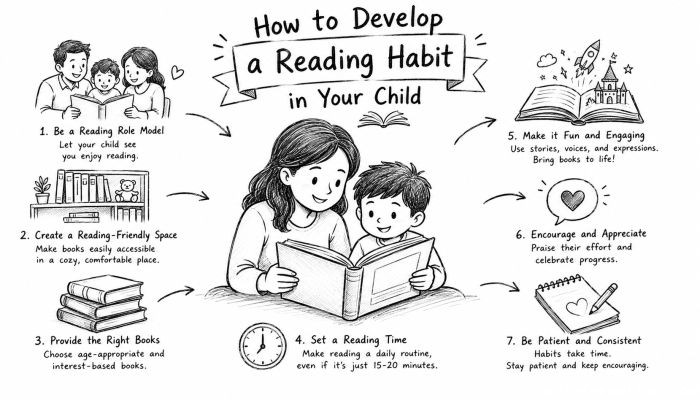
Create a Reading-Friendly Environment
Children are highly influenced by their surroundings. If books are easily accessible and visible, they are more likely to pick them up.
Create a cozy reading corner with:
- Age-appropriate books
- Comfortable seating
- Good lighting
A dedicated space signals that reading is important and special. It doesn’t have to be elaborate—even a small corner can make a big difference. The goal is to make reading inviting and accessible.
Be a Reading Role Model
Children learn more from what they see than what they are told. If they see you reading regularly, they are more likely to develop the same habit.
Let your child observe you reading books, newspapers, or even digital content. Talk about what you’re reading and share your thoughts.
When reading becomes a visible part of everyday life, it sends a powerful message: reading is valuable and enjoyable.
Choose the Right Books for Their Age and Interests
One of the most common mistakes parents make is forcing children to read books that don’t interest them.
Instead:
- Let them choose books
- Explore different genres (stories, comics, adventure, fantasy)
- Match books to their interests
A child who loves animals might enjoy wildlife stories, while another might prefer superhero comics. The key is to make reading relevant and exciting.
Make Reading a Daily Routine
Consistency is the foundation of any habit. Setting aside a specific time for reading every day helps make it a natural part of your child’s life.
It could be:
- Before bedtime
- After school
- During quiet time
Even 15–20 minutes a day can create a lasting impact. Over time, this routine becomes something your child looks forward to.
Read Together and Make It Interactive
Reading doesn’t have to be a solo activity. Reading together strengthens bonding and makes the experience more enjoyable.
Ask questions like:
- “What do you think will happen next?”
- “Which character do you like?”
Encourage your child to express their thoughts. This interaction improves comprehension and makes reading more engaging.
Use Storytelling to Spark Interest
Before children fall in love with reading, they often fall in love with stories.
Tell stories from your childhood, create your own stories, or narrate events in a fun way. This builds imagination and curiosity, which naturally leads to an interest in books.
Storytelling acts as a bridge between listening and reading, making the transition smoother.
Limit Screen Time Mindfully
Excessive screen time can reduce a child’s interest in reading. While technology is unavoidable, it’s important to create a balance.
Set boundaries for screen usage and encourage activities like reading, drawing, or playing. Instead of completely restricting screens, guide your child toward meaningful alternatives.
When children have fewer distractions, they are more likely to explore books.
Celebrate Small Reading Achievements
Positive reinforcement plays a huge role in building habits. Celebrate your child’s reading milestones, no matter how small.
For example:
- Finishing a book
- Reading consistently for a week
- Learning new words
Rewards don’t have to be material—they can be praise, encouragement, or extra story time. This builds confidence and motivation.
Visit Libraries and Bookstores
Taking your child to libraries or bookstores can make reading feel like an adventure.
Let them:
- Explore different books
- Choose what they want to read
- Experience the joy of discovery
These outings create excitement around books and make reading more than just a home activity—it becomes an experience.
Be Patient and Avoid Pressure
Every child is different. Some may develop a reading habit quickly, while others may take time.
Avoid forcing or pressuring your child to read. This can create resistance and make reading feel like a burden.
Instead, encourage gently, stay consistent, and allow them to progress at their own pace. Patience is key to building a lasting habit.
Connect Reading to Real Life
Help your child see how reading connects to the real world.
For example:
- Read recipes while cooking
- Follow instructions for games
- Explore books related to their hobbies
When children understand the practical value of reading, they see it as a useful and meaningful skill rather than just an academic task.
 How to Make the Most of Your Holiday Break
 The Best Winter Destinations for a Cozy Getaway
 How to Organize Your Holiday Travel Plans with Ease
 The Ultimate Guide to Cooking for a Crowd
 How to Make Healthy Comfort Food Without the Guilt
 5 Delicious Vegan Breakfast Ideas You Can Make in Minutes