How to Use Technology to Enhance Student Learning
In today’s rapidly evolving world, technology has become an integral part of education, transforming the way students learn, interact, and grow. Gone are the days when learning was confined to textbooks and classrooms. Now, with the help of digital tools, online platforms, and interactive resources, education has become more engaging, personalized, and accessible than ever before. However, simply having access to technology is not enough—it’s about using it effectively to enhance student learning outcomes. When used thoughtfully, technology can foster creativity, improve understanding, and prepare students for a future driven by innovation. In this article, we’ll explore how technology can be used to enhance student learning, offering practical insights and strategies that educators and students can apply in real-world scenarios.
- The Role of Technology in Modern Education
- Personalized Learning Through Digital Tools
- Interactive Learning with Multimedia Content
- Online Collaboration and Communication
- Access to Global Learning Resources
- Gamification for Enhanced Engagement
- Improving Assessment and Feedback
- Developing Digital Literacy Skills
- Supporting Remote and Flexible Learning
- Encouraging Creativity and Innovation
- Challenges and Responsible Use of Technology
- The Future of Technology in Education
- Conclusion
- More Related Topics
The Role of Technology in Modern Education
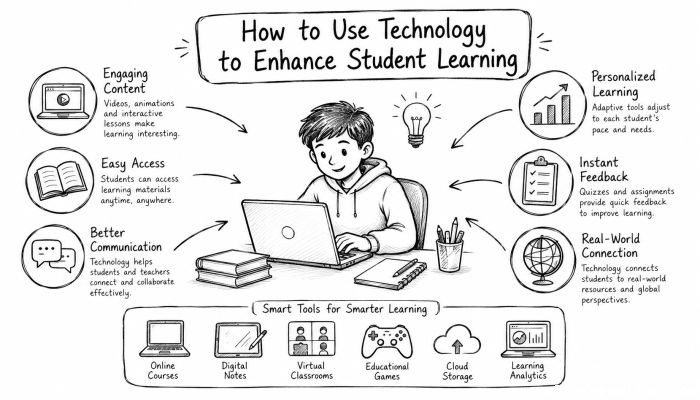
Technology has reshaped education by making information more accessible and learning more dynamic. Students can now access a vast range of resources, from online courses to educational videos, at any time. This shift has moved learning from a passive experience to an interactive one, where students actively engage with content. Technology also supports diverse learning styles, ensuring that every student has the opportunity to succeed.
Personalized Learning Through Digital Tools
One of the most significant benefits of technology is its ability to support personalized learning. Adaptive learning platforms analyze student performance and tailor content to individual needs. This ensures that students can learn at their own pace, focusing on areas where they need improvement. Personalized learning not only enhances understanding but also boosts confidence and motivation.
Interactive Learning with Multimedia Content
Multimedia content, such as videos, animations, and simulations, makes learning more engaging and easier to understand. Complex concepts can be simplified through visual representation, helping students grasp ideas more effectively. Interactive tools also encourage participation, making learning a more enjoyable and memorable experience.
Online Collaboration and Communication
Technology enables students to collaborate with peers and communicate with teachers in real time. Tools like discussion forums, video conferencing, and shared documents facilitate teamwork and knowledge sharing. This collaborative approach helps students develop important skills such as communication, problem-solving, and critical thinking.
Access to Global Learning Resources
With the internet, students are no longer limited to local resources. They can access educational content from around the world, gaining exposure to different perspectives and ideas. This global access enriches the learning experience and broadens students’ understanding of various subjects.
Gamification for Enhanced Engagement
Gamification incorporates game elements into learning, making it more engaging and motivating. Features like points, badges, and leaderboards encourage students to participate actively and strive for improvement. This approach transforms learning into an enjoyable activity, increasing retention and interest.
Improving Assessment and Feedback
Technology allows for more efficient and accurate assessment of student performance. Online quizzes, automated grading systems, and analytics provide immediate feedback, helping students understand their strengths and areas for improvement. This timely feedback is essential for continuous learning and growth.
Developing Digital Literacy Skills
Incorporating technology into education helps students develop essential digital literacy skills. These skills are crucial in today’s digital age, where technology plays a significant role in almost every aspect of life. By learning how to use digital tools effectively, students become better prepared for future careers.
Supporting Remote and Flexible Learning
Technology has made remote learning possible, providing flexibility for students and educators. Online classes, recorded lectures, and digital assignments allow students to learn from anywhere. This flexibility is especially beneficial for those who may not have access to traditional educational settings.
Encouraging Creativity and Innovation
Digital tools provide students with opportunities to express their creativity. From creating presentations and videos to developing projects and coding applications, technology encourages innovation. This creative freedom helps students think outside the box and develop problem-solving skills.
Challenges and Responsible Use of Technology
While technology offers numerous benefits, it also comes with challenges. Over-reliance on digital tools, distractions, and issues related to screen time can impact learning. It’s important to use technology responsibly and maintain a balance between digital and traditional learning methods. Educators and students must be mindful of how technology is used to ensure it enhances rather than hinders learning.
The Future of Technology in Education
As technology continues to evolve, its role in education will only grow. Innovations such as artificial intelligence, virtual reality, and augmented reality are set to revolutionize learning experiences. These advancements will provide even more opportunities for personalized, immersive, and effective education.
Conclusion
Technology has the power to transform education by making learning more accessible, engaging, and effective. From personalized learning and interactive content to global resources and collaborative tools, its benefits are vast and impactful. However, the key lies in using technology thoughtfully and responsibly. By integrating digital tools into education in a balanced and strategic way, we can create a learning environment that empowers students and prepares them for the future. Ultimately, technology is not just a tool—it is a gateway to endless possibilities in education.
 How to Make the Most of Your Holiday Break
 The Best Winter Destinations for a Cozy Getaway
 How to Organize Your Holiday Travel Plans with Ease
 The Ultimate Guide to Cooking for a Crowd
 How to Make Healthy Comfort Food Without the Guilt
 5 Delicious Vegan Breakfast Ideas You Can Make in Minutes