How to Learn Data Science From Scratch: A Beginner’s Guide
Data is everywhere — from the apps we use daily to the decisions businesses make behind the scenes. But for many beginners, stepping into the world of data science can feel overwhelming. Where do you start? What tools should you learn? And how do you move from theory to real-world skills? The good news is that learning data science from scratch is absolutely achievable, even without a technical background. With the right roadmap, consistency, and practical approach, you can build strong foundations and grow into a confident data professional. This guide breaks down the journey into clear, manageable steps — helping you understand what to learn, how to learn it, and how to apply it effectively in real-world scenarios.
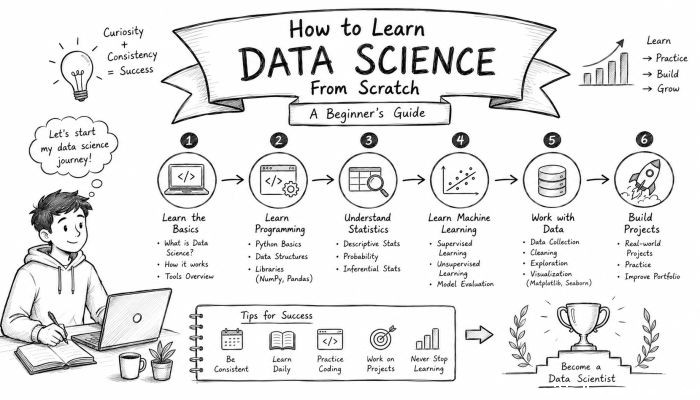
- Understanding What Data Science Really Is
- Building a Strong Foundation in Mathematics
- Learning a Programming Language (Python is King)
- Mastering Data Handling and Analysis
- Data Visualization: Telling Stories with Data
- Understanding Databases and SQL
- Introduction to Machine Learning
- Working on Real-World Projects
- Building a Portfolio That Stands Out
- Learning Version Control and Collaboration
- Staying Consistent and Avoiding Overwhelm
- Preparing for Data Science Jobs
- Conclusion
- More Related Topics
Understanding What Data Science Really Is
Before diving into tools and coding, it’s important to understand what data science actually involves. At its core, data science is about extracting meaningful insights from data to solve problems and make decisions.
It combines multiple disciplines — statistics, programming, data analysis, and domain knowledge. A data scientist doesn’t just analyze numbers; they ask the right questions, clean messy data, build models, and communicate findings. When you grasp this bigger picture early, your learning becomes more focused and purposeful rather than scattered.
Building a Strong Foundation in Mathematics
Many beginners fear math, but you don’t need to be a genius to succeed in data science. However, a basic understanding of key concepts is essential.
Focus on:
- Statistics (mean, median, probability, distributions)
- Linear algebra (vectors, matrices basics)
- Calculus (basic concepts for understanding models)
The goal is not memorization but intuition. When you understand why algorithms work, not just how, you gain a deeper edge that sets you apart from others.
Learning a Programming Language (Python is King)
Programming is the backbone of data science, and Python is the most recommended language for beginners.
Why Python?
- Easy to learn and read
- Huge community support
- Rich libraries like Pandas, NumPy, and Scikit-learn
Start with basics:
- Variables and data types
- Loops and conditions
- Functions and modules
Once comfortable, move toward data-specific libraries. Practice consistently — coding is a skill you build through repetition, not just reading.
Mastering Data Handling and Analysis
Real-world data is messy. Learning how to clean, manipulate, and analyze data is one of the most crucial skills.
You’ll work with:
- Missing values
- Duplicates
- Inconsistent formats
Using tools like Pandas, you can transform raw data into usable insights. This stage is where beginners start feeling like real data scientists because they begin solving actual problems instead of just learning theory.
Data Visualization: Telling Stories with Data
Data is powerful, but only if people can understand it. That’s where visualization comes in.
Tools like Matplotlib, Seaborn, and Tableau help you present data in a meaningful way. Charts, graphs, and dashboards turn complex data into simple insights.
Think of visualization as storytelling. Instead of showing numbers, you’re telling a story that influences decisions. This skill is often underestimated but highly valuable in real-world projects.
Understanding Databases and SQL
Data doesn’t always come in neat files — it often lives in databases. That’s why learning SQL (Structured Query Language) is essential.
With SQL, you can:
- Retrieve data
- Filter results
- Join multiple tables
- Perform aggregations
Even basic SQL skills can make you significantly more effective as a data scientist. It’s one of the most practical skills used daily in the industry.
Introduction to Machine Learning
Machine learning is where data science becomes truly exciting. It involves building models that can learn from data and make predictions.
Start with simple algorithms:
- Linear regression
- Logistic regression
- Decision trees
Focus on understanding concepts like training data, testing data, and overfitting. Don’t rush into complex models — strong fundamentals matter more than jumping ahead.
Working on Real-World Projects
Learning without practice is incomplete. Projects help you apply everything you’ve learned and build confidence.
Start with small projects like:
- Analyzing sales data
- Predicting house prices
- Visualizing COVID trends
Projects also become part of your portfolio, which is crucial when applying for jobs. Employers value practical experience more than theoretical knowledge.
Building a Portfolio That Stands Out
Your portfolio is your proof of skill. It tells your story as a data scientist.
Include:
- Clear problem statements
- Clean code
- Visualizations
- Insights and conclusions
Host your projects on platforms like GitHub and write explanations for each one. A well-documented portfolio can often outweigh degrees or certifications.
Learning Version Control and Collaboration
Data science is rarely a solo job. Teams work together, and version control tools like Git help manage that collaboration.
With Git, you can:
- Track changes in your code
- Collaborate with others
- Manage different versions of projects
Learning Git early makes you more industry-ready and improves your workflow significantly.
Staying Consistent and Avoiding Overwhelm
One of the biggest challenges beginners face is information overload. There are endless tutorials, tools, and courses.
The key is consistency over intensity.
- Study a little every day
- Practice regularly
- Focus on one concept at a time
Avoid comparing your journey with others. Progress in data science is gradual, and consistency is what leads to mastery.
Preparing for Data Science Jobs
Once you’ve built your skills, the next step is preparing for job opportunities.
Focus on:
- Resume building
- Mock interviews
- Problem-solving skills
Learn how to explain your projects clearly. Communication is just as important as technical skills. Employers look for candidates who can not only analyze data but also explain insights effectively.
Conclusion
Learning data science from scratch may seem intimidating at first, but it’s a journey that rewards persistence and curiosity. By building a strong foundation in math, mastering programming, working on real-world projects, and staying consistent, you can gradually transform yourself into a skilled data professional.
The beauty of data science lies in its impact — the ability to turn raw data into meaningful insights that drive decisions and innovation. As you progress, you’ll realize that it’s not just about tools or algorithms, but about thinking critically and solving problems.
Start small, stay consistent, and keep learning. Every expert was once a beginner — and your journey begins today.
 How to Make the Most of Your Holiday Break
 The Best Winter Destinations for a Cozy Getaway
 How to Organize Your Holiday Travel Plans with Ease
 The Ultimate Guide to Cooking for a Crowd
 How to Make Healthy Comfort Food Without the Guilt
 5 Delicious Vegan Breakfast Ideas You Can Make in Minutes