The Role of Art in Social Movements and Activism
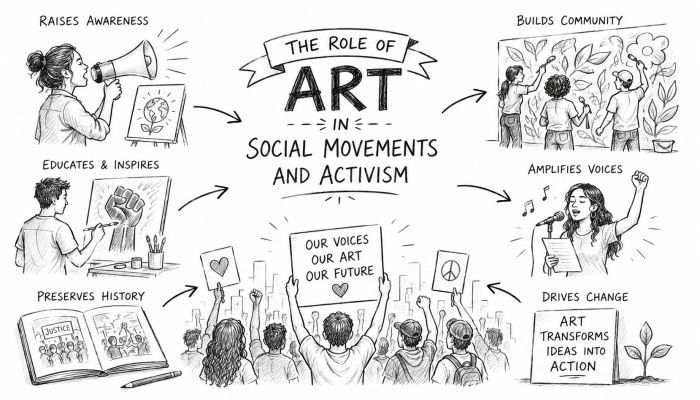
Art has always been more than just an expression of creativity—it is a powerful force that shapes societies, challenges norms, and ignites change. From protest songs echoing through crowded streets to murals painted on city walls, art has consistently played a vital role in social movements and activism. It speaks when words fail, connects people across cultures, and transforms complex issues into emotional, relatable experiences. In times of resistance and revolution, art becomes a voice for the unheard and a mirror reflecting society’s deepest struggles. This article explores how art influences social movements, mobilizes communities, and drives meaningful change, highlighting its enduring relevance in activism across the world.
- Art as a Universal Language of Resistance
- Historical Roots of Art in Activism
- Visual Art and Public Spaces
- Music as a Catalyst for Change
- Literature and Storytelling in Activism
- Digital Art and Social Media Movements
- Performance Art as Protest
- Art as a Tool for Emotional Connection
- Empowering Marginalized Voices
- Challenges and Criticism of Activist Art
- The Intersection of Art, Culture, and Identity
- The Future of Art in Activism
- Conclusion
- More Related Topics
Art as a Universal Language of Resistance
Art transcends barriers—language, geography, and culture—and becomes a universal medium of communication. In social movements, this universality is crucial. A powerful image, a moving song, or a symbolic performance can communicate injustice and resistance instantly. Unlike political speeches or policy documents, art appeals directly to human emotions. It allows individuals from different backgrounds to connect with a cause without needing extensive context or explanation. This emotional accessibility makes art one of the most effective tools for mobilizing people and creating collective awareness.
Historical Roots of Art in Activism
The relationship between art and activism is deeply rooted in history. From ancient cave paintings depicting societal struggles to revolutionary posters during wars, art has always documented and influenced change. Movements such as civil rights, anti-war protests, and feminist activism have relied heavily on artistic expression. Songs became anthems, posters became symbols, and performances became acts of defiance. These artistic elements not only supported movements but often defined their identity, making them memorable and impactful for generations.
Visual Art and Public Spaces
Murals, graffiti, and street art have become central to modern activism. Public spaces serve as open galleries where artists can challenge authority and highlight social issues. A single mural can transform a neglected wall into a powerful statement about justice, equality, or resistance. Visual art in public spaces democratizes expression—it doesn’t require entry tickets or formal settings. Anyone passing by becomes an audience, making the message widespread and immediate. This accessibility is what gives visual activism its strength and reach.
Music as a Catalyst for Change
Music has always been at the heart of social movements. Protest songs have the power to unite crowds, inspire courage, and sustain momentum during difficult times. Whether it’s folk, hip-hop, or rock, music captures the spirit of resistance and amplifies voices that might otherwise go unheard. Lyrics often address injustice, inequality, and hope, resonating deeply with listeners. Beyond entertainment, music becomes a form of collective identity, strengthening solidarity within movements and encouraging participation.
Literature and Storytelling in Activism
Stories have the power to humanize issues that might otherwise seem distant or abstract. Through novels, poetry, essays, and personal narratives, writers bring attention to social injustices and give voice to marginalized communities. Literature allows readers to step into someone else’s experience, fostering empathy and understanding. In activism, storytelling becomes a strategic tool—it not only informs but also persuades, encouraging readers to reflect and take action.
Digital Art and Social Media Movements
In the digital age, art has found new platforms and audiences. Social media has transformed how art is created, shared, and consumed. Digital illustrations, memes, and videos can go viral within hours, spreading messages across the globe. Online activism often relies on visually compelling content to capture attention in a crowded digital space. Hashtags, infographics, and short videos combine creativity with information, making activism more engaging and accessible to younger generations.
Performance Art as Protest
Performance art offers a unique way to engage audiences directly. It can be spontaneous or planned, subtle or bold, but its impact lies in its immediacy. Street performances, flash mobs, and symbolic acts can disrupt everyday routines and force people to confront social issues. Unlike static forms of art, performance art unfolds in real time, creating a shared experience between the artist and the audience. This interaction often leaves a lasting impression, making the message more powerful.
Art as a Tool for Emotional Connection
One of the most significant strengths of art in activism is its ability to evoke emotion. Facts and statistics inform, but emotions inspire action. Art bridges this gap by transforming data into experiences. A painting can convey pain, a song can express hope, and a film can reveal injustice in ways that resonate deeply. This emotional connection is what motivates individuals to move from awareness to action, making art an essential component of effective activism.
Empowering Marginalized Voices
Art provides a platform for those who are often excluded from mainstream narratives. Marginalized communities use art to tell their stories, preserve their identities, and demand recognition. Through creative expression, they reclaim their voices and challenge stereotypes. This empowerment is crucial in social movements, as it ensures that the narratives driving change are authentic and inclusive. Art becomes not just a tool for protest but also a means of self-representation and dignity.
Challenges and Criticism of Activist Art
Despite its power, activist art is not without challenges. Critics often question its effectiveness, arguing that art alone cannot bring about systemic change. Others highlight issues of commercialization, where powerful messages are diluted for profit. Additionally, artists may face censorship, backlash, or even danger for their work. However, these challenges also underscore the significance of art in activism—if it were not impactful, it would not provoke such strong reactions.
The Intersection of Art, Culture, and Identity
Art in activism is deeply connected to culture and identity. It reflects the values, traditions, and struggles of communities, making movements more relatable and grounded. Cultural expressions—such as traditional music, dance, and visual motifs—add depth and authenticity to activism. This intersection ensures that movements are not just political but also cultural, preserving heritage while advocating for change.
The Future of Art in Activism
As technology evolves, so does the role of art in activism. Virtual reality, augmented reality, and digital platforms are opening new possibilities for creative expression. These innovations allow activists to create immersive experiences that engage audiences in unprecedented ways. The future of activist art lies in its ability to adapt, innovate, and continue connecting people across boundaries. While the mediums may change, the purpose remains the same—to inspire, challenge, and transform.
Conclusion
Art is not just a reflection of society; it is a force that shapes it. In social movements and activism, art serves as a bridge between awareness and action, emotion and understanding, individuality and collective power. It amplifies voices, challenges injustice, and inspires change in ways that traditional methods often cannot. From murals on city walls to viral digital campaigns, art continues to evolve while maintaining its core purpose—to give meaning to struggle and hope to resistance. As the world faces new challenges, the role of art in activism will remain essential, reminding us that creativity is not just an expression, but a catalyst for change.
 How to Make the Most of Your Holiday Break
 The Best Winter Destinations for a Cozy Getaway
 How to Organize Your Holiday Travel Plans with Ease
 The Ultimate Guide to Cooking for a Crowd
 How to Make Healthy Comfort Food Without the Guilt
 5 Delicious Vegan Breakfast Ideas You Can Make in Minutes