How Technology Shapes STEM Learning in 2025
In 2025, STEM education is at the crossroads of significant change. Fueled by technological innovation, evolving pedagogies and the urgency of relevance, learning science, technology, engineering and mathematics now demands a reimagined approach to explore the unknown and prepare for the future. This article delves into how technology is revolutionizing STEM education from primary to higher education. We examine not only the latest tools and platforms but also how teaching, assessment, equity and student preparation for an uncertain world are changing in this new era. Read on to discover the twelve key trends where technology is redefining STEM learning and what that means for students, educators and institutions.
- Personalised Learning Through Artificial Intelligence
- Immersive Technologies: AR, VR & Extended Reality Labs
- Hands-On STEM with Robotics and Coding Kits
- Interdisciplinary Learning and STEAM Convergence
- Data-Driven Assessment and Learning Analytics
- Equitable Access and Inclusive STEM Technology
- Computational Thinking and Early Coding Integration
- Maker-Spaces, Innovation Labs and Project-Based STEM
- Global Collaboration and Remote STEM Experiences
- Sustainability, STEM and the Future Workforce
- Teacher Roles, Professional Development and Technology Adoption
- Challenges, Ethics and the Road Ahead
- Conclusion
- More Related Topics
Personalised Learning Through Artificial Intelligence
The use of AI to personalise learning experiences is one of the biggest changes in STEM education. Platforms that analyse individual learner data including pace, error patterns and preferred modalities provide customised content, adaptive tasks and real-time feedback. education.mamma.com+2Bubble Language School+2 In a STEM context, this means a math problem set adapts if a student struggles with algebraic manipulation, or a physics simulation is simplified to match prior misconceptions. By enabling individualised learning pathways, AI can increase engagement and efficiency in STEM: students can progress at their own pace, and educators can focus on deeper inquiry, mentoring and high-value facilitation.

Immersive Technologies: AR, VR & Extended Reality Labs
AR, VR and extended reality (XR) labs are making abstract STEM concepts more concrete and accessible in 2025. Augmented reality, virtual reality and the merging of both in extended reality settings are entering the mainstream pedagogy in STEM classrooms. trandev.net+2mitrmedia.com+2 Imagine learners exploring the molecular structure of DNA in 3D, assembling virtual circuits with haptic feedback or stepping into a virtual chemical laboratory. Immersive environments can drive deeper conceptual understanding, curiosity and engagement by suspending reality just enough for exploration, without real-world risk or constraints. Moreover, AR/VR tools support remote and hybrid learners, making labs and other complex STEM environments accessible outside of traditional infrastructure.
Hands-On STEM with Robotics and Coding Kits
Hands-on STEM experiences have exploded in 2025. Robotics kits, micro-controllers, programmable drones and maker-spaces have become an integral part of STEM curricula. makersmuse.in+1 Students are not just learning about circuits or programming—they are building robots, designing sensors, connecting devices to data platforms and solving engineering challenges. This kind of active learning cultivates computational thinking, engineering design skills, iteration and resilience. It also helps ground STEM in tangible, real-world application.
Interdisciplinary Learning and STEAM Convergence
STEM learning is becoming increasingly interdisciplinary in 2025. The borders between science, technology, engineering and math are dissolving. Classrooms are integrating the arts and humanities into the STEAM model more and more. jetlearn.com+1 In a STEM lesson, this could look like students designing an eco-bridge (engineering), modelling its stresses (math), creating a digital twin (technology) and developing a user-experience story (arts/humanities). This interdisciplinary approach mirrors the real-world, helps students develop creativity, communication, ethical reasoning and design sensitivity as well as pure technical skills.
Data-Driven Assessment and Learning Analytics
Technology is also changing the way we assess and monitor STEM learning. Learning analytics platforms collect data on how students approach tasks, where they struggle and how they improve. OECD+1 In STEM, this means tracking how long a student spends in a simulation, which errors are repeated on physics problems and how often they request hints in a coding challenge. Teachers then use that data to intervene: personalising the next level of scaffolding, re-grouping students strategically or even redesigning tasks. Formative, continuous assessment like this goes beyond traditional tests and supports mastery learning.
Equitable Access and Inclusive STEM Technology
As technology grows in sophistication, the equity imperative in STEM education is stronger than ever. Technology offers the potential to narrow rather than widen the opportunity gap. In 2025, efforts are focused on ensuring students from under-represented groups, rural areas and with special needs can access quality STEM experiences. Bubble Language School+1 This includes remote access to virtual labs, affordable maker-kits, accessible AR/VR tools and adaptive interfaces. Inclusive technology means STEM platforms are designed with diverse learners in mind from the start, data-monitored for bias and teachers are supported to use them well.
Computational Thinking and Early Coding Integration
Computational thinking and coding are now part of the foundation of STEM learning at younger age levels. In 2025, algorithmic reasoning, block-based coding, logic puzzles and data-driven experimentation are being introduced well before high school. jetlearn.com+1 Integrating coding into STEM early helps students develop mental models of automation, abstraction and iteration: fundamental concepts in modern STEM fields. This also de-mystifies technology and empowers students to be creators as well as consumers. Coding, computational thinking and digital fluency thus become part of the STEM pipeline from the beginning and better aligned with future-ready skills.
Maker-Spaces, Innovation Labs and Project-Based STEM
The environment of STEM learning is changing. Maker-spaces, innovation labs and collaborative project-based environments are core in 2025. makersmuse.in In these spaces, students work together to define problems, gather data, prototype solutions, test and iterate. For instance, a class might build sensors to monitor local air quality, then use technology to develop a dashboard, calculate emissions (math), propose remediation (science) and present results (engineering/design/communication). Project-based STEM fosters creativity, teamwork, reflection and an experimentation mindset. Digital tools amplify this learning: 3D printers, CAD software, sensors and networked platforms make design and testing accessible.
Global Collaboration and Remote STEM Experiences
Technology makes STEM learning global in 2025. Students are able to work together on projects with peers around the world, virtually connect with industry mentors and participate in remote virtual labs and competitions. IoT, cloud platforms and collaborative tools make this possible. As the OECD report on Technology in Education highlights, educational technology spans geographical divides. OECD+1 For example, schools in India might partner with universities in Germany to analyse climate data using sensors installed in both places, and co-present solutions. Global collaboration enriches STEM learning by exposing students to diverse perspectives, real-world relevance and an expansive network of peers and professionals.
Sustainability, STEM and the Future Workforce
In 2025, technology-infused STEM is not only about mastering formulas. It is about solving pressing global challenges such as climate change, renewable energy, sustainable systems and ethical innovation. Educators are weaving sustainability themes into STEM curricula. Synergy STEM Partners+1 Technology supports this by enabling modelling, simulation and data analysis of ecological and engineered systems. Students might build sensors to measure soil moisture, model energy flows in smart homes or simulate sustainable transport systems. This sustainability emphasis in STEM is about more than skills and science: it is about preparing for the future workforce in a way that matters to society. Students gain interdisciplinary systems-thinking, ethics and innovation for impact.
Teacher Roles, Professional Development and Technology Adoption
As technology is taking centre stage in STEM learning, the role of the teacher is shifting. The need for teacher professional development is shifting with it. Teachers become more like facilitators, mentors, curriculum designers and data-informed guides than just deliverers of content. To support teachers in this shift, professional development is now more about technological fluency, scaffolding learners’ use of immersive tools, interpreting analytics, and leading open-ended inquiry. The OECD report also makes clear that technology without capacity building risks creating or exacerbating inequality. OECD+1 In 2025, successful STEM institutions are those that invest in both technology infrastructure and teacher readiness, to ensure that tech is meaningful, integrated and supporting pedagogical change.
Challenges, Ethics and the Road Ahead
Despite the promise of technology in STEM learning, 2025 is also bringing clear challenges. Equity gaps are still real and persistent. Access to devices, connectivity and high-quality technology-enabled experiences still vary widely. Privacy, data security and algorithmic bias raise ethical questions as machine-learning tools become more embedded. Inequality and the responsible use of technology are critical cross-cutting themes, as the OECD report also emphasises. OECD+1 Moreover, technology alone does not guarantee deep learning. Pedagogy, teacher support and human-centred design remain essential. As education and policy leaders look to the future, the road involves scaling what works, retaining human-centred design, maintaining accessibility and continually adapting to new technologies without losing sight of the basics of equity, meaning and student agency.
Conclusion
Technology is remaking STEM education in 2025 in both big and small, profound and practical ways. AI personalisation, immersive VR labs, block coding in elementary schools and global collaboration on sustainability challenges mean the STEM learning landscape is richer, more adaptive and better aligned with the needs of the future workforce. Yet the full potential of this STEM transformation will only be realised with thoughtful, equitable and empowering implementation. Human-centred design, teacher support, ethical frameworks and pedagogies that leverage technology rather than simply adopt it will be critical in this new era. As we navigate this time of great change and opportunity, the goal for learners, educators and institutions remains the same. The goal is to power students to explore, create and innovate. Technology integrated well can be a powerful ally in that mission. For everyone involved in education today and tomorrow, the time is now to embrace the opportunities and challenges of STEM learning in 2025: to learn not just for tomorrow’s jobs but for how to shape tomorrow’s world.
 Big O Notation Explained for Beginners
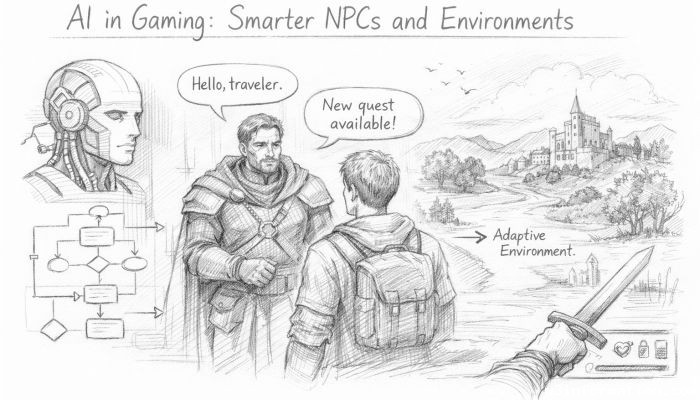 AI in Gaming: Smarter NPCs and Environments
 Understanding Bias in AI Algorithms
 Introduction to Chatbots and Conversational AI
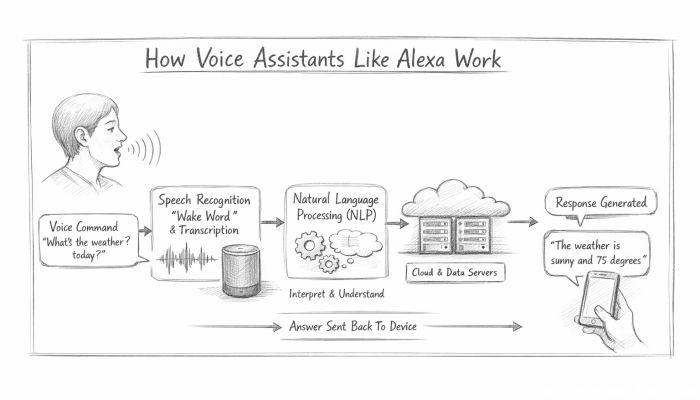 How Voice Assistants Like Alexa Work
 Federated Learning: AI Without Sharing Data