Why Critical Thinking Should Be Taught in Schools
In a world marked by rapid technological change, information overload, and complex global issues, the ability to think critically is more valuable than ever. Critical thinking is the intellectual process of analyzing facts, evaluating evidence, and questioning assumptions to make reasoned decisions. It involves mental skills such as reasoning, analysis, problem-solving, and open-mindedness. Despite its importance, critical thinking is often underemphasized or overlooked in traditional education systems. Teaching critical thinking in schools is not just about academic success; it prepares students to navigate the uncertainties of life, make informed decisions, and engage as active and responsible citizens. This article delves into why critical thinking should be an integral part of school education, offering a comprehensive analysis of various perspectives and insights into how schools can effectively develop this crucial skill.
- What is critical thinking? Defining it beyond memorization
- How critical thinking contributes to academic success
- Critical thinking in the workforce: Preparing students for future jobs
- Critical thinking for informed and responsible citizenship
- Combating misinformation and fake news: The role of critical thinking
- Critical thinking for emotional intelligence and empathy
- Inquiry-based learning as a method for teaching critical thinking
- Challenges in teaching critical thinking and overcoming them
- Using technology to support critical thinking
- Critical thinking as a tool for lifelong learning
- Creativity and critical thinking: Complementary skills
- Critical thinking in education policy: Shaping the future
- Conclusion: Embracing Critical Thinking for a Better Future
- More Related Topics
What is critical thinking? Defining it beyond memorization
Critical thinking is the active process of conceptualizing, applying, analyzing, synthesizing, and evaluating information to form a logical judgment. It involves curiosity, open-mindedness, skepticism, and self-reflection. The objective is to define it in a way that moves beyond memorization and standardized tests. A clear understanding of what critical thinking entails helps shift the educational focus towards developing intellectual independence in students. By cultivating these skills, students become better equipped to question the validity of information, recognize biases, and rely on logic over emotion.

How critical thinking contributes to academic success
Classrooms are more dynamic and engaging when students can think critically. Critical thinking helps students approach complex problems, interpret texts with depth, and communicate ideas persuasively. It enriches discussions, fosters creativity, and encourages intellectual risk-taking. Studies consistently show that critical thinkers perform better academically across subjects, including science, mathematics, literature, and social studies, as they can apply knowledge rather than just recall facts.
Critical thinking in the workforce: Preparing students for future jobs
The modern job market values more than just technical skills; employers look for candidates who can analyze situations quickly, solve problems creatively, and make decisions under pressure. Critical thinking is a transferable skill essential for innovation and adaptability. By integrating it into school curricula, students gain the tools to challenge assumptions in the workplace, collaborate effectively, and respond proactively to changes, aligning educational outcomes with the competencies needed in the workforce.
Critical thinking for informed and responsible citizenship
Healthy democratic societies depend on citizens who can evaluate information critically, understand diverse perspectives, and participate thoughtfully in political processes. In an era of misinformation and political polarization, critical thinking acts as a shield against manipulation and propaganda. Schools that prioritize critical thinking prepare students not just for voting but for meaningful engagement, dialogue, social justice advocacy, and constructive community contributions.
Combating misinformation and fake news: The role of critical thinking
The digital age has brought unprecedented access to information, but also to misinformation and fake news. Critical thinking enables students to distinguish credible sources from unreliable ones and question sensational or biased narratives. This skepticism is vital for self-protection against manipulation and for making decisions based on facts. Teaching media literacy alongside critical thinking is a vital step in helping students navigate the digital landscape responsibly.
Critical thinking for emotional intelligence and empathy
Beyond logic and analysis, critical thinking helps develop emotional intelligence. When students critically examine their emotions, biases, and perspectives as well as those of others, they become more empathetic and improve their interpersonal skills. This holistic approach to critical thinking reduces conflict, encourages cooperation, and nurtures social harmony both inside and outside the classroom.
Inquiry-based learning as a method for teaching critical thinking
Inquiry-based learning, which encourages students to ask questions, explore problems, and construct knowledge through investigation, is an effective method for promoting critical thinking. Rather than passively receiving information, learners are active participants in their education, leading to deeper comprehension, sustained curiosity, and the ability to reason through novel situations. Schools that adopt inquiry-driven curricula foster an environment where critical thinking can thrive.
Challenges in teaching critical thinking and overcoming them
Teaching critical thinking in existing curricula is challenging. Educators may feel ill-equipped, curricula are often rigid, and traditional assessment methods focus on memorization. Critical thinking is also context-dependent and hard to quantify. To overcome these challenges, schools should provide professional development for teachers, adopt flexible curricula, and use diverse assessment strategies like portfolios, debates, and reflective writing to nurture critical thinking skills.
Using technology to support critical thinking
Technology can be harnessed to support critical thinking. Digital resources offer diverse perspectives, enable simulation-based learning, and foster collaboration beyond geographic boundaries. However, technology is also a source of distraction and information overload. Educators must guide students in using technological resources critically to ensure that digital literacy complements rather than replaces critical thinking.
Critical thinking as a tool for lifelong learning
Teaching critical thinking reaps one of its greatest benefits in fostering lifelong learners. Critical thinkers are driven by intrinsic curiosity to seek new knowledge continuously, question the status quo, and adapt to new information. In a rapidly evolving world of knowledge and technologies, this mindset is essential. By embedding critical thinking into early education, schools help students develop intellectual habits that support lifelong learning and informed engagement with the world.
Creativity and critical thinking: Complementary skills
A common misconception is that critical thinking dampens creativity. In reality, these two skills are complementary. Critical thinking provides a framework for rigorously evaluating ideas, while creativity generates innovative solutions. Teaching students to think critically helps them refine and improve creative work by balancing originality with practical reasoning. This combination empowers students to tackle complex challenges with imagination and logic.
Critical thinking in education policy: Shaping the future
Promoting critical thinking in schools is a responsibility that extends to policy-making. Educational frameworks and standards must evolve to emphasize critical thinking and higher-order thinking skills alongside foundational knowledge. Policymakers must invest in teacher training, resource development, and curriculum redesign that prioritizes critical thinking skills. The future of education lies in creating systems that prepare individuals to be active, reflective, and critical contributors to society, not passive consumers of information.
Conclusion: Embracing Critical Thinking for a Better Future
Critical thinking is not an optional extra; it is a fundamental necessity in education and beyond. Whether the goal is to prepare students for academic challenges, future careers, civic responsibilities, or personal growth, the ability to think critically empowers individuals to navigate complexity, uncertainty, and multiple perspectives. Schools have a unique responsibility to nurture this skill from an early age by moving away from rote memorization and towards inquiry, reflection, and reasoned judgment. Embracing critical thinking in education is embracing a brighter future, where individuals are equipped to think independently, act responsibly, and innovate boldly. Educators, policymakers, and communities must recognize and champion the central role that critical thinking plays in shaping thoughtful, capable, and engaged citizens of tomorrow.
 Big O Notation Explained for Beginners
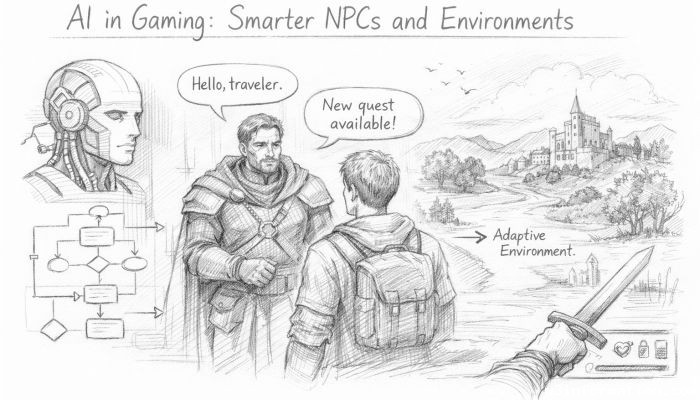 AI in Gaming: Smarter NPCs and Environments
 Understanding Bias in AI Algorithms
 Introduction to Chatbots and Conversational AI
 How Voice Assistants Like Alexa Work
 Federated Learning: AI Without Sharing Data