How to Create a Family Calendar for Better Time Management
In the hustle of everyday life, managing a family’s schedule can often feel overwhelming. Between work commitments, school activities, appointments, social events, and personal time, it’s easy for things to slip through the cracks. Missed appointments, last-minute stress, and constant confusion can quickly become part of the routine. This is where a well-organized family calendar becomes a game-changer. More than just a planning tool, it acts as a central hub that keeps everyone aligned, informed, and prepared. A thoughtfully designed family calendar not only improves time management but also reduces stress and creates a sense of balance in daily life. In this guide, we’ll explore how to create a family calendar that works effectively, helping your household stay organized, connected, and in control.
- Why a Family Calendar Is Essential
- Choosing Between Digital and Physical Calendars
- Involving the Whole Family in Planning
- Categorizing Activities for Clarity
- Setting Priorities and Managing Time Effectively
- Adding Reminders and Alerts
- Scheduling Family Time and Downtime
- Reviewing and Updating the Calendar Regularly
- Using Technology to Enhance Organization
- Avoiding Over-Scheduling
- Conclusion
- More Related Topics
Why a Family Calendar Is Essential
A family calendar serves as a single source of truth for all household activities. Instead of relying on memory or scattered notes, everything is documented in one place. This reduces confusion and ensures that everyone knows what to expect. It also helps avoid scheduling conflicts, making daily life smoother and more predictable. In a busy household, having a shared system brings clarity and peace of mind.
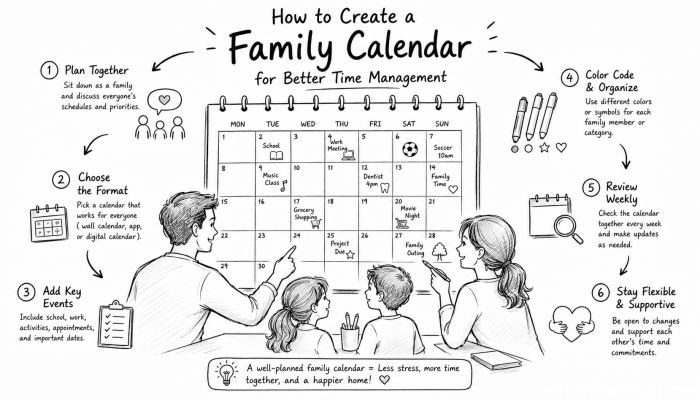
Choosing Between Digital and Physical Calendars
The first step in creating a family calendar is deciding whether to go digital or stick with a physical one. Digital calendars offer flexibility, reminders, and accessibility from anywhere, while physical calendars provide a visual presence that everyone can easily see. The choice depends on your family’s preferences and lifestyle. Some families even use a combination of both for maximum efficiency.
Involving the Whole Family in Planning
A family calendar works best when everyone is involved. Encourage each family member to contribute their schedules and commitments. This not only ensures accuracy but also promotes a sense of responsibility and teamwork. When everyone participates, the calendar becomes a shared tool rather than a one-person task.
Categorizing Activities for Clarity
Organizing activities into categories makes the calendar easier to read and manage. For example, you can use different colors for work, school, personal events, and appointments. This visual distinction allows you to quickly identify priorities and avoid confusion. Categorization simplifies planning and enhances overall efficiency.
Setting Priorities and Managing Time Effectively
Not all tasks are equally important. A family calendar helps in identifying priorities and allocating time accordingly. By scheduling important activities first and leaving room for flexibility, you can manage time more effectively. This approach ensures that essential commitments are met without overwhelming the schedule.
Adding Reminders and Alerts
One of the biggest advantages of a calendar is the ability to set reminders. Alerts ensure that important events are not forgotten, whether it’s a doctor’s appointment or a school meeting. Timely reminders reduce stress and help everyone stay on track. For digital calendars, notifications can be customized to suit individual preferences.
Scheduling Family Time and Downtime
While it’s important to stay organized, it’s equally important to schedule time for relaxation and bonding. A family calendar should include moments for shared activities, rest, and fun. This balance prevents burnout and strengthens family relationships. Time management is not just about productivity—it’s also about well-being.
Reviewing and Updating the Calendar Regularly
A family calendar is not a one-time setup—it requires regular updates. Weekly or monthly reviews help ensure that the schedule remains accurate and relevant. Adjustments can be made based on changing priorities or unexpected events. Consistent updates keep the calendar effective and reliable.
Using Technology to Enhance Organization
Digital tools can take your family calendar to the next level. Apps and shared platforms allow real-time updates, synchronization across devices, and easy collaboration. Features like notifications, task lists, and integration with other tools make digital calendars highly efficient. Leveraging technology simplifies the process and improves accessibility.
Avoiding Over-Scheduling
One common mistake is trying to fit too many activities into the calendar. Over-scheduling can lead to stress and fatigue. It’s important to leave room for flexibility and unexpected events. A well-balanced calendar ensures that the family remains productive without feeling overwhelmed.
Conclusion
Creating a family calendar is one of the simplest yet most effective ways to improve time management and reduce daily stress. By organizing schedules, setting priorities, and involving every family member, you can create a system that keeps everyone aligned and informed. Whether you choose a digital or physical approach, the key lies in consistency, communication, and flexibility. A well-maintained family calendar not only enhances productivity but also fosters stronger connections and a balanced lifestyle. Ultimately, it transforms chaos into clarity, helping your family navigate life with confidence and ease.
 How to Make the Most of Your Holiday Break
 The Best Winter Destinations for a Cozy Getaway
 How to Organize Your Holiday Travel Plans with Ease
 The Ultimate Guide to Cooking for a Crowd
 How to Make Healthy Comfort Food Without the Guilt
 5 Delicious Vegan Breakfast Ideas You Can Make in Minutes