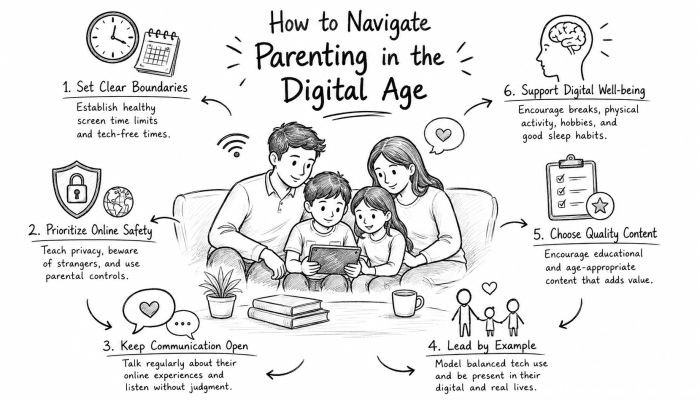
How to Navigate Parenting in the Digital Age
Parenting has never been simple, but in today’s digital age, it comes with a completely new set of challenges and opportunities. Children are growing up surrounded by smartphones, social media, online learning platforms, and instant access to information. While technology opens doors to creativity, education, and global connection, it also raises concerns about screen time, online safety, and emotional well-being. As parents, the goal is no longer just to guide children through the physical world but also to help them navigate the digital one responsibly. Striking the right balance between embracing technology and setting healthy boundaries can feel overwhelming, but it is essential for raising confident, aware, and resilient individuals. In this article, we’ll explore practical strategies and insights on how to navigate parenting in the digital age with confidence and clarity.
- Understanding the Digital Landscape Children Live In
- Balancing Screen Time and Real-Life Experiences
- Teaching Digital Responsibility and Etiquette
- Ensuring Online Safety and Privacy
- Encouraging Open Communication
- Leveraging Technology for Learning
- Setting a Positive Example as a Parent
- Managing Social Media Influence
- Promoting Emotional Well-Being
- Adapting to Constant Technological Changes
- Creating a Healthy Digital Routine
- Conclusion
- More Related Topics
Understanding the Digital Landscape Children Live In
Today’s children are digital natives—they are born into a world where technology is an integral part of daily life. From educational apps to social media platforms, their experiences are shaped by digital interactions. Understanding this landscape is the first step for parents. Instead of resisting technology, it’s important to recognize its role and learn how it influences behavior, communication, and learning.
Balancing Screen Time and Real-Life Experiences
One of the biggest concerns for parents is managing screen time. While technology can be educational, excessive use can affect physical health and social development. Setting clear boundaries and encouraging outdoor activities, hobbies, and family interactions helps maintain a healthy balance. The goal is not to eliminate screen time but to ensure it is used meaningfully.
Teaching Digital Responsibility and Etiquette
Just as children are taught manners in real life, they need guidance on how to behave online. Teaching digital etiquette—such as respecting others, avoiding harmful content, and understanding the consequences of online actions—is essential. This helps children become responsible digital citizens who use technology positively.
Ensuring Online Safety and Privacy
The internet can expose children to risks such as cyberbullying, inappropriate content, and privacy breaches. Parents must educate children about online safety, including the importance of not sharing personal information and recognizing potential threats. Using parental controls and monitoring tools can also provide an added layer of protection.
Encouraging Open Communication
Open communication is key to navigating digital challenges. Children should feel comfortable discussing their online experiences with their parents. By creating a supportive environment, parents can address concerns, guide decision-making, and build trust. This approach ensures that children are not navigating the digital world alone.
Leveraging Technology for Learning
Technology can be a powerful educational tool when used effectively. Online courses, interactive apps, and digital resources can enhance learning and spark curiosity. Parents can guide children in choosing quality content that supports their education and interests, turning screen time into a productive experience.
Setting a Positive Example as a Parent
Children often mimic the behavior of their parents. If parents are constantly on their devices, children are likely to follow suit. Modeling healthy technology habits—such as limiting screen time and prioritizing face-to-face interactions—sets a strong example. Parenting in the digital age requires self-awareness as much as guidance.
Managing Social Media Influence
Social media can significantly impact a child’s self-esteem and perception of reality. Parents should help children understand that online content is often curated and not always reflective of real life. Encouraging critical thinking and promoting self-confidence can help children navigate social media in a healthy way.
Promoting Emotional Well-Being
The digital world can sometimes lead to stress, anxiety, or feelings of isolation. Parents should be attentive to changes in their child’s behavior and emotional state. Encouraging offline activities, fostering friendships, and maintaining a supportive environment contribute to overall well-being.
Adapting to Constant Technological Changes
Technology evolves rapidly, and staying informed can be challenging. Parents don’t need to be experts, but staying updated on trends, apps, and platforms helps them guide their children effectively. Being adaptable and open to learning ensures that parents remain relevant in their child’s digital journey.
Creating a Healthy Digital Routine
Establishing routines helps children develop discipline and balance. Setting specific times for screen use, homework, and family activities creates structure. A consistent routine ensures that technology becomes a part of life without dominating it.
Conclusion
Parenting in the digital age is a journey that requires awareness, adaptability, and balance. While technology presents challenges, it also offers incredible opportunities for learning and connection. By understanding the digital world, setting boundaries, encouraging open communication, and modeling positive behavior, parents can guide their children toward responsible and meaningful use of technology. Ultimately, the goal is not to shield children from the digital world but to empower them to navigate it confidently and safely. With the right approach, technology can become a valuable tool in raising well-rounded, informed, and resilient individuals.
 How to Make the Most of Your Holiday Break
 The Best Winter Destinations for a Cozy Getaway
 How to Organize Your Holiday Travel Plans with Ease
 The Ultimate Guide to Cooking for a Crowd
 How to Make Healthy Comfort Food Without the Guilt
 5 Delicious Vegan Breakfast Ideas You Can Make in Minutes